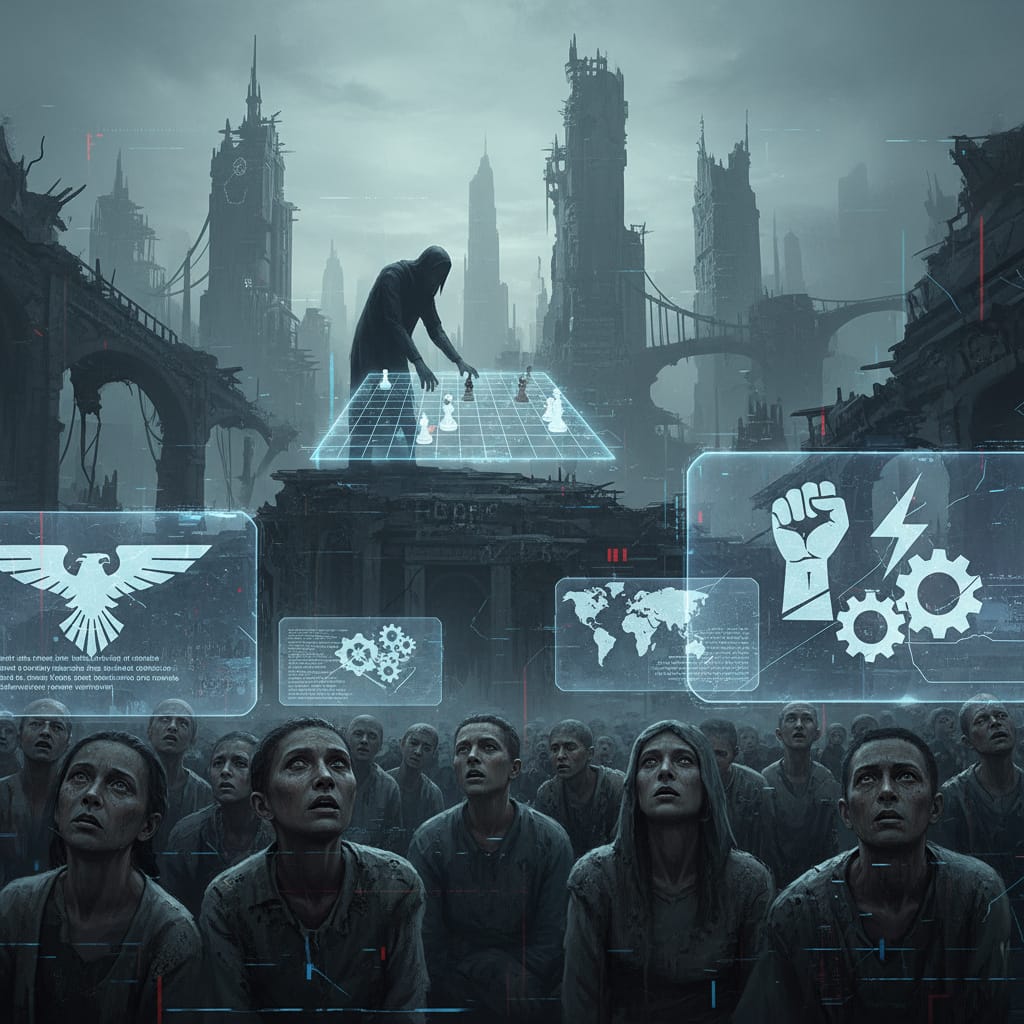
In the annals of digital warfare, many a would-be emperor has watched their glorious campaign crumble to dust, not from the might of an opposing army, but from the insidious rot of a disgruntled populace. You win the battles, you conquer the territory, but you lose the peace. This phenomenon, known in many strategy games as “war weariness,” is the silent killer of empires, a testament to the fact that even in the most abstract of conflicts, the will of the people is a resource that cannot be ignored. But what if you could turn this passive frustration into an offensive weapon? What if you could manipulate the hearts and minds of your own citizens and those of your enemies, transforming the abstract concept of “morale” into a tangible instrument of power? This guide provides a comprehensive analysis of how propaganda, both overt and subtle, can be used to manage domestic war weariness and amplify it within enemy empires, turning the tide of a war without firing a single shot.
Understanding War Weariness: The Silent Killer of Empires
War weariness is a mechanic in many strategy games that represents the cumulative negative impact of prolonged conflict on your population’s morale and stability. According to the player community, it is one of the most frequently underestimated and misunderstood mechanics, often leading to the downfall of even the most experienced commanders. Its effects are often subtle at first, a slow drain on your empire’s resources, but can quickly spiral into a full-blown crisis.
The most common triggers for war weariness include:
- Prolonged Conflict: The longer a war drags on, the more your people will yearn for peace, regardless of how well the war is going.
- Losing Units: Every unit lost, especially those far from home, sends a ripple of grief and discontent through your empire.
- Surprise Wars: Declaring war without a just cause or a clear provocation often leads to a significant spike in war weariness, as your population questions the morality of the conflict.
- Enemy Actions: A savvy opponent can intentionally prolong a conflict, engage in hit-and-run tactics, or even target your civilian populations (where mechanics allow) to maximize your war weariness.
The consequences of high war weariness are severe and can include:
- Reduced Happiness and Loyalty: Unhappy citizens are less productive, more likely to rebel, and can even cause a city to “flip” to an opposing empire.
- Decreased Production: A weary populace has little motivation to work, leading to a significant drop in the production of units, buildings, and resources.
- Increased Unrest: High war weariness can lead to riots, rebellions, and the spawning of rebel units that can wreak havoc on your infrastructure.
Managing war weariness is not just a matter of keeping your people happy; it is a critical component of a successful long-term strategy. A wise ruler knows that a war is fought on two fronts: the battlefield and the home front.
The Home Front: Using Propaganda to Bolster Domestic Support
A strong domestic front is the bedrock of any successful military campaign. A populace that is united, motivated, and resilient is one that can withstand the hardships of war. Propaganda, in its various forms, is the tool you use to build that resilience.

Direct Propaganda: The Iron Fist of Information
In some games, like the Tropico series or Workers & Resources: Soviet Republic, propaganda is an explicit mechanic. These games allow you to build radio stations, television networks, and newspaper offices to directly influence the thoughts and opinions of your citizens.
Actionable Advice:
- Control the Narrative: Use your media outlets to constantly remind your citizens of the righteousness of your cause and the perfidy of your enemies.
- Suppress Dissent: In games that allow it, use your propaganda machine to discredit and silence those who speak out against the war.
- Promote a Cult of Personality: In games like Tropico, a charismatic leader can use propaganda to become a symbol of the nation’s strength and resolve.
Many professional gamers suggest that the key to effective direct propaganda is to start early. Don’t wait for war weariness to become a problem before you start managing it. A constant stream of positive messaging can create a buffer of goodwill that will see you through the darkest days of a conflict.
Cultural Propaganda: The Velvet Glove of Influence
In many strategy games, particularly those in the Civilization series, “culture” and “influence” are powerful forms of soft power that can be used to bolster domestic support. A strong cultural identity can make your people more resistant to the negative effects of war weariness.
Actionable Advice:
- Invest in Culture: Build theaters, museums, and wonders that celebrate your empire’s history and achievements.
- Generate Great Works: Great artists, writers, and musicians can create works of art that inspire your people and fill them with a sense of national pride.
- Promote a Golden Age: A “Golden Age” or similar mechanic can provide a significant boost to your culture and morale, making it an ideal time to launch a military campaign.
Analysis on forums shows that a strong cultural defense is often the most effective long-term strategy for managing war weariness. A populace that is proud of its culture is one that is willing to fight to defend it.

Ideological Propaganda: A War of Ideas
In games like Stellaris or Endless Legend, ideology is a powerful force that can unite your people and justify your actions on the galactic stage. An ideology that glorifies military conquest or demonizes your enemies can make your population more willing to endure the hardships of war.
Actionable Advice:
- Choose Your Ideology Wisely: Select an ideology that aligns with your strategic goals. A militaristic ideology will make it easier to wage war, while a pacifistic ideology will make it more difficult.
- Promote Your Ideology: Use your influence to spread your ideology to other empires, creating a bloc of like-minded allies.
- Suppress Opposing Ideologies: Use your spies and diplomats to undermine the ideologies of your enemies, creating division and unrest within their borders.
A popular strategy is to use ideology to create a “clash of civilizations” narrative, framing the conflict as a struggle for the very soul of the galaxy. This can be a powerful motivator for your people and can help to offset the negative effects of war weariness.
The Foreign Front: Weaponizing War Weariness Against Your Enemies
While it is crucial to manage war weariness on the home front, it is equally important to use it as a weapon against your enemies. A savvy ruler can turn an opponent’s population against them, creating a second front that can be just as devastating as a military invasion.
Raising War Weariness Abroad: The Goal
The strategic advantage of increasing your opponent’s war weariness is immense. An enemy that is struggling with internal dissent is an enemy that is vulnerable. The potential outcomes include:
- Rebellions: An unhappy populace may rise up in rebellion, forcing your opponent to divert resources to deal with the internal threat.
- Reduced Production: A weary enemy will be unable to produce units and buildings at the same rate as a motivated one, giving you a significant advantage in a war of attrition.
- Favorable Peace Treaties: An opponent who is facing a full-blown internal crisis will be much more likely to agree to a peace treaty on your terms.
Espionage and Sabotage: The Dagger in the Dark
Espionage is one of the most direct and effective ways to increase war weariness in an enemy empire. In games like the Civilization series, Stellaris, and the Total War series, spies can be used to sow dissent, sabotage infrastructure, and spread propaganda.
Actionable Advice:
- Foment Unrest: Use your spies to start riots, fund rebellions, and spread negative rumors in enemy cities.
- Sabotage Production: Target your opponent’s key production centers to cripple their economy and war machine.
- Spread Propaganda: Use your spies to spread your own culture and ideology within your opponent’s borders, creating a fifth column of sympathizers.
Analysis on forums shows that the most effective espionage operations are those that target already unhappy populations. A city that is already on the brink of rebellion is a ripe target for a spy to push it over the edge.
Psychological Warfare: The War of Attrition
You don’t always need spies to wage a war of attrition against your opponent’s morale. Your military can be used to inflict maximum psychological damage with minimal risk to your own forces.
Actionable Advice:
- Target Civilian Infrastructure: Where the game mechanics allow, target your opponent’s farms, mines, and other civilian infrastructure to create a sense of chaos and despair.
- Conduct Raids and Skirmishes: Engage in small-scale battles that you are likely to win, forcing your opponent to constantly replace their losses and increasing their war weariness.
- Demonstrate Your Power: Parade a powerful fleet or army on your opponent’s borders without attacking. The constant threat of invasion can be just as demoralizing as an actual attack.
A popular strategy is to use a combination of military and espionage tactics to create a perfect storm of misery for your opponent. A city that is being constantly raided, its infrastructure in ruins, and its people being bombarded with propaganda is a city that is on the verge of collapse.
Cultural and Ideological Offensives
Your culture and ideology can be powerful offensive weapons. A “cultural bomb” can be just as devastating as a military one, flipping an enemy city to your side without a single shot being fired.
Actionable Advice:
- Target Key Cities: Focus your cultural and ideological pressure on your opponent’s border cities, or on cities that have a different culture or ideology than the rest of their empire.
- Use Great Works as Weapons: A Great Artist or Musician can be used to create a “culture bomb” that can instantly convert a large number of an opponent’s citizens to your culture.
- Spread Your Religion: In games with a religion mechanic, your missionaries and prophets can be used to spread your faith to enemy cities, creating a powerful source of unrest and division.
Case Studies: Propaganda and War Weariness in Action
The Civilization Approach
In the Civilization series, war weariness is a constant threat, but it is also a powerful weapon. A player who can master the art of cultural warfare can bring an enemy to their knees without ever declaring war. A popular strategy is to use a combination of tourism, rock bands, and spies to create a “culture bomb” that can flip an enemy city in a single turn.
The Paradox Interactive Method
In games like Stellaris and Hearts of Iron IV, propaganda and war weariness are much more explicit mechanics. In Stellaris, a player’s ethics and government type have a direct impact on their population’s happiness and war stability. In Hearts of Iron IV, a player must carefully manage their “war support” and “stability” to avoid a full-blown revolution. A common tactic in these games is to use propaganda and espionage to support a political faction in an enemy country that is more favorable to your own ideology.
The Covert Operations
In games like XCOM 2: War of the Chosen, the player is in a constant state of insurgency against a much more powerful enemy. Propaganda is a key tool for survival, used to recruit new soldiers, inspire resistance movements, and counter the enemy’s own propaganda. A successful XCOM campaign is a masterclass in how to use propaganda to fight a guerrilla war against a superior foe.
Conclusion
War weariness and propaganda are not just abstract concepts in strategy games; they are powerful tools that can be used to achieve victory. A wise ruler knows that a war is not just won on the battlefield; it is won in the hearts and minds of the people. By mastering the art of propaganda, you can turn the tide of a war, transform a losing position into a winning one, and build an empire that can withstand the test of time. The future of strategy gaming will undoubtedly see these mechanics become even more complex and intertwined, offering even greater opportunities for the cunning player to outwit their opponents not just with military might, but with the power of ideas.