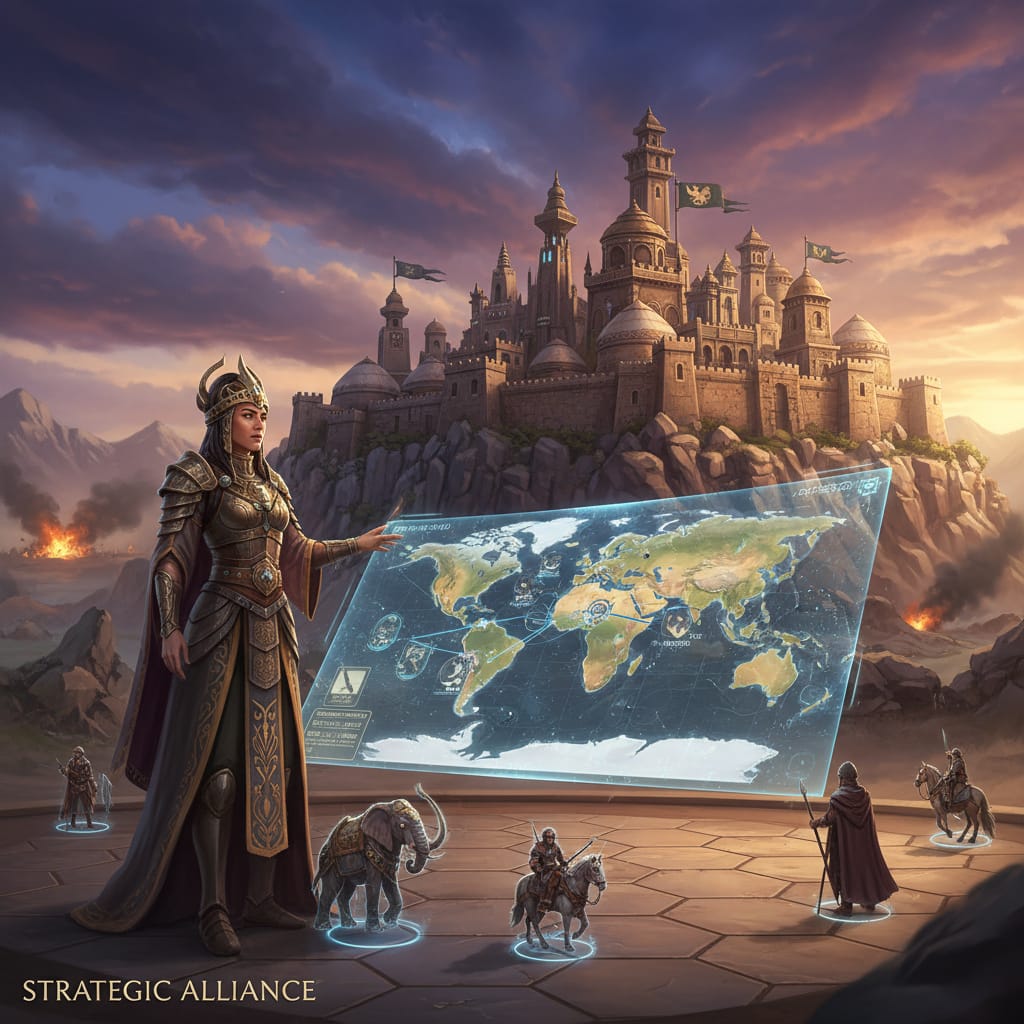
The intricate dance of diplomacy and warfare in Civilization VI often hinges on the powerful alliances forged with city-states. As a suzerain, you gain access to their resources, unique bonuses, and a loyal ally in times of war. But what if this relationship could be deepened? What if, as a suzerain, you could directly request the production of a city-state’s unique unit? This is a concept that has been widely discussed among the player community, and for good reason. The strategic implications of such a feature would be profound, adding a new layer of depth to military planning and diplomatic maneuvering.
The Current State of Suzerainty
Before diving into the hypothetical, it’s crucial to understand the existing mechanics. Currently, being a suzerain of a city-state grants a variety of powerful bonuses. These can range from economic boosts, like extra trade routes or production, to military advantages, such as increased combat strength for your units or unique improvements. While you can levy the military of a city-state, this gives you temporary control over their existing units, not the ability to commission new ones. This distinction is key. The ability to request specific unique units would transform city-states from passive allies into active participants in your grand strategy.
A New Era of Military Strategy
Analysis on forums shows that the ability to request unique units would revolutionize military strategy in several key ways:
Early Game Power Spikes
Many professional gamers suggest that the early game would see the most significant shift. Imagine being able to supplement your own army with a handful of Akkad’s Varu, the elephant-mounted warriors who reduce the combat strength of adjacent enemy units. Or perhaps you could field a small contingent of Preslav’s Keshiks, the swift and deadly horse archers who can attack twice in a single turn. These units, available in the early game, could provide a decisive edge in early conflicts, allowing for aggressive expansion or a formidable defense against a rushing neighbor. A popular strategy would be to identify a city-state with a powerful early-game unique unit and focus on securing suzerainty as quickly as possible.
Mid-Game Army Composition
As the game progresses into the mid-game, the strategic options would become even more diverse. According to the player community, the ability to request unique units would allow for highly specialized army compositions. For example, a player focusing on a naval domination victory could supplement their own fleet with Valletta’s Samoderzhets, the powerful ironclad that can attack twice. A land-based conqueror might seek out the services of Granada’s Almughavars, the versatile infantry unit that can build forts and has a bonus against fortified defenders. This would allow players to create armies tailored to specific threats and objectives, rather than being limited to their own civilization’s unique units.
Late-Game Reinforcements and Technological Leapfrogging
In the late game, the ability to request unique units would provide a crucial source of reinforcements. A player who has suffered heavy losses in a protracted war could quickly replenish their forces by calling upon their city-state allies. Furthermore, this mechanic could allow for a form of “technological leapfrogging.” A player who is behind in technology could potentially gain access to advanced units by becoming the suzerain of a technologically advanced city-state. Imagine being able to field a squadron of Giant Death Robots, the ultimate late-game unit, without having to research the corresponding technology yourself. This would be a game-changer, allowing for dramatic comebacks and unexpected shifts in the balance of power.

Balancing the Scales: Potential Costs and Limitations
Of course, such a powerful feature would need to be carefully balanced to prevent it from becoming overpowered. The player community has proposed several potential costs and limitations:
Gold and Strategic Resources
The most obvious cost would be gold. Requesting a unique unit would likely be an expensive proposition, with the cost scaling based on the unit’s strength and the era. In addition to gold, players might also be required to provide the necessary strategic resources. For example, to request a unit of Knights, you would need to have a source of iron. This would add a layer of strategic planning, as players would need to secure the necessary resources before they could call upon their city-state allies.
Diplomatic Favor and Envoys
Another potential cost could be diplomatic favor. Requesting a unique unit could require a significant expenditure of this valuable resource, representing the political capital needed to make such a request. Alternatively, players might be required to send a certain number of envoys to the city-state before they could request a unit. This would create a trade-off, as players would need to decide whether to invest their envoys in securing suzerainty or in requesting units.
Cooldowns and Production Queues
To prevent players from spamming unique units, there would likely be a cooldown period after each request. This would represent the time it takes for the city-state to train and equip the new unit. Additionally, the city-state’s own production queue could be a limiting factor. If the city-state is busy building districts or wonders, it may not be able to fulfill a request for a unique unit in a timely manner.
The Impact on Diplomacy
The ability to request unique units would also have a significant impact on diplomacy. The competition for suzerainty of key city-states would become even more intense. A city-state with a powerful unique unit would be a highly sought-after prize, and players would likely go to great lengths to secure their loyalty. This could lead to more proxy wars and diplomatic maneuvering, as players try to undermine their rivals’ influence over key city-states.
A More Dynamic and Engaging World
The ability to request a city-state’s unique unit as a suzerain is a feature that would add a new layer of depth and complexity to Civilization VI. It would create a more dynamic and engaging world, where city-states are not just passive bystanders, but active participants in the grand struggle for supremacy. While such a feature would need to be carefully balanced, the potential for new and exciting strategic possibilities is undeniable. From early game power spikes to late-game comebacks, the ability to call upon the unique military prowess of your city-state allies would be a game-changer, and a welcome addition to the world of Civilization.