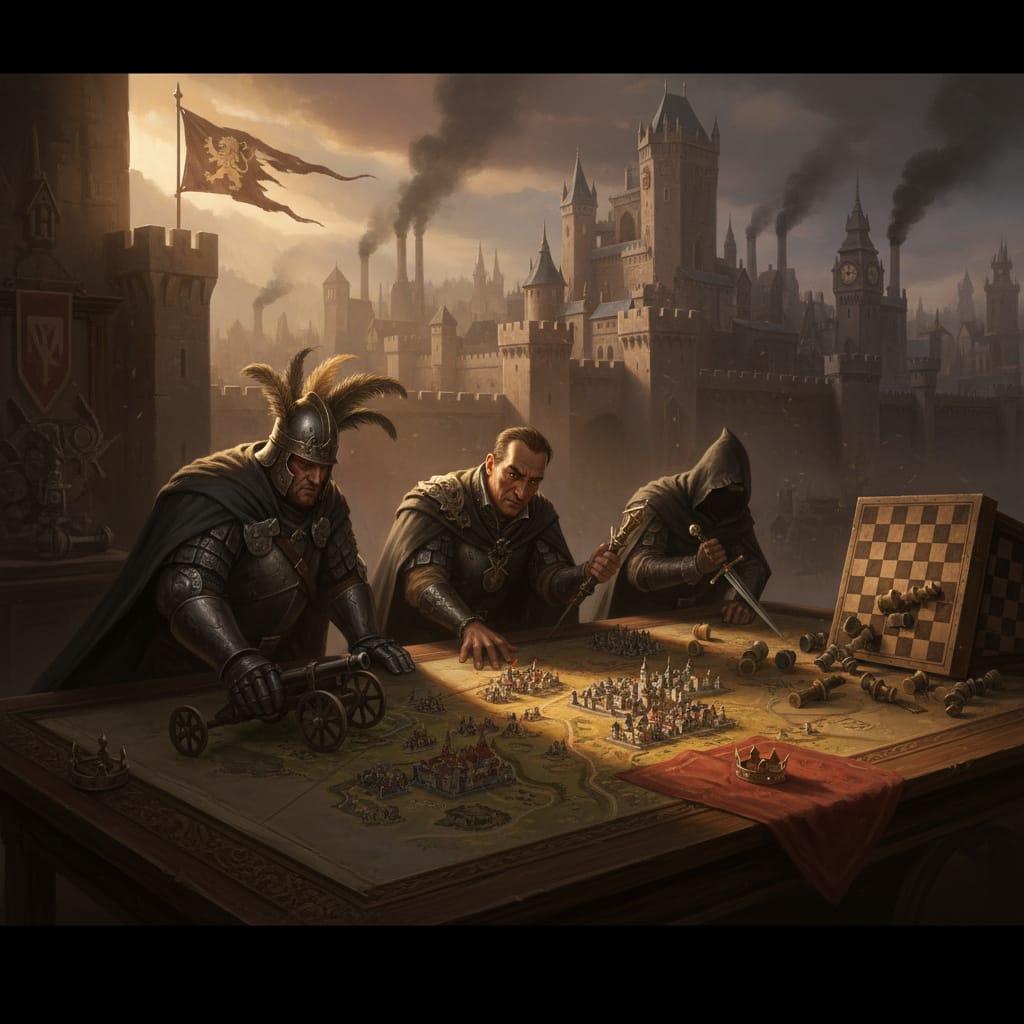
In the grand tapestry of strategy games, the ultimate fantasy for many players is not just to conquer new lands, but to reshape their own nation from within. The ability to overthrow a troublesome leader, to orchestrate a coup that dramatically shifts the government from a stagnant monarchy to a dynamic republic, is a powerful and alluring concept. This guide delves into the intricate mechanics of such political machinations, offering a comprehensive analysis of how to successfully instigate a coup and navigate the treacherous waters of internal rebellion in popular strategy titles.
The Art of the Coup: A Primer
Before we delve into the specifics of individual games, it’s crucial to understand the universal principles that govern internal power struggles. Analysis on forums shows that successful coups are rarely spontaneous acts of rebellion. They are the culmination of careful planning, strategic manipulation, and the exploitation of existing discontent.
Key Pillars of a Successful Coup:
- Cultivating Discontent: A populace on the brink of rebellion is a fertile ground for a coup. Many professional gamers suggest that actively lowering public order, whether through unpopular policies, high taxation, or even deliberately failing to address grievances, can create the necessary instability.
- Securing Elite Support: A coup is not a popular uprising; it is a power grab by a faction of the elite. Identifying and securing the allegiance of powerful individuals or groups within your nation is paramount. This could be the military, influential nobles, or wealthy industrialists.
- The Importance of a Figurehead: A rebellion needs a leader. Whether it’s a charismatic general, a disgruntled heir, or a popular politician, a figurehead provides a rallying point for the disaffected and a legitimate alternative to the current regime.
- Timing is Everything: A popular strategy is to strike when the ruling government is at its most vulnerable. This could be during a costly war, a succession crisis, or a period of economic collapse.
Crusader Kings III: The Machiavellian Playground
Crusader Kings III is a masterclass in dynastic intrigue and political maneuvering. Here, the overthrow of a leader is not just a possibility; it’s an art form. The player community has developed a plethora of strategies for seizing power, ranging from subtle manipulation to outright rebellion.
Method 1: The Faction-Fueled Rebellion
The most direct method for overthrowing your liege is through the faction system. This is a numbers game, and the goal is to gather enough military power to force the ruler’s hand.
- Building a Power Base: The first step is to increase your own military and economic strength. According to the player community, this involves maximizing your domain’s income, investing in powerful men-at-arms, and upgrading your holdings.
- The Power of Hooks: A key to success is the strategic use of hooks. Fabricating hooks on fellow vassals allows you to force them into your faction, dramatically increasing your military strength. A skilled spymaster is your greatest asset in this endeavor.
- The Ultimatum: Once your faction’s military power significantly surpasses that of your liege, you can present an ultimatum. If they refuse your demands, a civil war ensues. A decisive victory will grant you independence or even the throne itself.
Method 2: The Intrigue-Driven Coup
For those who prefer a more subtle approach, the intrigue lifestyle offers a path to power through clandestine means.
- The Spymaster’s Gambit: A popular strategy is to become your liege’s spymaster. This gives you access to a wealth of information and the ability to fabricate hooks and carry out schemes with greater efficiency.
- The Kidnap Scheme: The “Kidnap” perk is a game-changer. By successfully kidnapping your liege, you can press your demands with a guaranteed 100% war score, leading to an instant victory. This is a high-risk, high-reward strategy that can pay off handsomely.
- Murder and Mayhem: While less direct, murder can be an effective tool for destabilizing a realm. Assassinating a powerful ruler can lead to a weak child heir, creating a power vacuum that you can exploit.
Changing Government Types in Crusader Kings III
Changing your government type in CKIII is a more deliberate process, often tied to cultural and technological advancements.

- From Tribal to Feudal: Tribal rulers can transition to a feudal or clan government by meeting specific requirements, including high tribal authority and the discovery of key innovations. This is a major step in modernizing your realm and unlocking new technologies and laws.
- The Power of Inheritance: A character’s government type is determined by their primary title. By strategically marrying your heir to a feudal ruler, you can ensure that your dynasty transitions to a more advanced form of government.
Victoria 3: The Engine of Revolution
Victoria 3 is a game of industrialization, social change, and political upheaval. Here, revolutions are not just about a change of leader, but a fundamental shift in the nation’s ideology and laws.
Igniting the Flames of Revolution
Revolutions in Victoria 3 are driven by political movements and the radicalization of your populace. The key is to create a situation where a significant portion of your population is willing to take up arms to achieve their political goals.
- The Role of Interest Groups: Interest groups are the primary drivers of political change. To instigate a revolution, you must first identify an interest group that is powerful, angry, and ideologically opposed to your current government.
- Stoking the Fires of Discontent: Many professional gamers suggest that the best way to radicalize an interest group is to actively work against their interests. Enacting laws they oppose, removing them from government, and lowering the standard of living for their members will all contribute to their radicalism.
- The Agitator: The “Voice of the People” DLC introduced agitators, characters who can be used to stir up support for a particular political movement. A skilled agitator can be instrumental in pushing a movement towards revolution.
The Coup d’État
Update 1.3 introduced a more direct path to power: the coup d’état. This allows a powerful and angry interest group to seize control of the government without a full-blown civil war.
- The Angry General: A popular strategy is to cultivate a powerful and disgruntled military. By bolstering the armed forces interest group while simultaneously enacting policies they despise, you can create the perfect conditions for a military coup.
- The Journal Entry: Once the conditions are met, a journal entry for a coup will appear. This will trigger a series of events that will determine the success or failure of the coup. If successful, the instigating interest group will take power and can implement their desired government changes.
From Monarchy to Republic: Changing Government Types
Changing your government type in Victoria 3 is the ultimate goal of any revolution or coup. The new government will be determined by the ideology of the interest group that takes power.
- The Republican Revolution: If a republican movement successfully overthrows a monarchy, you will have the option to establish a republic. This will unlock new laws and political options, but may also lead to further instability as other interest groups react to the new political order.
- The Communist Uprising: A successful communist revolution will lead to the establishment of a council republic, fundamentally altering your nation’s economic and political system.
Conclusion
The ability to overthrow your own leader and reshape your government is one of the most compelling aspects of modern strategy games. Whether through the intricate plotting of Crusader Kings III or the revolutionary fervor of Victoria 3, the path to internal power is fraught with challenges and opportunities. By understanding the core mechanics of discontent, elite support, and strategic timing, players can master the art of the coup and write their own chapter in the annals of virtual history. The strategies outlined in this guide, drawn from the collective wisdom of the player community, provide a roadmap for those ambitious enough to seize power from within.