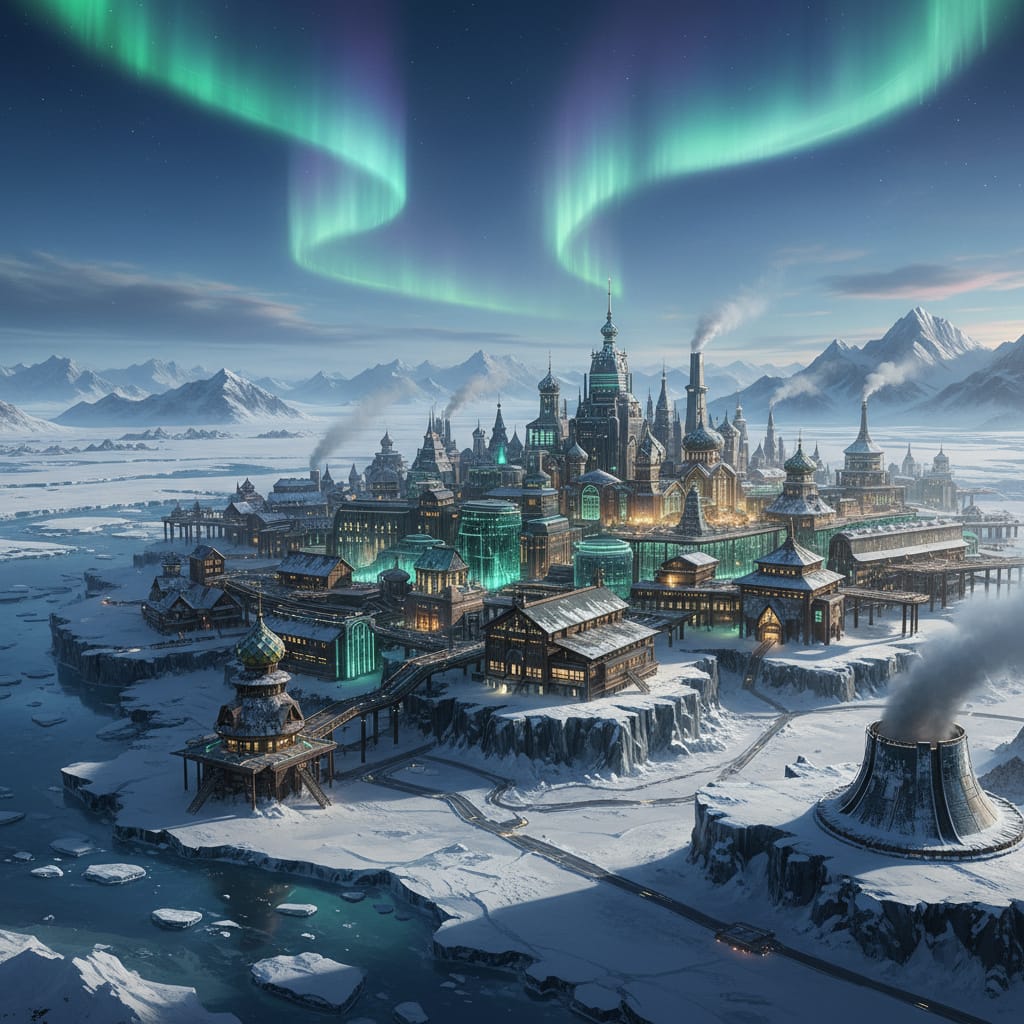
The standard playbook for Civilization 6 is written in green and gold: settle on lush grasslands, seek out bountiful resources, and push your empire across vibrant, life-giving continents. But what happens when you throw that playbook into the fire and embrace the frozen wastes? The Arctic Challenge, a player-created scenario where you can only settle cities on snow and ice, fundamentally inverts every established principle of expansion and survival. It’s a brutal, unforgiving test of strategic mastery, forcing a complete re-evaluation of what makes a city viable. This guide provides a comprehensive analysis of the strategies required to not only survive but conquer the arctic frontier.
The Foundational Hurdle: Understanding Snow vs. Tundra
Before diving into strategy, it’s crucial to understand the landscape. The challenge dictates settling on snow, but your survival depends on the adjacent tundra.
- Snow: These tiles are the absolute bottom tier in terms of yield. A standard snow tile offers zero food, zero production, and zero anything else. Settling on a flat snow tile founds a city with a base of 2 Food and 1 Production, but the surrounding workable tiles are often just as barren.
- Tundra: While still weak, tundra is where you will draw your strength. Standard tundra offers 1 Food. Tundra hills offer 1 Food and 1 Production. These tiles are your lifeline and the focus of your early-game development.
The core of the challenge, therefore, is not to make the snow itself productive, but to use your snow-settled city as a base to exploit the slightly more promising tundra that surrounds it.
Civilization Selection: The Arctic Elite
Success in this challenge is heavily dependent on your choice of civilization. Most leaders are simply not equipped to handle the extreme environment. Analysis on forums and among top players consistently points to two civilizations as being in a tier of their own for this challenge: Russia and Canada.
Russia: The Faith-Fueled Industrial Juggernaut
Peter the Great is arguably the most powerful leader for an arctic challenge. Russia’s abilities don’t just mitigate the weaknesses of the tundra; they turn it into a source of immense power.
- Mother Russia & Lavra: Russia starts with extra territory and gains +1 Faith and +1 Production from Tundra tiles. This is a staggering advantage. The unique Lavra district, which is cheaper to build, provides a platform for a devastating strategy when combined with the right beliefs.
- The Pantheon Power Play: Dance of the Aurora: This pantheon is non-negotiable for Russia. It provides +1 Faith from Tundra tiles for each adjacent Holy Site district. A well-placed Lavra surrounded by six tundra tiles will generate a base of 7 Faith (1 from the Lavra, 6 from the pantheon).
- The “Work Ethic” Miracle: This Follower Belief is the linchpin of the Russian strategy. It grants Production equal to the Faith adjacency bonus of your Holy Sites. That Lavra generating 7 Faith per turn now also generates 7 Production per turn. Suddenly, your barren tundra city has a production output that can rival temperate-zone powerhouses.
- St. Basil’s Cathedral: This wonder is practically designed for Russia in this challenge. It grants +1 Food, +1 Production, and +1 Culture to all Tundra tiles in the city that builds it. The synergy is undeniable.
Russian Strategy Blueprint:

- Settle and Scout: Your first city must be placed on a snow tile adjacent to the maximum possible number of tundra tiles, preferably with some hills for initial production. Your first build should be a scout to find more tundra, natural wonders, and city-states.
- Rush for Faith: Immediately prioritize the Astrology tech to unlock Holy Sites. Your first district in every city must be a Lavra. Place it to maximize tundra adjacency.
- Secure the Pantheon and Beliefs: Generate Great Prophet points as quickly as possible. Secure “Dance of the Aurora” as your pantheon. When you found your religion, “Work Ethic” is your absolute priority.
- Faith to Production: Once Work Ethic is active, your cities will come alive. Use this newfound production to build settlers, expand your arctic empire, and construct other essential districts like Campuses and Commercial Hubs.
- Victory Path: A Religious victory is the most natural path, given your immense Faith generation. However, the production from Work Ethic makes a Science or Domination victory entirely feasible.
Canada: The Tundra Tamers
Wilfrid Laurier offers a different, more gradual but equally potent approach to mastering the arctic. Canada’s strengths lie in direct yield improvements and diplomatic advantages.
- The Last Best West: This ability is a game-changer. It allows Canada to build farms on Tundra terrain (after the Civil Engineering civic). Furthermore, mines and lumber mills on Tundra provide +2 Production, and camps and farms on Tundra provide +2 Food. This directly addresses the core weakness of the arctic: low yields.
- Ice Hockey Rink: This unique improvement can be built on snow or tundra, providing amenities and culture, with bonuses for adjacent snow and tundra tiles. It’s a vital tool for keeping your cities happy and culturally relevant.
- Diplomatic Prowess: Canada gains Diplomatic Favor from completing Emergencies and Competitions, and can’t be the target of surprise wars. This provides a layer of security while you develop your isolated empire.
Canadian Strategy Blueprint:
- Strategic Settling: Like Russia, settle on snow adjacent to tundra. However, Canada should prioritize tundra with features that can be improved: hills for mines, woods for lumber mills, and deer or furs for camps.
- Early Game Survival: The early game is tougher for Canada than for Russia. You lack the immediate production boom from Work Ethic. Focus on building builders to improve your tundra resources and traders to establish internal trade routes for food.
- Unlocking Tundra’s Potential: The Civil Engineering civic is your first major power spike. Once unlocked, your builders can start placing farms on tundra, finally solving the food problem.
- Cultural Development: Build Ice Hockey Rinks to boost your culture and amenities. This will help you expand your borders and progress through the civic tree faster.
- Victory Path: A Diplomatic victory is a strong option for Canada, leveraging their unique diplomatic advantages. A Culture victory is also very possible, using Mounties to create National Parks on the vast, appealing tundra landscapes you’ve cultivated.
The Supporting Cast: Situational Arctic Contenders
While Russia and Canada are the clear frontrunners, a few other civilizations can perform surprisingly well with the right map conditions.
- Byzantium (Theodora): Can execute a similar strategy to Russia by combining “Dance of the Aurora” with her ability to gain Culture from Holy Site adjacency. This creates a Faith and Culture powerhouse.
- Inca (Pachacuti): The Inca can work mountain tiles, which are often found near tundra and snow. Their Terrace Farms can provide a much-needed food source if you can find mountains adjacent to your snow-settled cities.
- Norway (Harald Hardrada): A coastal arctic map with many sea resources can make Norway a viable pick. Their ability to raid and their powerful navy can help supplement a weak land-based economy.
Strategic Pillars of Arctic Survival
Regardless of your chosen civilization, certain strategic principles are universal to the Arctic Challenge.
The Early Game: A Fight for Survival
The first 50 turns are the most critical. Your goal is to stabilize your first city and prepare for expansion.
- The First City: Do not be afraid to move your starting settler several turns to find the optimal location. A snow tile with 4-5 adjacent tundra tiles, including at least one hill, is a solid start.
- Initial Builds: Your build order should generally be: Scout -> Slinger -> Settler. The scout is essential for finding future city locations and potential threats. The slinger provides basic defense against barbarians, who can be a major problem for a slow-starting arctic civilization.
- Trade Routes are Lifelines: As soon as you have a second city, establish an internal trade route. The food and production from a trade route can be the difference between stagnation and growth.
The Mid-Game: Expansion and Specialization
With a few cities established, you can begin to specialize and build towards your victory condition.

- Wonder Construction: This is the time to target key wonders. St. Basil’s Cathedral is a must-have for any tundra-focused empire. The Amundsen-Scott Research Station, a late-game wonder that provides massive science bonuses for cities with snow tiles, is another prime target.
- District Placement: Plan your districts carefully. A well-placed Campus next to mountains or a Commercial Hub on a river can provide crucial yields. For Russia, every city needs a Lavra. For Canada, every city can benefit from an Ice Hockey Rink.
- Governors: Governors are essential for overcoming the arctic’s limitations.
- Magnus (The Steward): His “Provision” promotion allows your cities to grow without losing a population when they produce a settler. This is invaluable for rapid expansion.
- Reyna (The Financier): Her “Harbormaster” and “Contractor” abilities allow you to purchase districts with gold, bypassing the low production of your cities.
- Pingala (The Educator): His science and culture boosts can help you keep pace with more temperate civilizations.
The Late Game: Consolidating Power
The late game in the arctic is about leveraging your unique position.
- Strategic Resources: Tundra and snow are often rich in late-game strategic resources like Oil and Uranium. Secure these to fuel a powerful modern military or power your cities.
- Climate Change: The Gathering Storm expansion adds another layer to the arctic challenge. As the world industrializes, ice caps will melt, and sea levels will rise. This can be both a threat and an opportunity. Coastal snow cities may be flooded, but melting ice can also reveal new resources and land to settle.
- Closing Out the Game: By the late game, your specialized arctic empire should be a force to be reckoned with. Whether you’re spreading your religion across the globe, winning over the world congress, or launching a surprise scientific or military strike, your victory will be a testament to your ability to turn the most inhospitable of environments into a seat of power.
A Test of True Mastery
The Civ 6 Arctic Challenge is more than just a quirky ruleset; it’s a deep and rewarding strategic puzzle. It forces players to abandon conventional wisdom and embrace a completely different way of thinking. Success requires careful planning, precise execution, and a deep understanding of the game’s mechanics. By choosing the right civilization, leveraging the unique synergies of the arctic environment, and patiently building your empire from the ice, you can achieve a victory that is far more satisfying than any easy win on a temperate map. The frozen wastes are not a barrier; they are a crucible, and the empire that emerges from them will be forged in fire and ice, a true testament to strategic genius.