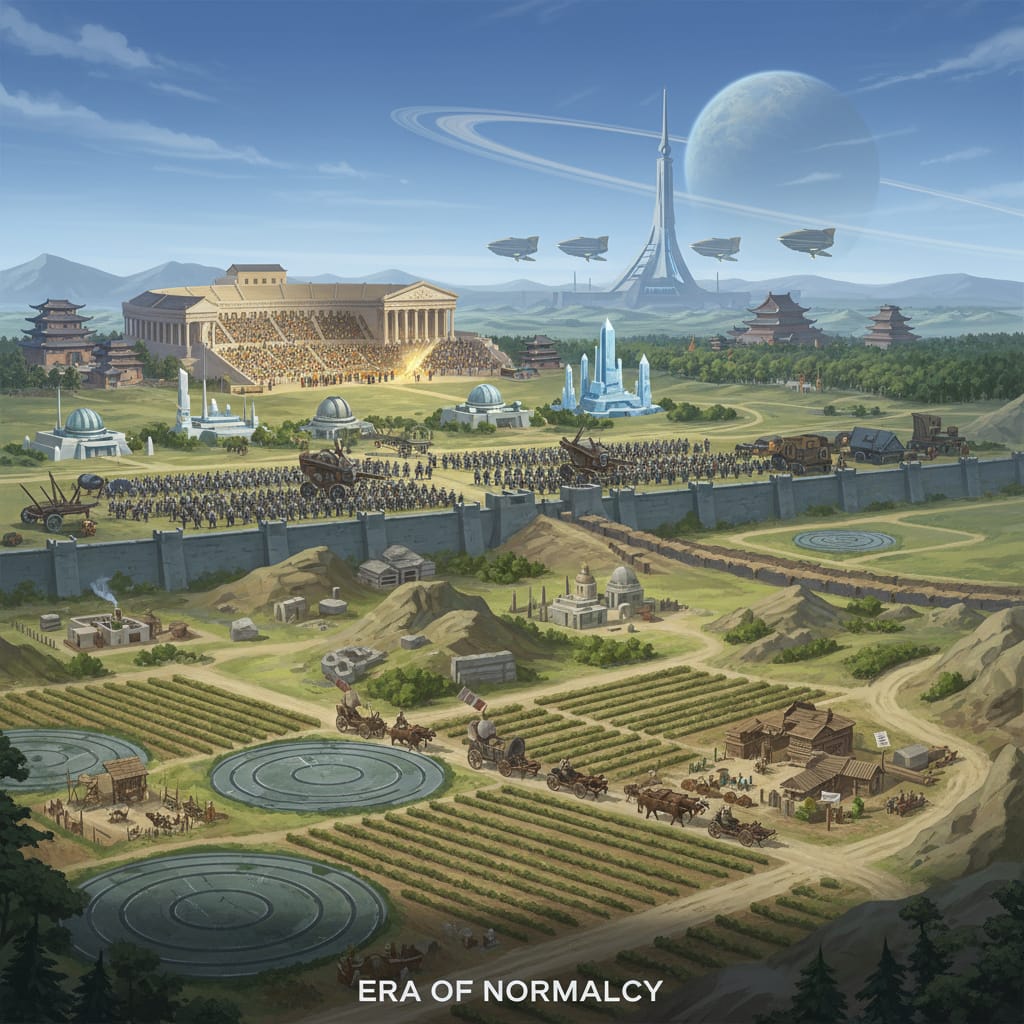
The dramatic swings of Golden and Dark Ages in Civilization 6 define the rhythm of many games. A Golden Age can catapult a civilization to new heights, while a Dark Age can bring a flourishing empire to its knees. But what if this system of booms and busts was removed? What if the game unfolded in a state of perpetual Normalcy? This guide explores the strategic depths of a Civilization 6 experience without the highs of Golden Ages or the lows of Dark Ages, offering a comprehensive analysis of how to thrive in a world of stability and predictability.
The End of an Era: Deconstructing the Golden and Dark Age System
To understand a game without them, one must first appreciate the impact of Golden and Dark Ages. The system is designed to create dynamic narratives, where players can experience both triumphant surges and desperate struggles. A Golden Age, triggered by a high Era Score, grants powerful bonuses and unique Dedications, accelerating a civilization’s progress toward a chosen victory condition. Conversely, a Dark Age, a consequence of a low Era Score, imposes significant penalties but also offers the potential for a Heroic Age—a supercharged Golden Age—if the player can overcome the challenges.
Analysis on forums shows that this system, while exciting, can also lead to a “rich get richer” phenomenon. A well-timed Golden Age can create an insurmountable lead, while a Dark Age can cripple a player, making recovery a monumental task. By removing this system, the game transforms into a more predictable, purely strategic contest.
A New Dawn: The Philosophy of Normalcy
A gameplay experience limited to Normal Ages is a test of fundamental skills. Without the crutch of Golden Age bonuses or the dramatic setbacks of Dark Ages, success hinges on consistent, optimal play. The player community suggests that this style of game is a purer form of Civilization, where long-term planning and incremental advantages are paramount.
The Core Principles of a Normal Age
- Consistency over Spectacle: The primary shift in mindset is from seeking explosive bursts of progress to achieving a steady, relentless advance. Every decision, from city placement to policy choices, must be weighed for its long-term value.
- Predictability as a Weapon: In a world without Era Score-induced volatility, you can anticipate the trajectory of your opponents with greater accuracy. This allows for more calculated risks and more effective long-term strategies.
- The Power of Fundamentals: With no shortcuts to success, a deep understanding of core game mechanics becomes non-negotiable. Tile yields, district adjacency bonuses, and efficient city management are the bedrock of a Normal Age victory.
Strategic Imperatives in a World of Normalcy
With the age system neutralized, the strategic landscape of Civilization 6 is fundamentally altered. Certain aspects of the game gain prominence, while others recede in importance.
The Primacy of Early Game Expansion
Many professional gamers suggest that in a Normal Age-only game, the early game is more critical than ever. Without the potential for a Golden Age to correct a slow start, a strong foundation is non-negotiable.

- Aggressive Settling: The mantra of “expand, expand, expand” becomes even more potent. Aim to settle at least three cities by turn 50 and ten by turn 100. This “wide” empire provides the raw resources, production, and district capacity needed to outpace your rivals.
- The Magnus Advantage: The Governor Magnus, with his “Provision” promotion, is an invaluable asset. His ability to prevent population loss when training Settlers allows for continuous, unhindered expansion.
- Scouting for Success: A popular strategy is to prioritize early scouting to identify prime city locations, natural wonders, and city-states. The information gathered in the first 50 turns can dictate the course of the entire game.
The Unwavering Importance of Production
Production is the engine of any civilization, and in a Normal Age game, it is the undisputed king of yields.
- Hills and Chops: Prioritize settling cities near hills and forests. Hills provide a consistent source of production, while forests can be “chopped” with Builders for a massive, immediate injection of production into a key district or wonder.
- The Industrial Zone Revolution: The strategic placement of Industrial Zones is a cornerstone of Normal Age dominance. A well-placed Industrial Zone, with its factories and power plants, can provide a production bonus to multiple cities, creating an industrial heartland that fuels your empire’s growth.
- Internal Trade Routes: While international trade routes are valuable, a network of internal trade routes focused on production can be a game-changer. Sending trade routes from your developing cities to your industrial core can accelerate their growth and transform them into productive powerhouses.
The Art of Sustained Warfare
In a game without the dramatic swings of loyalty that accompany Golden and Dark Ages, warfare becomes a more straightforward, albeit challenging, endeavor.
- The Early Rush: A popular strategy is the early rush, targeting a nearby neighbor before they can establish walls and a formidable military. A successful early war can eliminate a rival and provide a significant boost to your empire’s size and strength.
- The Long Game of Attrition: Without the loyalty pressures of a Dark Age, a defending civilization can be more resilient. This means that mid and late-game wars are often wars of attrition, requiring a robust economy and a steady stream of reinforcements.
- The Power of Corps and Armies: The ability to form Corps and Armies is a critical military advantage. These combined units are significantly stronger than their individual counterparts and are essential for breaking through entrenched defenses.
Victory Conditions in a Normal Age
While the fundamental goals of each victory condition remain the same, the path to achieving them is subtly altered in a Normal Age game.
The Scientific March to the Stars
A Science Victory in a Normal Age is a marathon, not a sprint.
- The Campus is King: A network of well-placed Campuses, with high adjacency bonuses, is the foundation of a successful Science Victory.
- The Great Scientist Game: Actively competing for Great Scientists is crucial. Their unique abilities can provide significant boosts to your research and can be the difference between launching your exoplanet expedition first or watching another civilization achieve victory.
- The Production Pivot: The final stages of a Science Victory require immense production to complete the space race projects. This is where a strong industrial base, built throughout the game, pays its dividends.
The Cultural Conquest of the World
A Culture Victory in a Normal-Age-only game is a testament to long-term planning and consistent cultural output.
- The Theater Square Symphony: A sprawling empire with numerous Theater Squares, each filled with Great Works, is the engine of a Culture Victory.
- The Power of Tourism: Understanding the mechanics of tourism is essential. Focus on building wonders, creating National Parks, and leveraging the unique tourism-generating abilities of your civilization.
- The Defensive Counter-Culture: Be prepared to defend against the cultural influence of your rivals. A strong domestic tourism rating, generated by your own wonders and Great Works, can prevent another civilization from achieving a Culture Victory before you.
The Religious Crusade for Global Dominance
A Religious Victory in a Normal Age is a game of strategic conversion and theological combat.

- The Holy Site Foundation: A strong faith income, generated by a network of Holy Sites, is the prerequisite for a Religious Victory.
- The Apostle Onslaught: The key to a Religious Victory is the effective use of Apostles. Use them to spread your religion to other civilizations and to engage in theological combat with the religious units of your rivals.
- The Inquisition Defense: Be prepared to defend your own cities from the religious incursions of your opponents. Establishing an Inquisition allows you to remove the presence of other religions from your territory, securing your home front while you focus on converting the world.
The Purity of Strategy
Playing Civilization 6 without Golden or Dark Ages is a unique and rewarding experience. It strips away the game’s more random elements and replaces them with a pure, unadulterated test of strategic skill. Success in this “Normalcy” mode is a testament to a player’s mastery of the game’s fundamental mechanics. It is a game of inches, where every decision matters and where victory is not the result of a fortunate Golden Age but the culmination of a well-executed, long-term plan. For those seeking a deeper, more analytical challenge, a game of perpetual Normalcy may be the ultimate expression of the Civilization 6 experience.