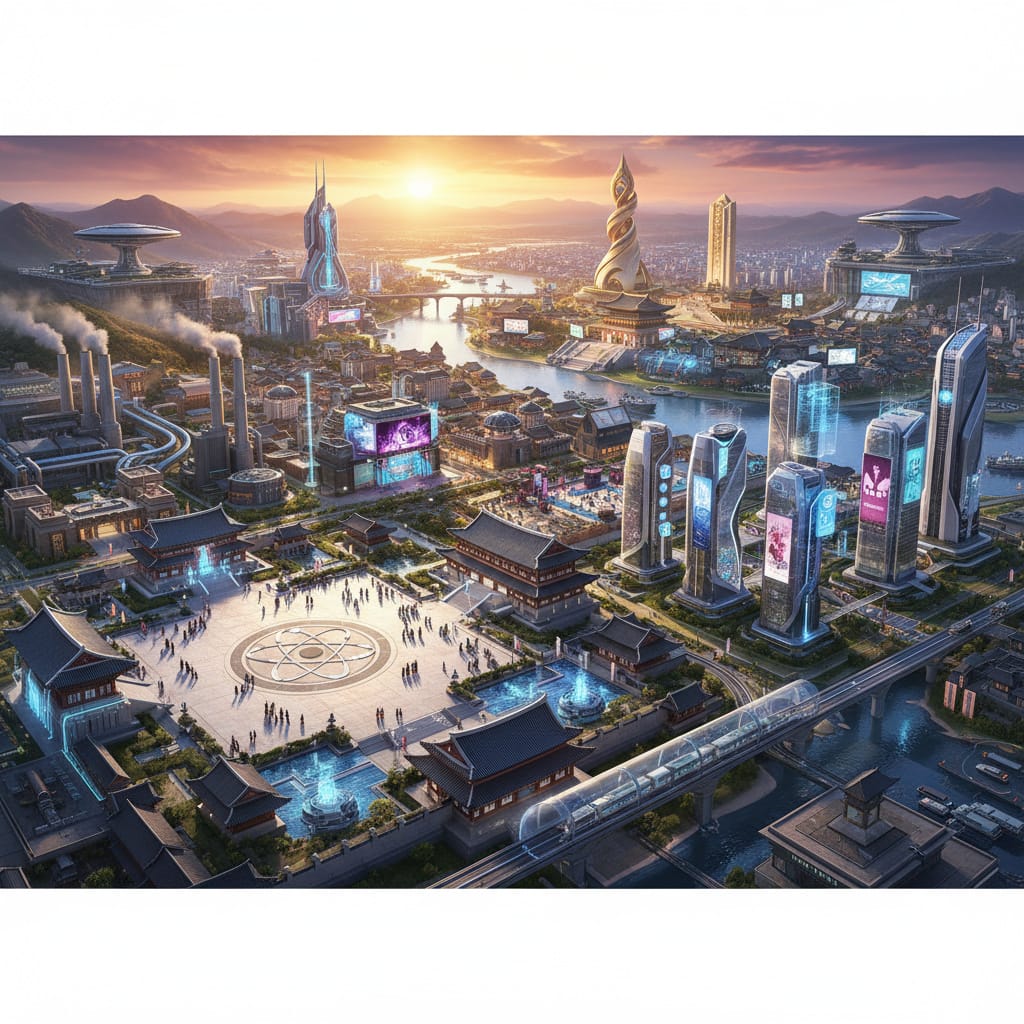
A popular strategy for Korea in Civilization 6 is to isolate the Seowon district to maximize its science output. But what if Seondeok’s science bonus applied to all districts? This hypothetical scenario would fundamentally reshape Korea’s strategic landscape, transforming it from a civilization focused on isolated science generation to a powerhouse of interconnected, high-yield cities. This guide explores the strategic implications of such a change, offering a comprehensive analysis of how to leverage this new potential for a decisive victory.
The Seowon Dilemma: A Paradigm Shift
Under the current rules, Korea’s unique Seowon district, which replaces the Campus, provides a base +4 Science but loses one point for each adjacent district. This encourages players to place Seowons on hills, away from the urban core, surrounded by mines and farms to benefit from the Three Kingdoms ability. This ability grants +1 Science to mines and +1 Food to farms adjacent to a Seowon. While effective, this approach often leads to sprawling, decentralized cities that can be difficult to defend and optimize.
If Seondeok’s science bonus were to apply to all districts, the entire paradigm of Korean city planning would shift. Instead of isolating the Seowon, the new strategy would be to create tightly packed, synergistic district clusters. Every district, from the Commercial Hub to the Industrial Zone, would become a source of scientific advancement, creating a civilization that is not only scientifically dominant but also economically and culturally robust.
Rethinking District Adjacency: The New Science Powerhouses
The core of this new strategy lies in maximizing district adjacency bonuses. With every district contributing to science, the goal is to create a web of interconnected districts that boost each other’s yields. Analysis on forums shows that the Government Plaza and Diplomatic Quarter would become the linchpins of this strategy, as they provide adjacency bonuses to all adjacent districts.
The Government Plaza: The Heart of the Scientific Empire
The Government Plaza, which provides a +1 adjacency bonus to all adjacent districts, would become the central hub of your scientific empire. A popular strategy is to place it in a location where it can be surrounded by at least four other districts, creating a powerful core of high-yield infrastructure.
For example, a common layout would be to place the Government Plaza and then surround it with a Theater Square, a Commercial Hub, an Industrial Zone, and a Holy Site. Each of these districts would receive a +1 science bonus from the Government Plaza, in addition to their own adjacency bonuses. This creates a powerful feedback loop, where each district not only generates its primary yield but also contributes to the overall scientific output of the civilization.

The Diplomatic Quarter: A Surprising Source of Science
The Diplomatic Quarter, often overlooked in science-focused strategies, would become a crucial component of the new Korean empire. Like the Government Plaza, it provides a +1 adjacency bonus to all adjacent districts. This means that placing it next to a cluster of districts would provide a significant boost to their science output.
A popular strategy is to build the Diplomatic Quarter adjacent to the Government Plaza, creating a powerful duo that can supercharge the yields of surrounding districts. For example, a layout with the Government Plaza and Diplomatic Quarter at the center, surrounded by other districts, would provide a +2 science bonus to each of those districts. This would transform even non-science-focused districts into significant contributors to your technological advancement.
Maximizing Yields: A Multi-faceted Approach
With every district contributing to science, the new Korean strategy would be to focus on maximizing all yields, not just science. A strong economy, a vibrant culture, and a powerful military would all contribute to your scientific dominance.
The Economic Engine: Fueling the Scientific Revolution
A strong economy is essential for any successful civilization, and the new Korean empire would be no exception. Commercial Hubs and Harbors, in addition to providing a steady stream of gold, would also become valuable sources of science. According to the player community, placing these districts adjacent to rivers and coastlines, as well as other districts, would maximize their yields.
The gold generated by these districts could then be used to purchase buildings, units, and even Great People, further accelerating your scientific progress. Many professional gamers suggest using the gold to rush-buy key science buildings, such as libraries and universities, in newly founded cities, allowing them to quickly catch up to your more established urban centers.
The Cultural Core: A Renaissance of Science and Art
In the new Korean empire, culture and science would go hand in hand. Theater Squares, in addition to generating culture and attracting Great Works of Art, would also contribute to your scientific output. A popular strategy is to place them adjacent to Wonders and Entertainment Complexes to maximize their adjacency bonuses.

The culture generated by these districts would allow you to unlock powerful policy cards, such as Rationalism and Natural Philosophy, which provide significant boosts to science. This creates a virtuous cycle, where your cultural and scientific achievements reinforce each other, leading to a golden age of innovation and creativity.
The Military-Industrial Complex: Science in Service of a Strong Defense
A strong military is essential for protecting your scientific endeavors from would-be conquerors. Encampments, Industrial Zones, and Aerodromes, in addition to producing military units and boosting production, would also contribute to your scientific advancement. Analysis on forums shows that placing Industrial Zones adjacent to mines, quarries, and aqueducts would maximize their production and science yields.
The production generated by these districts could be used to build a powerful army, which could then be used to defend your borders, deter aggression, and even conquer new territories. This would create a formidable military-industrial complex, where your scientific and military might are mutually reinforcing.
The Role of Governors: Amplifying the Science Bonus
Seondeok’s Hwarang ability, which grants a +3% bonus to science and culture for each promotion a Governor has in a city, would become even more powerful in this new scenario. With every district contributing to science, the percentage-based bonus from Governors would have a much larger impact on your overall scientific output.
Pingala: The Grand Vizier of Science
Pingala, with his Researcher and Grants promotions, would remain the cornerstone of your Governor strategy. A popular strategy is to place him in your capital or your most populous city to maximize his science-boosting abilities. With the new universal science bonus, his impact would be felt across all districts, not just the Seowon.
Magnus: The Industrial Magnate
Magnus, with his Vertical Integration promotion, would become a valuable asset in your industrial heartland. A popular strategy is to place him in a city with a high concentration of Industrial Zones and strategic resources to maximize production and science.
Moksha: The Theocrat of Science
Moksha, with his Divine Architect promotion, would be a powerful force in your holy cities. A popular strategy is to place him in a city with a high concentration of Holy Sites and religious wonders to maximize faith and science.
A New Golden Age for Korea
The hypothetical scenario of Seondeok’s science bonus applying to all districts would transform Korea into a civilization of unparalleled scientific and cultural achievement. By embracing a strategy of interconnected district clusters, maximizing all yields, and leveraging the power of Governors, you could lead Korea into a new golden age of innovation and discovery. This guide has provided a roadmap for this new strategic landscape, but the possibilities are endless. The future of Korea is in your hands.