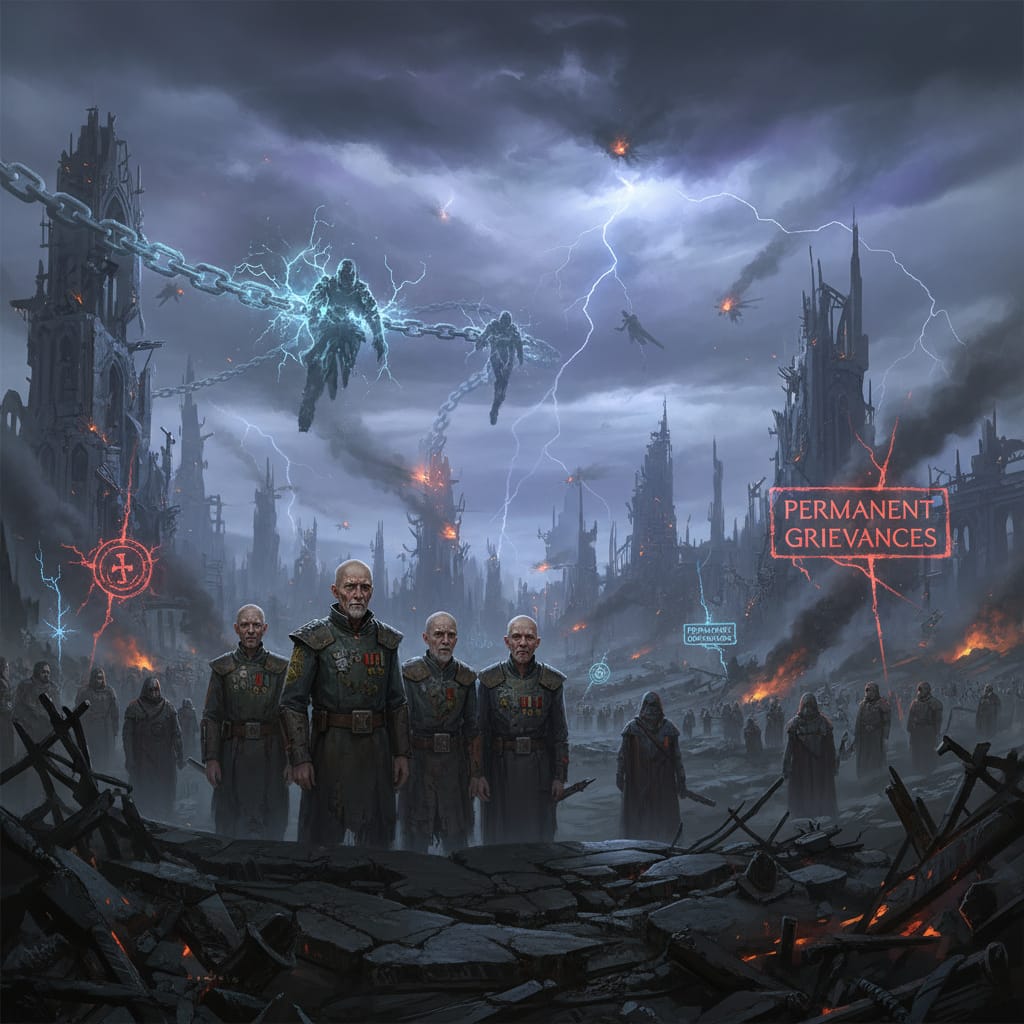
In the intricate dance of diplomacy and warfare that defines Civilization 6, the grievance system acts as a critical regulator, a mechanism that quantifies the transgressions of empires and dictates the tempo of international relations. But what if this fundamental pillar of diplomatic gameplay were to be radically altered? Imagine a world where grievances, once generated, never fade. A world where every declaration of war, every captured city, and every broken promise is etched into the permanent memory of the world’s leaders. This is not merely a tweak to the game’s rules; it is a reimagining of its very soul. The player community and professional gamers alike have often speculated on such a scenario, and the consensus is clear: the world of Civilization 6 would be plunged into a state of perpetual conflict, a world of eternal war.
The Grievance System: A Quick Refresher
Before delving into the abyss of everlasting grievances, it is essential to understand the system as it currently exists. Introduced in the Gathering Storm expansion, the grievance system replaced the more simplistic warmonger penalty of previous iterations. It is a more nuanced and transparent mechanic, designed to create a more dynamic and realistic diplomatic landscape.
Grievances are generated through a variety of hostile actions. Declaring a surprise war, for instance, is a significant transgression that will generate a large number of grievances. Capturing a city, especially one with a high population, will further fuel the fires of resentment. Even seemingly minor actions, such as denouncing another civilization or breaking a promise, contribute to the accumulation of grievances.
The brilliance of the current system lies in its decay mechanism. Over time, as long as two civilizations remain at peace, their grievances against each other will gradually dissipate. This allows for the possibility of redemption, for empires to mend their broken relationships and for the world to move on from past conflicts. It is this very feature that would be absent in our hypothetical scenario, and it is this absence that would have such a profound and far-reaching impact on the game.
The Point of No Return: A World Without Decay
In a world where grievances do not decay, every action has a permanent and irreversible consequence. The early game, in particular, would become a treacherous minefield. A single misstep, a single ill-advised war, could be enough to condemn a civilization to a future of perpetual isolation and conflict.
According to the player community, the early game is often a chaotic and violent affair. Players are jostling for position, competing for limited resources, and often find themselves drawn into conflicts that they would rather avoid. In the current system, these early wars are not necessarily a death sentence. A player can emerge from an early conflict, lick their wounds, and then focus on rebuilding their relationships with the rest of the world.

But in a world of eternal grievances, this would be impossible. The grievances generated in that early war would linger forever, a permanent stain on the player’s diplomatic record. Every other civilization would view them as a warmonger, a pariah, and a threat. Trade deals would be impossible to secure, alliances would be out of the reach, and the player would find themselves in a state of perpetual diplomatic isolation.
The End of Diplomacy: Permanent Pariahs
The diplomatic game in Civilization 6 is a delicate dance of favors, promises, and alliances. It is a game of give and take, of building trust and forging relationships. In a world of eternal grievances, this delicate dance would be replaced by a brutal and unforgiving reality.
Many professional gamers suggest that the key to success in Civilization 6 lies in the ability to manage one’s diplomatic relationships. A player who is able to cultivate strong alliances and maintain a positive standing in the world will have a significant advantage over their rivals. They will be able to secure lucrative trade deals, form powerful military alliances, and ultimately, achieve their victory conditions with greater ease.
But in a world where grievances are permanent, the very concept of diplomacy would be rendered meaningless. Once a civilization has been branded as a warmonger, there is no coming back. They are a permanent pariah, an outcast in the community of nations. No amount of favors, no amount of promises, will ever be enough to wash away the stain of their past transgressions.
War and its Unforgiving Consequences
War is an inevitable part of Civilization 6. It is a tool that can be used to expand one’s empire, to weaken one’s rivals, and to achieve one’s strategic objectives. But in a world of eternal grievances, the decision to go to war would be a far more weighty and consequential one.
Analysis on forums shows that players are often willing to engage in calculated acts of aggression, weighing the potential rewards against the diplomatic costs. They might declare a surprise war to seize a valuable city, or they might launch a preemptive strike to neutralize a growing threat. In the current system, these actions are not without their consequences, but those consequences are manageable.

In a world of eternal grievances, however, the consequences of war would be unforgiving. Every city captured, every unit destroyed, would add to a permanent and ever-growing mountain of grievances. The player would find themselves in a state of perpetual war, not just with their immediate rival, but with the entire world.
A popular strategy is to use a casus belli, a just cause for war, to mitigate the diplomatic penalties of aggression. But even with a casus belli, a war will still generate grievances. And in a world where those grievances are permanent, even a “just” war could be enough to condemn a civilization to a future of perpetual conflict.
The Ripple Effect: How Non-Decaying Grievances Would Reshape Strategy
The introduction of non-decaying grievances would not just be a change to the diplomatic game; it would be a fundamental reshaping of the entire strategic landscape of Civilization 6. Every aspect of the game, from city management to technological research, would be affected by this single, profound change.
The Rise of the Isolationist Strategy
In a world where any interaction with other civilizations is fraught with peril, many players would likely opt for a strategy of isolationism. They would focus on building a small, defensible empire, and they would avoid any and all contact with the outside world. They would not explore, they would not expand, and they would not engage in diplomacy. Their goal would be to simply survive, to weather the storm of eternal war that rages around them.
The Dominance of the Domination Victory
In a world where diplomacy is dead and every civilization is a permanent enemy, the domination victory would become the only viable path to success. Players would have no choice but to embrace a strategy of total war, to conquer their rivals and to unite the world under their iron fist. The game would become a brutal and bloody affair, a relentless slog of conquest and extermination.
The Devaluation of Culture and Science
In a world of eternal war, the pursuit of culture and science would become a luxury that few could afford. Players would be forced to pour all of their resources into their military, to build massive armies and to wage endless wars. The great works of art and literature, the groundbreaking scientific discoveries, would all be sacrificed at the altar of military necessity.
A More Brutal Civilization
The world of Civilization 6, with its intricate web of diplomacy and warfare, is a complex and fascinating place. The grievance system, with its mechanism of decay, is a key part of what makes the game so compelling. It allows for the possibility of redemption, for the mending of broken relationships, and for the world to move on from past conflicts.
A world without decaying grievances would be a far more brutal and unforgiving place. It would be a world of eternal war, where every civilization is a permanent enemy and the only path to victory is through total domination. It would be a world where diplomacy is dead, where culture and science are sacrificed for military might, and where the very soul of the game is lost. While the concept is an interesting thought experiment, it is clear that the grievance system, as it currently exists, is a vital part of what makes Civilization 6 such a masterpiece of strategy gaming.