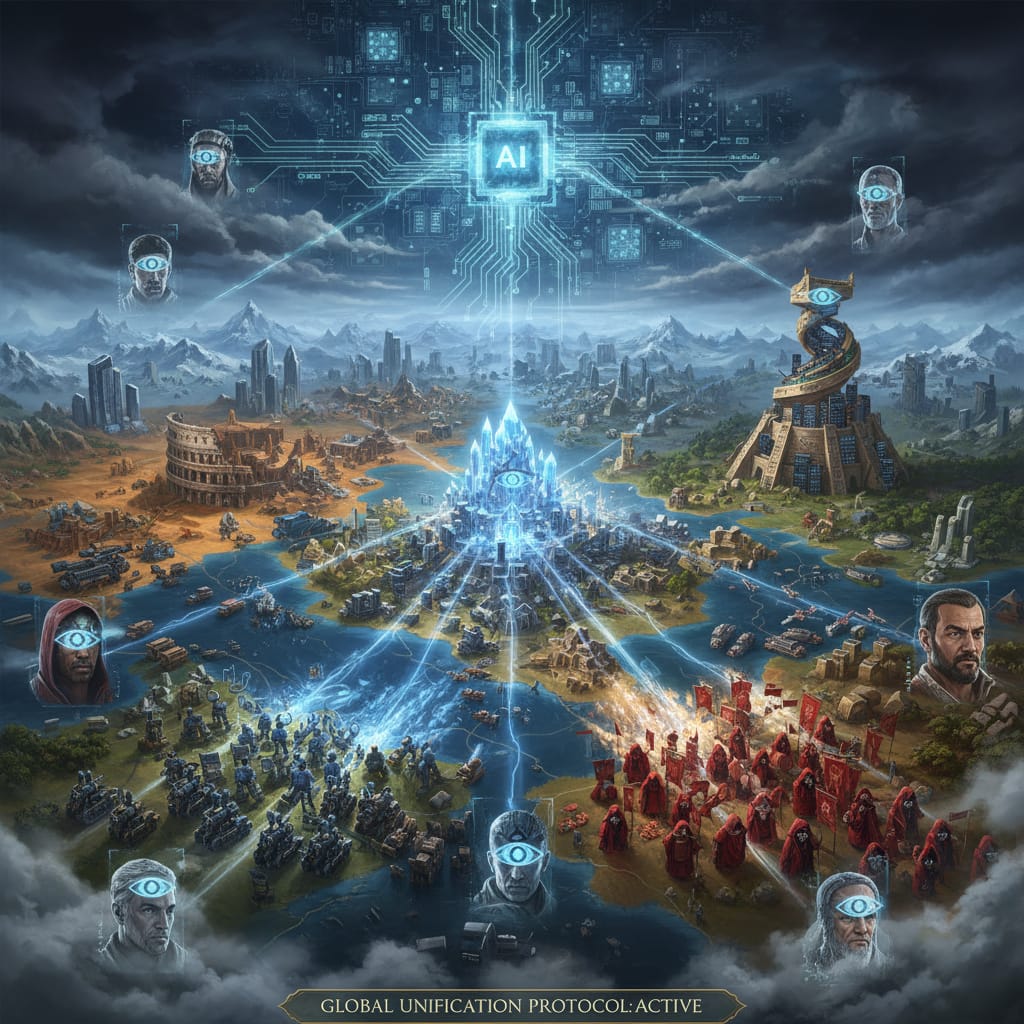
A fascinating thought experiment that often circulates within the Civilization 6 community is what would happen if every leader in the game suddenly adopted the same AI personality. This scenario would dramatically alter the strategic landscape, forcing players to adapt to a world where every opponent shares the same goals, biases, and behaviors. Analysis on forums shows that this would lead to predictable yet chaotic games, where the player’s ability to exploit a single, universal AI tendency would be paramount.
This guide delves into that hypothetical, exploring how the game would transform if a single AI personality governed every civilization. We will analyze several key AI archetypes and the unique challenges and opportunities they would present.
The World of Endless Expansionists
Many professional gamers suggest that a game where every AI leader is an aggressive expansionist would be one of the most challenging scenarios. Imagine a world where every AI embodies the spirit of leaders like Montezuma or early-game Gilgamesh, driven by an insatiable hunger for land.
Early Game Mayhem
In this scenario, the early game would be a brutal free-for-all. The AI, universally programmed to expand, would churn out settlers at an astonishing rate. Expect to see AI cities popping up in every available space, often in strategically questionable locations. The rush for territory would be so intense that early-game diplomacy would be virtually non-existent. Alliances would be fleeting, as every AI would view jejich neighbors as obstacles to their expansion.
A popular strategy in this environment is to adopt a hyper-aggressive early-game military strategy. According to the player community, the key is to strike first and cripple a neighboring AI before they can establish a strong foothold. Churning out a few early military units to capture an AI settler or a newly founded city can create a snowball effect, giving you the space and resources needed to survive the initial land grab.
Mid-Game Power Struggles
As the world fills up, the mid-game would be characterized by constant border friction and frequent wars. With no more empty land to settle, the expansionist AIs would turn on each other, leading to massive, multi-civilization conflicts. The player would find themselves in a world of shifting alliances and betrayals, where a neighbor who was friendly one turn could declare a surprise war the next.

Analysis on forums shows that the most successful players in this scenario are those who can effectively manage a multi-front war. A strong military is a given, but the ability to use diplomacy to turn your enemies against each other would be a game-changer. Paying one AI to declare war on another can create a much-needed distraction, allowing you to focus your forces on a single target.
Late-Game Dominance
The late game in a world of expansionists would likely be a race for a domination victory. The AIs, having been at war for most of the game, would have massive armies and a thirst for conquest. The player would need to have a significant technological and military advantage to stand a chance.
A popular strategy is to focus on a “tall” empire, with a few highly developed cities, and then use your technological superiority to build a modern army that can systematically dismantle the sprawling but less-developed empires of the AI. Airpower and naval dominance would be particularly effective, as the AI, focused on land-based expansion, often neglects these areas.
The Unwavering Wonder-Builders
Now, let’s consider a less overtly aggressive but equally challenging scenario: a world where every AI is a “wonder-builder,” mirroring the personality of leaders like Qin Shi Huang. In this world, the primary goal of every AI would be to construct every possible World Wonder.
The Great Wonder Race
The early game would be a frantic race for the ancient and classical era wonders. The AI, with its production bonuses, would be a formidable competitor. Players would need to be extremely strategic in their choice of wonders, focusing on those that provide the most significant long-term benefits.
According to the player community, a viable strategy is to let the AI build the less critical wonders while you focus on securing those that are essential to your victory condition. For example, if you’re aiming for a science victory, securing the Great Library and Oxford University would be a top priority.

Mid-Game Espionage and Sabotage
As the game progresses, the competition for wonders would intensify. The mid-game would be a hotbed of espionage and sabotage. The AI, desperate to secure the next wonder, would likely resort to using spies to disrupt your production and steal your technology.
Analysis on forums shows that a strong counter-espionage game is essential in this scenario. Building a robust network of spies and using them to protect your key production centers would be critical. It would also be wise to invest in defensive buildings and policies that make it harder for enemy spies to operate in your territory.
Late-Game Cultural Warfare
The late game in a world of wonder-builders would likely be a cultural arms race. The AIs, having accumulated a vast collection of wonders, would be generating a massive amount of tourism. The player would need to have a strong cultural output to avoid being overwhelmed.
A popular strategy is to focus on a “Great Work” strategy, generating as many Great Writers, Artists, and Musicians as possible. Building museums and other cultural buildings would be essential. It would also be wise to use your spies to steal Great Works from the AI, slowing their cultural advance while boosting your own.
The Pious Zealots
A world where every AI is a religious zealot, like Spain’s Philip II, would be a game of intense spiritual warfare. The primary goal of every AI would be to convert the world to their religion, leading to a unique set of challenges and opportunities.
The Race for a Pantheon
The early game would be a race to found a religion. The AI, with its faith-generation bonuses, would be a formidable opponent. Players would need to prioritize faith-generating buildings and policies to secure a Great Prophet.
According to the player community, a strong early-game faith economy is essential. Stonehenge, if you can get it, is a game-changer. Otherwise, focusing on Holy Site districts and the associated buildings is a must.
Mid-Game Theological Combat
The mid-game would be a chaotic scene of theological combat. Apostles and Missionaries would swarm the map, each trying to convert cities to their faith. Expect to see your cities constantly being targeted by enemy religious units.
Analysis on forums shows that a strong defensive religious strategy is key. Stationing Inquisitors in your cities can protect them from being converted. It’s also wise to use your own Apostles to engage in theological combat, weakening the enemy’s religious pressure.
Late-Game Religious Victory or Defeat
The late game in a world of religious zealots would be a race for a religious victory. The AIs would be relentlessly trying to convert every civilization to their faith. The player would either need to win a religious victory themselves or be prepared to fend off a constant barrage of religious pressure.
A popular strategy is to adopt a “heretic” strategy, focusing on a strong military and a different victory condition. By declaring war on the most aggressive religious AIs, you can use your military to destroy their religious units and capture their holy cities, effectively neutralizing their religious threat.
Conclusion
A Civilization 6 game where every leader shares the same AI personality would be a fascinating and challenging experience. The strategic landscape would be dramatically altered, forcing players to adapt to a world of predictable yet relentless opponents. Whether facing a world of endless expansionists, unwavering wonder-builders, or pious zealots, the key to victory would be to understand the universal AI tendency and to develop a counter-strategy that exploits its weaknesses. While this remains a thought experiment, it’s a testament to the depth and complexity of Civilization 6 that such a scenario can spark so much strategic discussion and analysis within the player community.