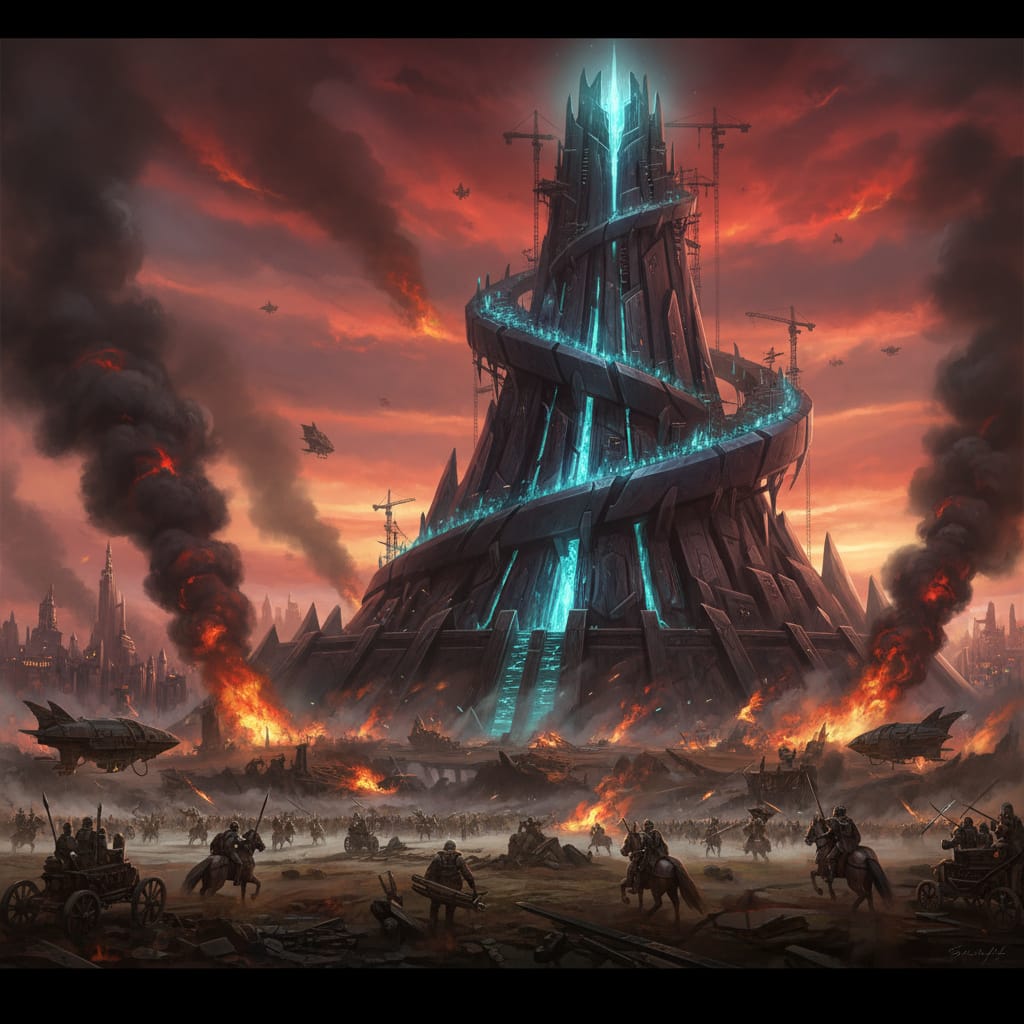
The race to construct a World Wonder in Civilization 6 is often a tense and competitive affair. But what if the stakes were raised to their absolute limit? Imagine a scenario where the completion of a World Wonder was not a moment of national pride, but a catalyst for global conflict, a de facto declaration of war on a global scale. This isn’t a feature in the base game, but a hypothetical scenario that many in the player community have speculated upon. Analysis on forums shows that such a mechanic would fundamentally reshape every aspect of gameplay, from the first turn to the last. This guide will explore the strategic implications of a world where wonders are worth fighting and dying for, offering a comprehensive analysis of how to navigate this high-stakes environment.
The Spark of Conflict: How Wonder Construction Becomes a Declaration of War
In this hypothetical game mode, the completion of any World Wonder would immediately trigger a global “Wonder War.” The builder of the wonder would find themselves at war with every other major civilization in the game. This dramatic shift in international relations would transform wonder construction from a peaceful pursuit of cultural or scientific advancement into a high-risk, high-reward gambit. According to the player community, this would force a complete re-evaluation of the strategic value of each wonder, as their benefits would have to be weighed against the certainty of immediate and widespread conflict.
This “Wonder War” would not be a typical conflict. It would be a global free-for-all, where the wonder-builder is the primary target. Alliances would be shattered, and the diplomatic landscape would be redrawn in an instant. The only way to survive would be to have a robust military, a strong economy, and a clear strategic vision. Many professional gamers suggest that this would make the game far more dynamic and unpredictable, as players would be forced to adapt to a constantly changing geopolitical landscape.
The Early Game Gamble: Wonder Rushing in a High-Stakes World
The early game would become a frantic scramble for strategic advantage. The decision to rush an early wonder would be a monumental gamble. On one hand, securing a powerful early wonder like the Great Bath or Stonehenge could provide a significant long-term advantage. On the other hand, it would also paint a massive target on your back, inviting the wrath of the entire world.
A popular strategy is to focus on wonders that provide a direct military or defensive advantage. The Great Wall, for instance, would become an invaluable asset, providing a crucial defensive buffer against the inevitable invasions. Similarly, wonders that boost production, like the Pyramids, would be highly sought after, as they would allow for the rapid training of military units.
However, the opportunity cost of rushing a wonder would be immense. The production and resources poured into a wonder could have been used to build settlers, expand your empire, and train a standing army. Therefore, the decision to build an early wonder would have to be carefully considered, based on your starting location, your chosen civilization, and your overall strategic goals.

Mid-Game Machinations: Diplomacy and Deception in the Wonder Wars
The mid-game would be characterized by a complex web of diplomacy, deception, and proxy wars. While the “Wonder War” would create a state of open conflict, it would also create opportunities for savvy players to manipulate the international situation to their advantage.
Analysis on forums shows that players would likely form temporary, informal alliances to take down a common enemy. For example, if one civilization is running away with the game, other civilizations might tacitly agree to focus their military efforts on the frontrunner, even if they are technically at war with each other. This would create a delicate balancing act, where players would have to constantly assess the shifting loyalties and priorities of their rivals.
Espionage would also play a crucial role in this high-stakes environment. Spies could be used to sabotage wonder construction, incite rebellions in enemy cities, and steal valuable technologies. A well-placed spy could be the difference between victory and defeat in a “Wonder War.”
The Late-Game Arms Race: Wonders as Weapons of Mass Disruption
In the late game, the “Wonder War” would escalate into a full-blown arms race. The wonders available in this era, such as the Eiffel Tower, Broadway, and the Cristo Redentor, offer powerful cultural and diplomatic bonuses. In a world where wonder construction triggers a world war, these wonders would become weapons of mass disruption, capable of destabilizing the entire global order.
A popular strategy is to use late-game wonders as a “wonder bomb.” For example, a player who is lagging behind in the science race could build the Eiffel Tower to trigger a world war, hoping to disrupt the progress of the more technologically advanced civilizations. This would be a desperate gambit, but it could be the only way to snatch victory from the jaws of defeat.
The late game would also see the rise of “wonder sniping,” where players would intentionally wait until a wonder is almost complete before declaring war and attempting to capture the city where it is being built. This would be a high-risk, high-reward strategy, but the payoff could be immense.

Choosing Your Arsenal: A Strategic Analysis of Wartime Wonders
In a world where wonders trigger wars, not all wonders are created equal. The strategic value of each wonder would have to be re-evaluated based on its ability to help you survive and thrive in a state of perpetual conflict.
Top-Tier Wartime Wonders:
- The Great Wall: The ultimate defensive wonder, providing a significant combat bonus to units fighting in your territory.
- The Terracotta Army: A massive boost to your military strength, providing a free army of powerful units.
- Alhambra: A versatile wonder that provides a significant boost to your military, as well as a free military policy slot.
- The Red Fort: A powerful defensive wonder that provides a significant combat bonus to units fighting in your territory, as well as a free defensive building in all of your cities.
Situational Wartime Wonders:
- The Pyramids: A powerful production wonder that can help you churn out military units at an alarming rate.
- The Colosseum: A useful wonder for maintaining happiness and loyalty in your empire, which can be a major challenge during a “Wonder War.”
- The Forbidden City: A powerful diplomatic wonder that can help you maintain control of the World Congress, even when you are at war with everyone.
The Architect’s Gambit: Strategies for Surviving and Thriving in a Wonder-Fueled War
Surviving and thriving in a world where wonders trigger wars would require a unique set of skills and strategies. Here are some key principles to keep in mind:
- Military First, Always: In this high-stakes environment, a strong military is not an option, it’s a necessity. You should always have a standing army ready to defend your borders and project your power abroad.
- Production is King: The ability to produce units and buildings quickly is essential for success in a “Wonder War.” You should prioritize production in your cities and use every available bonus to boost your output.
- Diplomacy is a Weapon: Even in a world of perpetual conflict, diplomacy can be a powerful weapon. You can use your diplomatic influence to turn your enemies against each other, form temporary alliances, and manipulate the World Congress to your advantage.
- Timing is Everything: The decision of when to build a wonder is just as important as the decision of which wonder to build. You should carefully consider the geopolitical situation and your own military strength before committing to a wonder.
A New Era of Civilization
The introduction of a “Wonder War” mechanic would transform Civilization 6 into a far more dynamic, challenging, and ruthless game. It would force players to think more strategically about every aspect of the game, from city placement to wonder selection. While this hypothetical scenario may never be an official part of the game, it serves as a fascinating thought experiment that highlights the intricate interplay between culture, conflict, and diplomacy in the world of Civilization. The player community’s analysis suggests that such a feature would be a welcome addition for those seeking a more challenging and unpredictable gameplay experience, a true test of a player’s ability to lead a civilization through the crucible of a world at war.