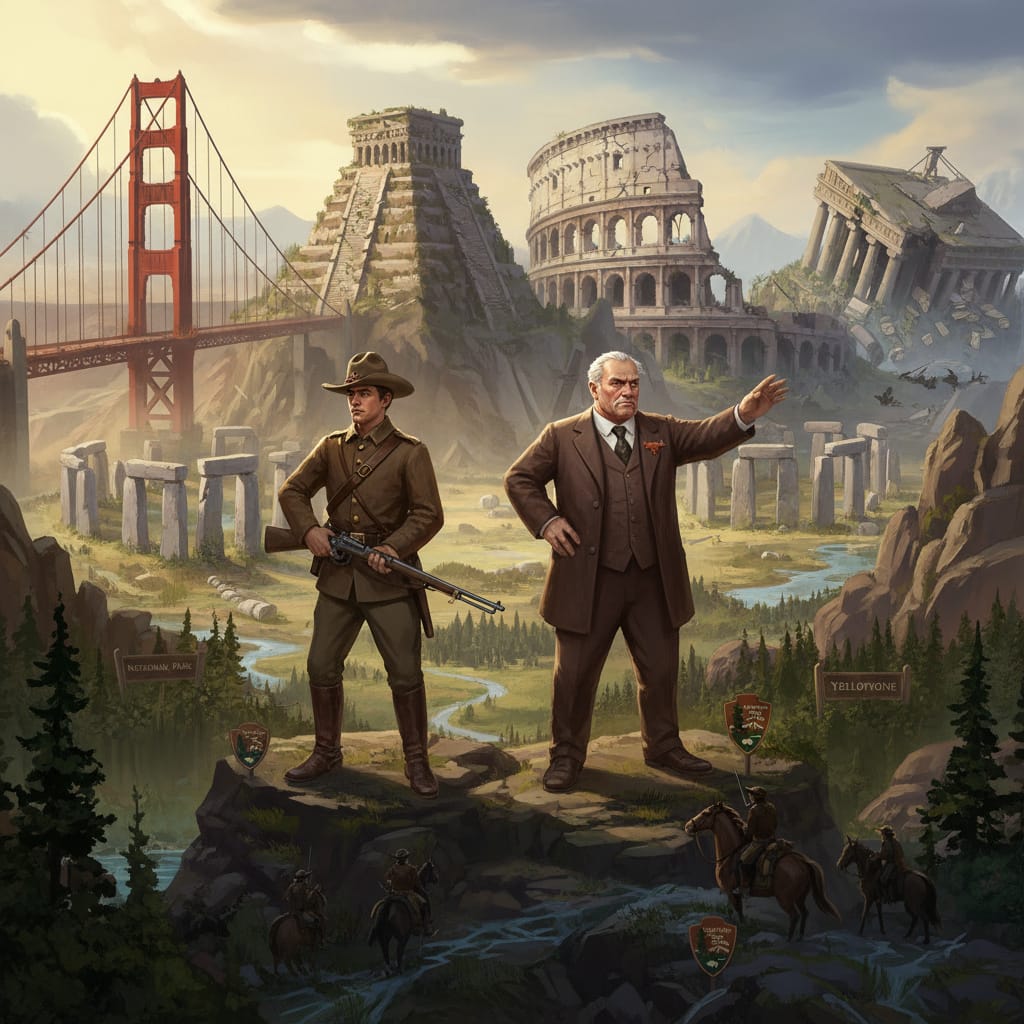
In the grand strategy of Civilization 6, few leaders are as intertwined with the landscape as Teddy Roosevelt. Whether leading the charge as the Rough Rider or cultivating a pristine wilderness as the Bull Moose, his unique abilities shape a distinct approach to victory. However, the allure of wonder construction can often be a siren’s call, luring even the most seasoned players into production traps that offer minimal synergy with Teddy’s strengths. Analysis on forums and among top players reveals a consensus: several highly-coveted wonders are, in fact, significantly overrated when playing as America under Roosevelt’s leadership.
This guide delves into the most overrated wonders for Teddy Roosevelt, providing a critical analysis of why they often represent a misallocation of resources. We will explore the strategic opportunity costs and offer superior alternatives that align more effectively with his powerful cultural and military advantages. Understanding which wonders to avoid is just as crucial as knowing which to build, and this analysis will equip you with the strategic foresight to lead America to a decisive victory.
Golden Gate Bridge: A Bridge to Nowhere
The Golden Gate Bridge, with its promise of increased tourism and amenities, often appears as a tempting late-game wonder for a culture-focused civilization. However, for Teddy Roosevelt, particularly his Bull Moose persona, this wonder is a classic example of an overrated investment. The production cost is immense, and its primary benefits are surprisingly lackluster when examined through the lens of Teddy’s unique abilities.
According to the player community, the Golden Gate Bridge’s core function is to provide a significant boost to the appeal of the tiles it occupies, along with a tourism bonus from National Parks in the city. While this may seem synergistic with Bull Moose Teddy’s focus on appeal, the reality is that by the time the Golden Gate Bridge becomes available, a proficient Teddy player will have already cultivated vast swaths of breathtaking terrain. The marginal increase in appeal from the bridge is often negligible compared to the widespread appeal generated by well-placed forests, mountains, and National Parks.
Furthermore, the amenity bonus is often superfluous. A well-managed empire with a robust network of National Parks will already be generating substantial amenities. The production that would be poured into the Golden Gate Bridge is almost always better spent on developing more National Parks, planting more forests, or acquiring more land to create even more breathtaking tiles. A popular strategy is to focus on the Eiffel Tower, a wonder that provides a global +2 appeal bonus to all tiles in your empire, a far more impactful and efficient use of production for a Bull Moose Teddy player.
Etemenanki: The Marshy Mirage
Etemenanki, a wonder that provides science and production from marsh tiles, is frequently cited as one of the most overrated wonders in the game, and this holds particularly true for Teddy Roosevelt. The allure of a powerful early-game science boost can be strong, but the situational nature of this wonder makes it a risky and often fruitless endeavor.
Analysis on forums shows that the effectiveness of Etemenanki is entirely dependent on having a starting location with a significant number of marsh tiles. For Teddy Roosevelt, whose starting bias is towards mountains and forests, a marsh-heavy start is exceptionally rare. Chasing after Etemenanki in a suboptimal location is a recipe for disaster, diverting precious early-game production away from settlers, military units, and the foundational districts that are crucial for establishing a strong empire.
Many professional gamers suggest that even in the rare event of a marshy start, the opportunity cost of building Etemenanki is still too high. The AI prioritizes this wonder heavily, making it a competitive and often unwinnable race on higher difficulties. The production invested in a failed attempt to build Etemenanki is a complete loss, setting you back significantly in the early game. A more reliable strategy for Teddy is to leverage his inherent science bonus from breathtaking tiles, focusing on settling near mountains and natural wonders to maximize his unique abilities.
The Colosseum: A Spectacle of Misplaced Priorities
The Colosseum, with its promise of a massive boost to culture and amenities, is another wonder that is often overrated for Teddy Roosevelt. While the immediate benefits can be tempting, the strategic trade-offs involved in its construction often outweigh the rewards, particularly for a player who is focused on leveraging Teddy’s unique strengths.
The primary issue with the Colosseum is its stringent placement requirements. It must be built on a flat tile adjacent to an Entertainment Complex. This often forces players to make suboptimal city planning decisions, potentially sacrificing more valuable adjacency bonuses for other districts. For Bull Moose Teddy, who thrives on the appeal of tiles, the placement of an Entertainment Complex and the Colosseum can be particularly problematic, as they can negatively impact the appeal of surrounding tiles.
Furthermore, the culture and amenity bonus, while significant, can be achieved through other, more flexible means. A well-developed network of Theater Squares and a diverse collection of luxury resources can provide a comparable level of culture and amenities without the restrictive placement requirements and high production cost of the Colosseum. A popular strategy is to focus on building a strong foundation of districts and improvements that synergize with Teddy’s abilities, rather than chasing after a single, costly wonder.
Stonehenge: A Detour from the Path to Victory
Stonehenge, the iconic wonder that provides a free Great Prophet and a significant boost to early-game faith, is almost universally considered a poor choice for Teddy Roosevelt. While a strong religion can be a powerful tool, it is not a natural fit for Teddy’s primary victory conditions, and the investment in Stonehenge represents a significant detour from a more optimal strategic path.

According to the player community, the primary issue with Stonehenge is its immense opportunity cost. The production required to build this wonder in the ancient era is substantial, and it comes at a time when every hammer of production is critical. For a Rough Rider Teddy player, this production is far better spent on building a formidable early-game military to secure an early advantage. For a Bull Moose Teddy player, the focus should be on exploration, expansion, and the early development of cultural and scientific infrastructure.
Moreover, the AI’s obsession with Stonehenge makes it an incredibly difficult wonder to secure on higher difficulties. The race to build Stonehenge is often a fool’s errand, and the production invested in a failed attempt is a devastating setback. A more effective strategy for Teddy is to focus on a pantheon that complements his strengths, such as Earth Goddess, which provides faith from breathtaking tiles, and to generate faith through more organic means, such as Holy Site districts in cities with strong adjacency bonuses.
The Great Library: A Chapter Best Left Unread
The Great Library, with its promise of a massive boost to science and a free technology, is another wonder that often falls into the overrated category for Teddy Roosevelt. While the immediate benefits can seem powerful, the long-term strategic implications of building this wonder often make it a suboptimal choice.
Analysis on forums shows that the Great Library’s primary benefit, the free technology, is often less impactful than it appears. The technology is chosen randomly from the era after the wonder is completed, and it may not align with your strategic priorities. Furthermore, the science boost, while significant, can be replicated and surpassed by a well-developed network of Campuses with strong adjacency bonuses.
For Teddy Roosevelt, who already has a powerful source of science from breathtaking tiles, the Great Library is often a redundant and unnecessary investment. The production that would be poured into this wonder is far better spent on developing more cities, building more Campuses, and leveraging his unique abilities to their fullest potential. A popular strategy is to focus on a balanced approach to science and culture, using Teddy’s inherent strengths to create a well-rounded and powerful empire.
In conclusion, while the allure of building a world wonder is a powerful motivator in Civilization 6, a discerning leader must weigh the costs and benefits of each one in the context of their unique civilization and leader abilities. For Teddy Roosevelt, a leader whose strengths are so closely tied to the natural beauty and military might of his nation, the most effective path to victory often lies not in the construction of grand monuments, but in the careful cultivation of the land and the strategic application of his inherent advantages. By avoiding these overrated wonders and focusing on a strategy that aligns with his unique strengths, you can lead America to a golden age of prosperity and power.