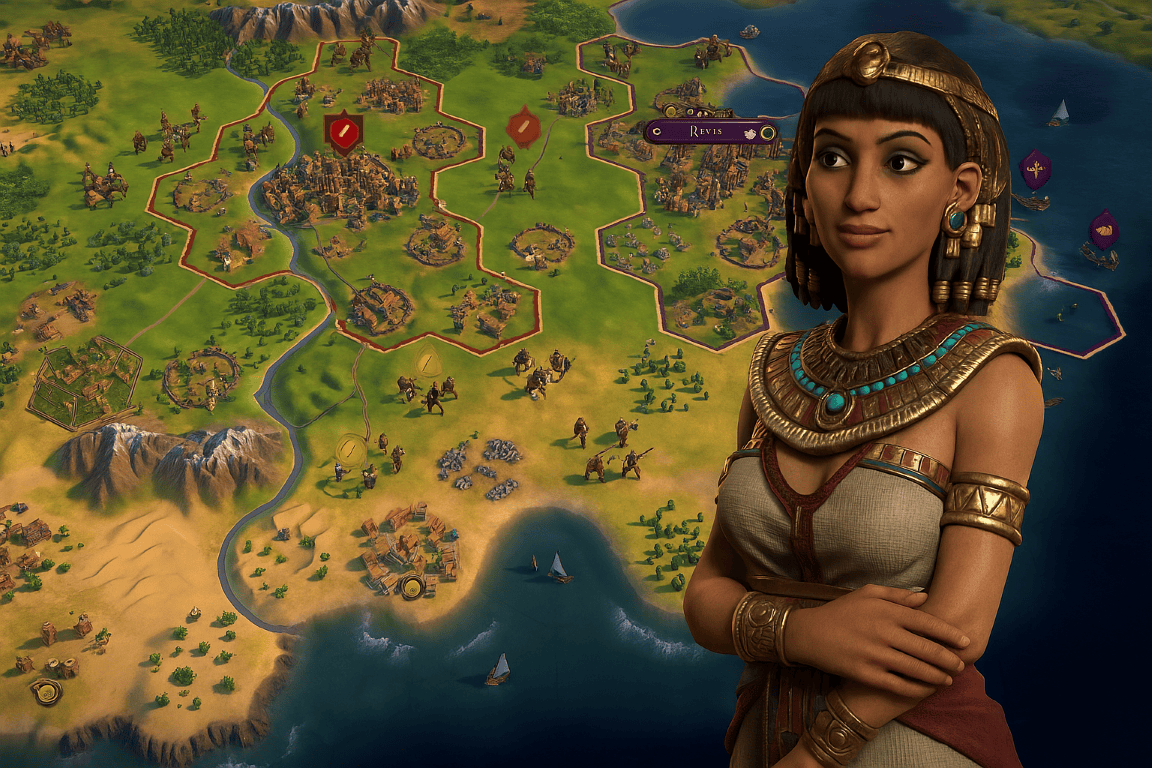
In Civilization 6 multiplayer, victory isn’t a matter of chance. It’s a symphony of calculated decisions, long-term planning, and the subtle art of deception. The best players are not just masters of their own empire; they are experts at reading their opponents’ intentions. Being able to figure out an adversary’s grand strategy long before it comes to fruition is the mark of a truly elite player. I’m going to share a definitive, in-depth framework for reading your opponent’s strategy, from the pre-game lobby to the final, game-winning push. We’ll dissect the tells, analyze the indicators, and I’ll give you the knowledge to not only anticipate your opponent’s every move but to counter it with decisive precision.
This isn’t for the faint of heart. We’re going to dive deep into the nuanced mechanics of Civilization 6, exploring the subtle cues that betray a player’s true ambitions. Prepare to elevate your gameplay from reactive to proactive, from a participant to a predator who sees the entire board with crystal clarity.
Deconstructing the Pre-Game Lobby: The First Clues
The battle for information begins before the first turn. The pre-game lobby is a goldmine of intelligence, offering the first glimpses into your opponents’ potential strategies. Don’t underestimate the power of this initial phase.
Analyzing Civilization and Leader Choices
A player’s choice of civilization and leader is the most obvious declaration of their potential path to victory. While experienced players can pivot and adapt, their initial selection is a strong indicator of their comfort zone and intended playstyle.
- Domination-Focused Civilizations: The presence of leaders like Alexander the Great (Macedon), Genghis Khan (Mongolia), or Shaka (Zulu) should immediately put you on high alert. Their unique abilities are heavily skewed towards military conquest. Expect early aggression, a focus on cavalry or unique combat units, and a beeline for technologies and civics that unlock powerful military advantages. For instance, a player who chooses Gran Colombia (Simón Bolívar) is telegraphing an intent to leverage the Comandante General and the Llanero’s incredible movement to launch swift, devastating attacks.
- Science-Oriented Civilizations: When you see Seondeok (Korea), Scotland (Robert the Bruce), or Australia (John Curtin), you should anticipate a race for the stars. These civilizations possess powerful bonuses to science generation. A Korean player will almost certainly beeline for their unique Seowon district, while a Scottish player will look to maintain high happiness to maximize their scientific and production output. Their early game may appear passive, focusing on growth and infrastructure, but don’t be fooled. Their goal is to build an insurmountable technological lead.
- Cultural Powerhouses: The selection of leaders like Pericles (Greece), Kristina (Sweden), or Eleanor of Aquitaine (England/France) signals a clear intent to pursue a Culture Victory. These civilizations excel at generating Tourism, Great Works, and exerting cultural pressure. An Eleanor player, for example, will likely focus on creating Great Works of Writing, Art, and Music to flip nearby cities without firing a single shot. Expect them to prioritize Theater Squares, build culture-focused wonders, and engage in extensive trade to spread their cultural influence.
- Religious Zealots: The appearance of Saladin (Arabia), Peter the Great (Russia), or Jadwiga (Poland) in the lobby is a strong indication of a religious game. These civilizations have significant advantages in faith generation and religious combat. A Russian player, with their Lavra district, can secure an early Great Prophet with alarming speed. Be prepared for a flood of Missionaries and Apostles as they attempt to convert your cities and those of your neighbors.
- Flexible and Economic Civilizations: Leaders like Trajan (Rome), Frederick Barbarossa (Germany), or Mansa Musa (Mali) offer more flexibility but still provide clues. A Roman player, with their free Monuments and roads, is poised for rapid expansion and a strong early game, which can be leveraged for any victory condition. A German player’s extra district slot and powerful Hanseatic League point towards a production-heavy mid-game, which can fuel either a scientific or military push. Mansa Musa is a clear indicator of a gold-focused strategy, likely aiming for a Diplomatic Victory or simply buying their way to supremacy.
What to do with this info: Take note of each opponent’s civilization. This initial assessment will form the foundation of your strategic planning. If you are surrounded by aggressive civilizations, prioritize early defense. If a powerful science civilization is your neighbor, consider an early rush to disrupt their plans before they can achieve a technological advantage.
The First 50 Turns: Unmasking Early Game Intentions
The opening turns of a Civilization 6 multiplayer match are a delicate dance of exploration, expansion, and subtle posturing. If you’re paying attention, you can glean a wealth of information from an opponent’s initial actions.

Scouting: Your Eyes and Ears on the World
Effective scouting is non-negotiable. Your first few units should be dedicated to exploring the map and, more importantly, finding your opponents. When you locate an opponent’s capital, don’t just glance at their city and move on. Linger. Observe.
- Initial Production: What is the first unit your opponent produces? A Scout is standard, but a second Scout suggests a strong emphasis on exploration and finding tribal villages and city-states. A Warrior followed by another Warrior or a Slinger is a classic sign of impending aggression. They are building an early military force, likely to rush a neighbor or clear out barbarians for a swift expansion. A Builder as the first or second production choice indicates a focus on early infrastructure and tile improvement, often a hallmark of a player planning for a longer, more economic game. A Monument rush is a clear sign of a player prioritizing culture and civic progression, a common opening for a Culture Victory.
- Tile Improvements: What tiles is your opponent improving first? Are they chopping down forests and rainforests for a quick production boost to rush a wonder or a settler? Are they improving luxury resources to boost their amenities and keep their cities growing? The choice of improved tiles reveals their immediate priorities. A player improving a tile with high food and production is likely focused on growing their capital quickly. A player who immediately improves a quarry on a stone resource might be planning to build the Pyramids.
- Pantheon Beliefs: A player’s choice of Pantheon is a massive tell. A Pantheon like Religious Settlements (free Settler) or God of the Forge (25% production towards ancient and classical military units) is a clear indicator of an aggressive expansionist or militaristic strategy. Conversely, a Pantheon such as Divine Spark (+1 Great Person points from Holy Sites, Campuses, and Theater Squares) or Goddess of Festivals (+1 Culture from Plantations) suggests a long-term focus on Great People and culture. A player who chooses a faith-generating Pantheon like Desert Folklore or Dance of the Aurora is almost certainly planning a religious game.
- Early Settling Patterns: Where does your opponent place their second and third cities? Are they forward-settling towards you, aggressively claiming land and resources? This is a classic domination tactic designed to hem you in and prepare for a future invasion. Are they settling in locations with high adjacency bonuses for specific districts, such as near mountains for a Campus or along a river for a Commercial Hub? This demonstrates a more calculated, long-term approach geared towards a specific victory condition.
What to do with this info: Consolidate your scouting information. If you see an opponent with a domination-focused civilization building multiple military units and forward-settling you, you must immediately pivot to a defensive posture. Build walls, produce anti-cavalry units if they are a cavalry-focused civ, and consider seeking an alliance with another player to counter the threat. If you see a player in a secluded corner of the map building tall and focusing on science, you have a window of opportunity to either rush them or out-expand them before their technological superiority becomes an issue.
Mid-Game Maneuvers: Identifying the Path to Victory
The mid-game is where an opponent’s grand strategy really begins to come together. Their district placement, wonder construction, and military posture will provide undeniable evidence of their intended victory condition.
District Development: The Blueprint of an Empire
A city’s districts are the engine of a civilization’s progress. By observing which districts your opponents prioritize, you can accurately predict their long-term goals.
- The Science Victory Tell: A player pursuing a Science Victory will have a Campus in almost every city. Look for high-adjacency Campuses nestled amongst mountains or geothermal fissures. They will also prioritize building libraries and universities. As they progress through the tech tree, you will see them build Industrial Zones to fuel the production of space race projects and Spaceports in their highest-production cities. Their government will likely be a Republic or Merchant Republic for the economic bonuses, later transitioning to Communism for the production boost.
- The Culture Victory Tell: A Culture Victory aspirant will have a plethora of Theater Squares. These will be filled with amphitheaters, museums, and broadcast centers. They will be actively trading with every civilization to maximize their tourism modifier. Look for the construction of wonders that provide tourism or slots for Great Works, such as the Bolshoi Theatre, Broadway, or the Eiffel Tower. They will often have a strong faith economy as well, using it to patronize Great People and purchase Naturalists to create National Parks. Their government will likely be Classical Republic or Monarchy for the culture and influence points.
- The Domination Victory Tell: A player committed to a Domination Victory will have Encampments in their border cities. These will be used to generate Great Generals and produce units more quickly. They will also have a significant number of Industrial Zones to churn out their military machine. Look for the construction of military-focused wonders like the Terracotta Army or the Alhambra. Their government will almost always be Oligarchy or Fascism for the combat bonuses. They will also likely have a high number of spies, which they will use to sabotage your defenses and steal your technologies.
- The Religious Victory Tell: The hallmark of a Religious Victory player is the presence of Holy Sites in all of their cities. They will have built shrines and temples and will be generating a massive amount of faith per turn. You will see a constant stream of Apostles and Missionaries pouring out of their cities, seeking to convert the world. They may also build wonders like the Mahabodhi Temple or Hagia Sophia to enhance their religious units. Their government will likely be Theocracy for the faith discounts and combat bonuses for religious units.
- The Diplomatic Victory Tell: A player aiming for a Diplomatic Victory will focus on generating Diplomatic Favor. They will be the suzerain of many city-states and will actively participate in every scored competition. They will build wonders like the Potala Palace and the Statue of Liberty. They will also have a strong gold economy to aid city-states and win favor in the World Congress. Their government will often be one that provides influence points, such as Monarchy or Democracy.
What to do with this info: By the mid-game, you should have a clear picture of each opponent’s primary victory condition. This is the time to formulate your counter-strategy. If a player is running away with a Science Victory, you need to either launch a military intervention to disrupt their spaceports or pivot to a different victory condition that you can achieve faster. If a Culture Victory player is nearing their goal, you can declare war to stop the flow of their tourists to your civilization, or you can try to win a different victory type before they do.
Wonder Construction: Monuments to Ambition
Wonders are not just impressive feats of engineering; they are strategic investments that reveal a player’s priorities.

- Early Game Wonders: The Great Bath suggests a player concerned with early faith and protection from flooding. The Pyramids are a clear sign of a player who wants to improve their tiles quickly with extra builder charges. Stonehenge is an obvious, if often risky, attempt at an early religion. The Oracle is a powerful wonder for a player focused on generating Great People, a strong indicator of a potential Science or Culture Victory.
- Mid-Game Wonders: Wonders like the Colosseum and the Hanging Gardens point to a player focused on growth and amenities. The Great Lighthouse and the Colossus are tells for a player with a strong naval presence and a focus on trade. A player building the Forbidden City is clearly aiming for an extra wildcard policy slot, a versatile bonus that can benefit any victory condition.
- Late-Game Wonders: Late-game wonders are often the final pieces of a player’s victory puzzle. The Eiffel Tower is a must-have for a Culture Victory. The Ruhr Valley is a massive production boost for a player aiming for a Science or Domination Victory. The Statue of Liberty is a key wonder for a Diplomatic Victory.
What to do with this info: Keep a close eye on the wonders being built. If an opponent starts constructing a wonder that is critical to your own victory plan, you may need to consider a preemptive strike to capture the city building it. Conversely, if you see an opponent investing heavily in wonders that are not directly related to a victory condition, they may be neglecting their military or scientific progress, creating a window of opportunity for you.
Late-Game Intelligence: Predicting the Final Push
The late game is a tense and often chaotic race to the finish line. Being able to recognize the signs of an imminent victory attempt is crucial for survival and ultimate triumph.
The Telltale Signs of an Imminent Victory
- Science Victory: The most obvious sign is the construction of Spaceports. You will also see them launching the various space race projects. A surge in their science output and the use of spies to steal your tech boosts are also clear indicators.
- Culture Victory: A sudden spike in an opponent’s tourism is the primary indicator. This is often accompanied by the use of the Rock Band unit to generate massive amounts of tourism in a short period. They will also be pushing for cultural heritage and environmentalism civics to further boost their tourism.
- Domination Victory: The massing of a large, technologically advanced army on your borders is the most unsubtle of tells. Look for the appearance of giant death robots, stealth bombers, and nuclear submarines. They will likely be using the “Information Warfare” casus belli to minimize warmonger penalties.
- Religious Victory: A final, massive wave of Apostles and Inquisitors will be sent to convert the remaining civilizations. They will likely have the “Debater” and “Translator” promotions on their Apostles to make them more effective in theological combat.
- Diplomatic Victory: A player nearing a Diplomatic Victory will be aggressively competing in all scored competitions and will be proposing resolutions in the World Congress that grant them diplomatic victory points. They will also likely be using their gold and diplomatic favor to win over the remaining city-states.
What to do with this info: When you see these late-game tells, you must act immediately. If a player is about to launch their spaceship, you have a very short window to either destroy their spaceports or win the game through another victory condition. If a cultural player is about to win, you may need to declare a surprise war to stop the flow of rock bands into your territory. The late game is no time for passivity; it is a time for decisive and often desperate action.
Counter-Intelligence and Deception: Masking Your Own Strategy
Just as you are reading your opponents, they are reading you. To gain a true advantage, you must learn to mask your own intentions and feed your opponents false information.
- The Diversionary Tactic: Build districts and wonders that are not directly related to your primary victory condition. If you are going for a Science Victory, build a few Theater Squares to make your opponents think you are pursuing a Culture Victory. This can cause them to misallocate their resources in an attempt to counter a threat that doesn’t exist.
- The Feigned Weakness: Deliberately keep a smaller military than you are capable of fielding. This can lull your opponents into a false sense of security, making them more vulnerable to a surprise attack.
- The Bait and Switch: Start the game as if you are pursuing one victory condition, only to pivot to another in the mid or late game. For example, you could start with a strong religious game, generating a lot of faith, and then use that faith to purchase units for a Domination Victory.
- The Silent Partner: In team games, coordinate with your allies to create a deceptive grand strategy. One player can appear to be the primary aggressor while the other quietly builds towards a Science or Culture Victory.
What to do with this info: Deception is a powerful weapon in the hands of a skilled player. By understanding how to read your opponents, you also learn how to manipulate the information they are receiving about you. Be unpredictable. Be adaptable. And never let your opponents know your true intentions until it is too late for them to do anything about it.
In the complex and ever-shifting landscape of Civilization 6 multiplayer, information is power. By mastering the art of reading your opponent’s strategy, you transform from a reactive player to a proactive one. You will see the storm coming long before the first drop of rain, and you will be prepared to weather it, and even turn it to your advantage. Every choice your opponent makes, from their civilization selection to their district placement, is a piece of a larger puzzle. It is up to you to assemble those pieces and reveal the picture of their grand design. Then, and only then, can you truly claim to be a master of Civilization.