
In the electrifying world of real-time strategy (RTS) games, the term “APM,” or Actions Per Minute, is often thrown around as a definitive measure of skill. You’ve seen the pros, their hands a blur across the keyboard, their APM counters ticking into the stratosphere. It’s easy to fall into the trap of believing that a higher APM is the ultimate goal, the key that unlocks the highest echelons of play. But this is a dangerous misconception. Raw, unrefined speed is just noise; it’s the chaotic flailing of a novice, not the precise, deadly dance of a master.
True mastery isn’t about how fast your fingers can move, but how effectively you can translate your strategic intentions into in-game results. It’s about the quality of your actions, not just the quantity. This guide will deconstruct the myth of APM. We won’t just teach you how to click faster. We will embark on a journey to transform your actions from frantic spasms into a symphony of strategic intent. We will teach you how to manage your focus, streamline your mechanics, and ultimately, make every single action count. This is the path to transcending the raw number and achieving truly effective APM—the kind that wins championships.
Deconstructing APM: Beyond the Raw Number
Before you can optimize your APM, you must understand what it truly represents. Viewing it as a simple speed metric is the first and most common mistake. It’s a nuanced indicator of player activity, and dissecting it reveals the difference between wasted effort and decisive action.
Raw APM vs. Effective APM (EAPM)
Imagine two factory workers. The first is in constant motion, rushing around, picking things up and putting them down, sweating and looking incredibly busy. His raw activity is off the charts. The second worker is calm, his movements are deliberate. He completes his tasks with an economy of motion. At the end of the day, the second worker’s output is double that of the first. This is the core difference between Raw APM and Effective APM (EAPM).
- Raw APM is every single input you register. This includes selecting the same unit group ten times in a row, clicking frantically on the same spot to move a unit, and any other redundant or pointless action. It’s pure, unfiltered finger speed. While a certain baseline is necessary to play the game, excessively high Raw APM is often a sign of panic or inefficiency, commonly referred to as “spamming.”
- Effective APM (EAPM), on the other hand, is the measure of your meaningful actions. These are the clicks and key presses that have a direct, tangible impact on the game state. Producing a worker, issuing a command to a new unit, casting a spell, or setting a building rally point are all effective actions. EAPM is the metric of a strategic mind and efficient hands working in concert.
Your goal is not to inflate your Raw APM. Your goal is to increase your EAPM while keeping your Raw APM as close to it as possible. This signifies that you are not wasting energy on superfluous actions. A player with 200 EAPM is infinitely more formidable than a player with 400 Raw APM and only 150 EAPM.
The Anatomy of a “Good” Action
What separates a high-value action from a low-value one? It comes down to three elements: purpose, timing, and efficiency. A “good” action is one that is performed with a clear strategic goal, at the precise moment it’s needed, using the most efficient method possible.

Consider a Stalker in StarCraft II. A low-value action is repeatedly right-clicking it back and forth behind your mineral line out of nervous energy. A high-value action is using the ‘Blink’ ability with a single key press and a precise mouse click to dodge a lethal projectile, saving the unit and turning the tide of a skirmish. Both involve actions, but one is a game-changer, while the other is noise. Your journey to APM mastery involves consciously choosing to perform more of these high-value, game-changing actions.
Understanding the APM Bell Curve
APM is not a static number. It naturally ebbs and flows throughout a match, typically following a bell curve pattern.
- Early Game: APM is generally lower. The focus is on executing a clean build order, scouting, and establishing your economy. Actions are deliberate and rhythmic.
- Mid Game: This is where APM often peaks. You’re managing an expanding economy, controlling a larger army, engaging in multiple skirmishes, and potentially defending against harass on multiple fronts. The demand for both macro and micro actions is at its highest.
- Late Game: APM may stabilize or even slightly decrease. While army sizes are massive, the game often becomes more about strategic positioning and a few decisive, large-scale battles rather than constant, frantic micro.
Understanding this natural rhythm is crucial for pacing. Don’t be alarmed if your APM is “low” in the first five minutes. If you’re hitting all your production cycles and scouting effectively, your EAPM is right where it needs to be. The key is to have the capacity to ramp up your APM when the game demands it.
The Foundation: Mechanical Proficiency and Ergonomics
You can’t build a skyscraper on a foundation of sand. Before you can implement high-level strategies for APM allocation, you must first forge the raw mechanical skill and create a physical setup that enables speed, precision, and endurance.
Master Your Hotkeys: The Language of Speed
If you are still clicking the command card to build units or use abilities, you are playing with a self-imposed handicap. Hotkeys are the single most important element of mechanical skill. They are the foundation upon which all speed is built.
- Personalize Your Setup: Don’t just stick with the default layout. Explore different configurations like “Grid” (which maps the command card to the QWERTY layout) or advanced setups like “TheCore.” The goal is to find a layout that minimizes hand movement and feels intuitive to you. Your entire arsenal of units and commands should be accessible without your hand ever leaving its natural resting position.
- Embrace Control Groups: Your army should not be a single, amorphous blob. Use control groups (the number keys) religiously. A standard setup might be:
- 1-3: Main army components (e.g., melee, ranged, spellcasters).
- 4: Production buildings (e.g., all Barracks, Gateways, or Archery Ranges).
- 5: Main command center/nexus/town center.
- 6-7: Additional production or tech buildings.
- 8-0: Scouts or harassing units. By using control groups, you can jump between producing units at home and controlling your army on the other side of the map in an instant.
- Drill for Muscle Memory: Knowing your hotkeys isn’t enough. They must be burned into your subconscious. Practice your build order against an AI, focusing solely on using hotkeys for everything. Play custom games with the goal of never clicking the command card. This process is arduous, but it’s non-negotiable. The aim is to make execution so automatic that your conscious mind is free to focus entirely on strategy.
Ergonomics for Endurance and Precision
A long gaming session can be physically demanding. Poor ergonomics will not only cap your APM potential but can also lead to repetitive strain injuries (RSI), cutting your gaming career short.
- Posture is Paramount: Sit up straight with your back against your chair. Your feet should be flat on the floor. Your elbows should be at a roughly 90-degree angle, with your forearms parallel to the floor.
- Monitor Positioning: The top of your monitor should be at or slightly below eye level. This prevents you from hunching your neck and shoulders.
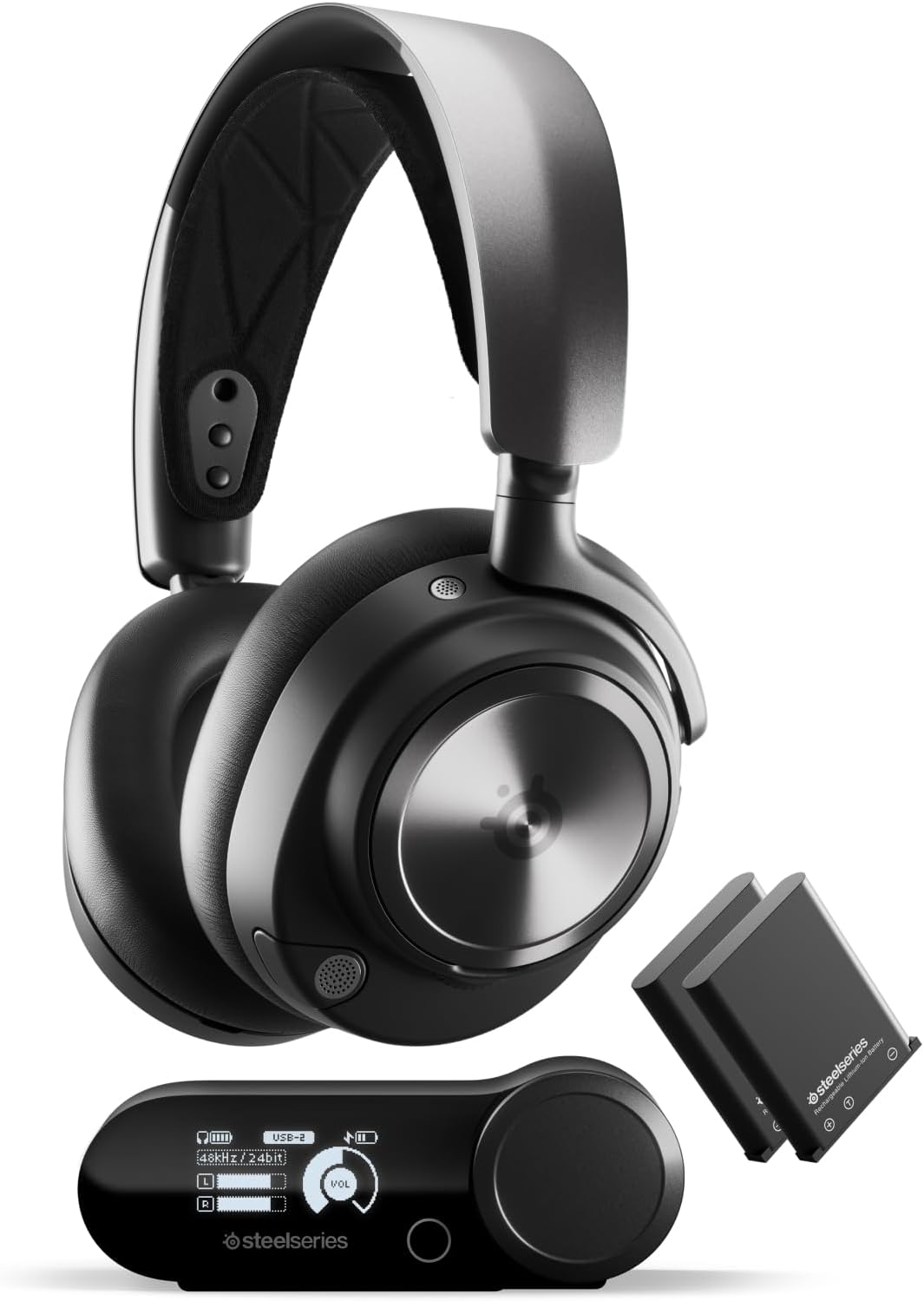
- Keyboard and Mouse: Choose tools that fit your hands and playstyle. Mechanical keyboards with switches that provide good tactile feedback can improve accuracy. A gaming mouse with adjustable DPI (dots per inch) allows you to find the perfect sensitivity—high enough for quick screen movement, but low enough for precise clicking.
- Rest and Stretch: Take breaks. During pauses or between games, stretch your hands, wrists, and shoulders. This isn’t fluff; it’s essential maintenance for the physical tools of your craft.
Strategic APM Allocation: Where to Spend Your Clicks
This is where the art of APM management truly begins. You have a finite amount of attention and a physical limit to your actions. The strategic player understands that the most critical skill is not generating more actions, but allocating their limited actions to the tasks that yield the highest return.
The Triage System: Prioritizing Actions in Real-Time
In the heat of the moment, it’s easy to become overwhelmed. To combat this, you need a mental framework for triaging tasks. Think of yourself as an emergency room doctor. You must constantly assess the situation and devote your attention to the most critical patient. In an RTS, your “patients” fall into three categories:
- Macro (The Economy): This is the lifeblood of your operation. It includes constantly building workers, ensuring you are not supply blocked, expanding to new bases, and queuing up units from your production structures. Macro is almost always the highest priority. A missed worker or a supply block causes ripples of damage that compound over time. The best players have their macro so ingrained that it operates on a subconscious rhythm, a concept we’ll explore next.
- Micro (Unit Control): This involves managing your army in battle—focusing fire, dodging skillshots, and using abilities. Micro is the most APM-intensive and often the most tempting “patient” to focus on. It provides immediate visual feedback and feels heroic. However, obsessively microing a small group of units while your production at home grinds to a halt is a classic recipe for disaster.
- Scouting (Information Gathering): This is the most frequently neglected, yet arguably the most powerful, use of your APM. A single click to send a scout to an enemy expansion can provide information that completely changes your strategic direction. It tells you what units to build, when to defend, and when to attack. Neglecting scouting is like trying to navigate a maze with a blindfold on.
Your goal is to constantly rotate your attention between these three areas, giving priority to macro, using scouting to inform your decisions, and applying micro when it is most impactful.
“APM Cycling”: A Rhythmic Approach to Gameplay
Professional players don’t just react; they operate on a finely tuned internal clock. They develop a rhythmic cycle of actions that ensures all critical aspects of the game are consistently addressed. This is “APM Cycling.” A typical 10-15 second cycle might look like this:
- Macro Check (2-3 seconds): Use your control groups to jump back to your bases. Are your command centers constantly producing workers? Are you about to be supply blocked? Queue up a round of units from all your production buildings. This entire sequence can be executed in a few seconds using only hotkeys, without even needing to look at your base.
- Army Check (3-5 seconds): Jump back to your army. Position it correctly. Are there any immediate threats? Are there opportunities to be aggressive?
- Minimap/Scouting Check (2-3 seconds): Glance at the minimap. Are there any red dots in unexpected places? Send out a scout or use a scan to check for new enemy technology or expansions.
- Repeat.
This cycle creates a constant, proactive loop. It prevents you from getting tunnel vision on a single battle and forgetting your economy. It ensures you are always gathering information and making informed decisions. The rhythm may break during intense, game-deciding battles, but the goal is to return to it as quickly as possible. By practicing this cycle, you are building the muscle memory for effective, strategic management of the entire game state.
Offloading to Muscle Memory
The human brain has a limited capacity for conscious thought. The more tasks you can delegate to your subconscious muscle memory, the more mental bandwidth you free up for high-level strategy and decision-making. Your build order for the first seven minutes of the game should be as automatic as breathing. The hotkeys for your core units and buildings should be an extension of your will, not something you have to think about.
Practice your opening against an AI until you can do it perfectly while listening to music or a podcast. This is the test of true mastery. When execution becomes effortless, your mind is free to focus on outthinking your opponent, which is the ultimate goal.
The Mental Game: Cognitive Optimization for High APM
The speed of your hands is ultimately limited by the speed of your mind. A fast player with a slow brain will always lose to a slower player who is two steps ahead mentally. Optimizing your cognitive processes is the final frontier of APM management.
Reducing Cognitive Load Through Planning
A clear, concise game plan drastically reduces the number of decisions you have to make in the moment. If your strategy is “I’m going to execute a 2-base timing attack with +1 armor,” you have a framework that guides your actions. You know which technologies to research, what units to build, and when you need to be aggressive. This proactive approach is far superior to a purely reactive one, where you are constantly trying to decipher your opponent’s moves and improvise a response. A simple plan, executed crisply, will always beat a complex plan executed sloppily.
The Power of Anticipation
The highest form of EAPM is demonstrated through anticipatory actions. This is when you act not on what is happening, but on what you predict will happen.
- Pre-emptive Positioning: Instead of reacting to an enemy attack, you use scouting to see it coming and position your army in a favorable choke point or flank position beforehand.
- Anticipatory Spell-casting: In StarCraft II, a Ghost player doesn’t just react to a High Templar’s Psionic Storm; they anticipate it, and pre-emptively cast an EMP, neutralizing the threat before it ever materializes.
- Setting Traps: Placing burrowed Banelings or Spider Mines in a likely enemy path is the epitome of effective, anticipatory APM. A few clicks early on can result in a devastating payoff later.
These actions are born from a deep understanding of the game and a relentless focus on scouting. They are the hallmark of a truly strategic player.
Maintaining Composure Under Pressure
Panic is the enemy of EAPM. During a chaotic, multi-pronged attack, it’s natural for your Raw APM to spike as you frantically try to manage everything. However, this is often when your EAPM plummets. You might miss inject cycles, forget to build workers, and mis-micro your army, all because your mental state is compromised.
Developing the ability to remain calm under fire is a trainable skill. When you feel panic setting in, take a deep breath and consciously return to your APM Cycle. Triage the situation. What is the single most important threat right now? Deal with it. Then, immediately check your macro. Forcing yourself back into this structured rhythm can pull you out of a panicked state and restore order to your actions.
Advanced Drills for APM Mastery
Once you have mastered the fundamentals, you can begin incorporating advanced drills to push your limits and refine your skills.
- Screen Mechanics and Camera Hotkeys: Your ability to move your screen is a critical component of your APM. Frantically scrolling across the map with your mouse is slow and inefficient. Instead, use camera hotkeys (often F1-F4 or customizable keys). Set camera locations for your main base, your natural expansion, a potential third base location, and a common army rallying point. Practice snapping between these locations until it becomes instantaneous. This allows you to manage your economy and your army almost simultaneously, dramatically increasing your EAPM.
- Replay Analysis with an APM Lens: Watch your own replays, but not just to analyze your strategy. Pay close attention to your APM. Look for periods of downtime. What were you doing when your APM was low? Were you just staring at your base? Could you have been scouting or posturing your army? Watch from your opponent’s perspective. When did they have to react to your pressure? When did you fail to react to theirs? Identify instances of wasted actions—repeatedly selecting the same group or clicking the same spot—and consciously work to eliminate these habits.
- The Overload Drill: Play a custom game against an easy AI but set the game speed to “Faster” or “Insane.” The goal isn’t to win, but to force your hands and mind to operate at a speed beyond your normal comfort zone. Try to keep up with your macro and execute your build order as cleanly as possible. When you return to the normal game speed, it will feel like the world has slowed down, giving you more time to think and act.
- The Micro-Only Drill: Use custom arcade maps designed for practicing specific unit interactions. There are maps for splitting Marines against Banelings, blinking Stalkers, or managing spellcasters. Isolating and drilling these specific micro-intensive scenarios builds the fine motor skills and reaction time needed to execute them flawlessly in a real game.
Conclusion
The path to APM mastery is not a sprint to see who can achieve the highest number. It is a marathon of continuous improvement, a disciplined practice of turning thought into effective action. It begins with shedding the obsession over raw speed and embracing the philosophy of purposeful action. By building a solid foundation of mechanical skill and ergonomic health, you create the physical capacity for high-level play. By adopting a strategic framework like APM Cycling and a triage system for your attention, you ensure that your actions are always directed towards what matters most. Finally, by cultivating a sharp, predictive, and calm mind, you unlock the ability to act not just quickly, but wisely.
Your APM is a reflection of your engagement with the game. Let it be a reflection not of nervous energy, but of strategic depth. Let every click be a decision, every key press a statement of intent. The ultimate goal is to reach a state of flow where your hands effortlessly carry out the commands of a mind that is always one step ahead. This is true APM optimization. This is how you win.