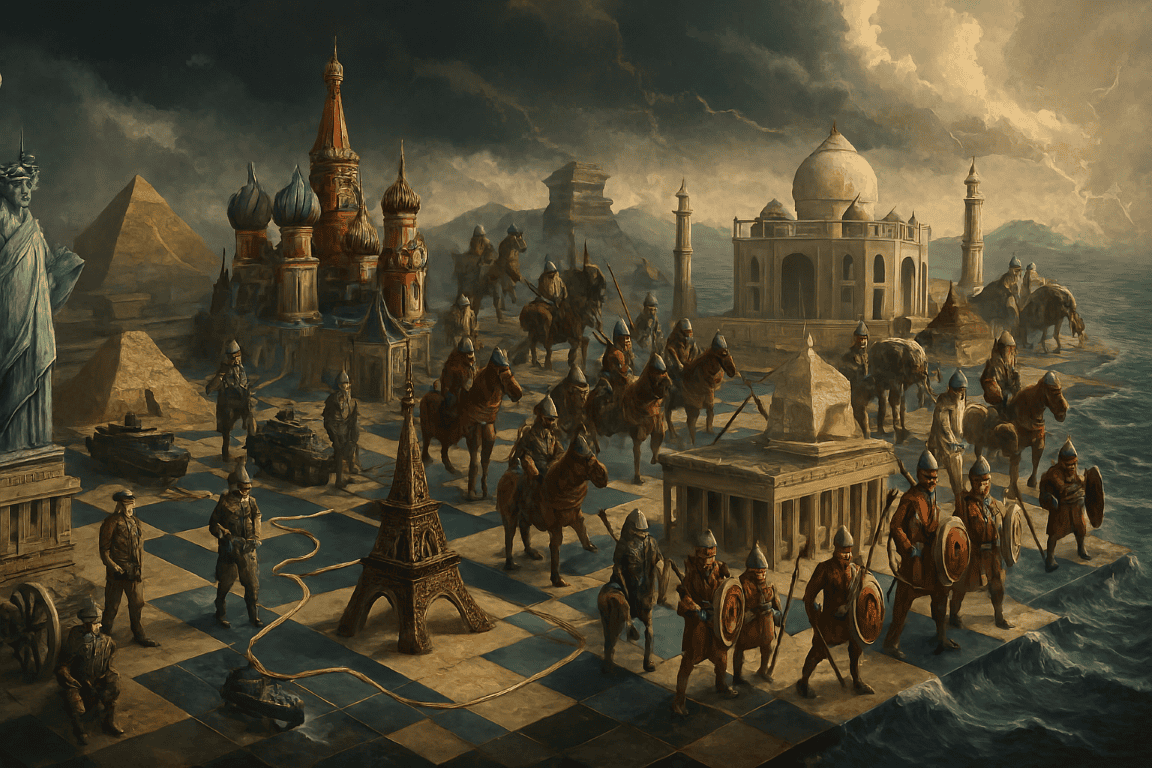
I’ve always found that in the world of digital strategy games, few can capture the intricate dance of global power quite like Sid Meier’s Civilization VI. It’s more than just its addictive “one more turn” quality; it’s a surprisingly deep simulation of real-world geopolitics. The game brilliantly simplifies complex ideas like diplomacy, war, economic rivalry, and cultural sway into something you can actually play with. If you’re a strategy fan, seeing these connections isn’t just for fun—it’s the secret to playing on a whole new level and clinching that victory.
The Delicate Dance of Diplomacy: Alliances, Agendas, and Global Influence
The diplomacy in Civilization VI is where the game truly shines for me. It’s a huge leap from the old “friendly” or “hostile” system. Now, you’re navigating a complex web of relationships shaped by leader agendas, past grievances, and the crucial currency of Diplomatic Favor. It feels just like the messy, complicated world of international relations.
Every leader has a unique personality based on their history and some random quirks, which dictates how they act. Frederick Barbarossa of Germany, for instance, can’t stand anyone who gets cozy with city-states, a nod to his historical beefs. This means you have to play detective, figuring out what makes your rivals tick so you can either win them over or use their biases against them. It’s a perfect mirror of how nations need to understand the ideologies, histories, and goals of others. If you misread another leader, you can find yourself suddenly denounced, with tensions escalating—just like a diplomatic blunder on the world stage.
Alliances are so much more than just promises not to attack each other. They’re real strategic partnerships. A Research Alliance boosts science for both of you, reminding me of collaborations like the International Space Station. A Military Alliance gives you combat bonuses against a common enemy, a direct reflection of pacts like NATO. The fact that these alliances need time to mature to unlock their best perks is a great touch, modeling the trust that has to be built between nations for a partnership to really work.
Diplomatic Favor is another game-changer, acting as your currency of global influence. You earn it through alliances, control over city-states, and global competitions, and you spend it in the World Congress. This is a fantastic representation of “soft power”—the ability to influence others through persuasion, not force. If you’re swimming in Diplomatic Favor, you can guide global policy, pass resolutions that benefit you, and even win a Diplomatic Victory. It proves that a powerful voice can be just as mighty as a powerful army.
The Art of War: From Justification to Modern Warfare
Jumping into a war in Civilization VI isn’t just about having the biggest army. The game’s rules for conflict are rooted in real military strategy, stressing the need for justification, smart logistics, and better tech.

The Grievances system is a smart evolution of the old “warmonger” penalty. It creates a clear reason—a casus belli—for going to war. If you declare a surprise war, you’ll rack up huge grievances, and the world will turn on you. But if you’re liberating a city or responding to a betrayal, you generate grievances against the aggressor, giving you a legitimate reason to fight back. This forces you to think about the political consequences of your actions, just like real leaders who have to justify their choices to the world. A war fought on the “moral high ground” is always easier to sustain.
The combat itself rewards smart tactics, like using combined arms and terrain. A single, powerful unit can be easily taken down by a balanced force of infantry, anti-cavalry, and siege units. Placing your troops on hills, across rivers, or in forests can completely change a battle’s outcome, showing how important geography has always been in war. The addition of support units, like military engineers who build forts and roads, highlights the critical role of logistics. An army that outruns its supply lines is doomed.
As you advance through the eras, warfare evolves just as it did in history. Ancient-era clashes of swords and spears give way to the boom of Renaissance cannons and the overwhelming power of modern air and naval forces. Late in the game, you’re faced with nuclear weapons and Giant Death Robots, presenting the same existential threats and moral questions that have defined our world since WWII. The idea of Mutually Assured Destruction (MAD) becomes a real strategy, where the price of total war is so high that it has to be avoided.
Economic Warfare: Trade, Resources, and the Power of Money
In Civilization VI, your economy isn’t just for funding your empire; it’s a weapon. The game’s detailed systems for trade, strategic resources, and economic policies create a fascinating simulation of the economic rivalries that drive global strategy.
Trade Routes are the lifeblood of your empire, sending gold, food, and production between your cities and others. They’re also tools of soft power. Trading with another civilization builds good will and spreads your culture. On the flip side, using the World Congress to embargo a rival can crush their economy, just like real-world sanctions. Deciding where to build your Commercial Hubs and Harbors to get the most out of your trade routes—and protecting them from barbarians and rivals—is a key part of the game.
Controlling Strategic Resources is vital for both your economy and your military, just like in the real world. Horses and Iron are crucial for early military strength, while Coal and Oil become essential for industrial and modern armies. If you don’t have access to these resources, you’ll be at a huge disadvantage, forced into bad trades or risking falling behind. The fight for these resources often leads to expansion and conflict, echoing historical wars fought over oil fields and other vital goods.

The policy card system lets you tailor your economy. You can go for a free-market approach with policies that boost trade, or you can choose a more state-controlled economy that enhances industrial production. This flexibility lets you experiment with different economic strategies and see their geopolitical results, from colonial-era mercantilism to 21st-century globalized capitalism.
The Silent Offensive: Winning with Culture
One of my favorite things about Civilization VI is that victory doesn’t always come from the battlefield. The Cultural Victory is a unique and brilliant model of “soft power,” showing how cultural influence can be its own form of global domination. This isn’t about conquering cities; it’s about winning hearts and minds.
The key to a Cultural Victory is generating Tourism. This isn’t just about getting people to visit your cities; it’s a measure of how appealing your civilization’s culture is to the world. Great Works of Art, Music, and Writing, created by Great People, are your main source of Tourism. Strategically collecting these Great Works and displaying them in Museums and Amphitheaters is how you build a culturally dominant empire. This perfectly models how a nation’s films, music, and literature can shape global trends—think of the influence of American “blue jeans and rock ‘n’ roll” during the Cold War.
The game even adds Rock Bands in the late game, a fun but sharp take on modern pop culture’s global power. These units can tour other civilizations and perform concerts, generating huge amounts of Tourism. The different promotions they can get, like “Indie” or “Surf Rock,” mirror the diverse genres and subcultures that exist in the real world.
The defense in this cultural war is your own Culture output. A high culture score acts as a shield, making your people more resistant to foreign influence. This creates a fantastic tug-of-war, where some civilizations push their culture on the world while others fight to protect their unique identity. It’s a great reflection of the real-world tension between globalization and cultural preservation.
The Race to the Future: Technology and Espionage
The Technology Tree in Civilization VI isn’t just a straight line of progress. It’s a branching path of strategic decisions that have a massive impact on your civilization’s place in the world. The technologies you research, and when you research them, will define your strengths and weaknesses.
An early tech advantage can be a game-winner. Researching Archery before your neighbors gives you a huge military advantage, while unlocking Writing opens the door to science buildings and Great Scientists. As the game goes on, the tree splits, forcing you to make tough choices. Do you focus on military tech to protect yourself, or on economic and scientific advancements to build a prosperous, innovative society? These are the same dilemmas nations face when they decide how to spend their resources.
The “Eureka” moment mechanic, which gives you a research boost for doing certain things in the game, is a clever way to show how practical experience can speed up scientific progress. Building a quarry might inspire you to study Masonry, while defeating an enemy with a slinger could spark the idea for Archery. It encourages you to be adaptable and adjust your research based on what’s happening around you.
Espionage adds a layer of spy-vs-spy intrigue to the tech race. You can use spies to steal technologies, sabotage production, and stir up trouble in rival cities. This models the real-world importance of intelligence gathering and covert ops. A well-placed spy can level the playing field against a more advanced opponent or ruin the plans of a potential conqueror. The risk of getting caught, and the diplomatic mess that follows, adds a thrilling element of risk and reward.
The Shifting Sands of Power: City-States, Loyalty, and the Rise and Fall of Empires
Civilization VI has mechanics that make empires feel dynamic and unpredictable, not just static blobs on a map. City-states, loyalty, and the “Rise and Fall” system create a more organic and historical experience.
City-states are no longer just minor players. They are independent actors with their own bonuses. By sending Envoys, you can compete for control over them, gaining access to their resources, units, and powerful suzerain bonuses. This system is a great model of proxy wars and spheres of influence. Two major powers might avoid direct war but fight fiercely for control over key city-states, using them as buffers or as launchpads for future conflicts. It’s very much like the Cold War dynamic between the U.S. and the Soviet Union.
The Loyalty system is a brilliant take on nationalism and the internal pressures that can break empires apart. Cities that are too far from your capital, have low population, or are under the cultural sway of a neighbor will lose loyalty. If it hits zero, the city rebels and becomes a Free City, which can then be absorbed by a more influential neighbor. This forces you to be smart about how you expand. A sprawling, overextended empire is hard to hold together—a lesson learned by countless empires throughout history. Governors, with their loyalty-boosting abilities, become essential for managing a large realm.
The “Ages” mechanic introduces Golden Ages and Dark Ages. Hitting a Golden Age gives you powerful bonuses and strengthens loyalty, representing a time of prosperity. But falling short can plunge you into a Dark Age, a period of instability and rebellion. However, coming out of a Dark Age into a Heroic Age gives you even bigger bonuses, modeling the resilience and comeback that can follow tough times. This cycle of rise, fall, and rebirth makes the story of your civilization feel much more realistic.
The Global Commons: World Congress and Climate Change
In the later stages of the game, you have to deal with global challenges that require international cooperation. The World Congress and the climate change mechanics force you to face issues that go beyond your own borders, mirroring the complex global challenges of the 21st century.
The World Congress is the game’s version of the United Nations, where civilizations vote on global resolutions. These can have huge effects, from banning luxury resources to sending aid to a civilization hit by a natural disaster. Voting is powered by Diplomatic Favor, creating a political marketplace where influence is everything. If you have a lot of it, you can push your own agenda, but you have to be careful not to create a powerful opposition. It captures the essence of international diplomacy, with its mix of self-interest, alliances, and moments of real global cooperation.
The Gathering Storm expansion adds a dynamic climate change model that is a powerful allegory for one of the biggest issues of our time. Burning fossil fuels for power generates CO2, which raises the global temperature. This leads to rising sea levels that can swallow coastal tiles, more frequent and severe natural disasters, and melting polar ice caps.
This creates a classic “tragedy of the commons” problem. One civilization might benefit from burning coal to power its factories, but the long-term consequences are shared by everyone. The World Congress can be used to pass resolutions to cut emissions and invest in renewable energy, but getting everyone to agree is tough, especially when some civilizations are more reliant on fossil fuels than others. It’s a direct mirror of the real-world challenges of international climate negotiations. The choices you make about your energy sources have a real impact on the game world, forcing you to balance short-term gain with long-term sustainability.
A Masterclass in Strategy
For me, Civilization VI is a monumental achievement in strategy gaming, not just because it’s fun to play, but because it does such a remarkable job of modeling the complex and often brutal realities of real-world geopolitics. From the subtleties of diplomacy and the grim math of war to the quiet power of culture and the existential threat of climate change, the game is a rich sandbox for exploring the forces that have shaped our world.
While it’s an abstraction, its systems are built on a deep understanding of power, influence, and human interaction. For anyone who loves strategy, seeing these parallels is the first step to true mastery. When you understand how the game models concepts like soft power, casus belli, and economic interdependence, you can stop just reacting to events and start shaping them. You can learn to predict your rivals’ moves, build resilient empires, and navigate the treacherous waters of international politics with skill. Civilization VI is more than just a game; it’s a dynamic textbook on the art and science of grand strategy.