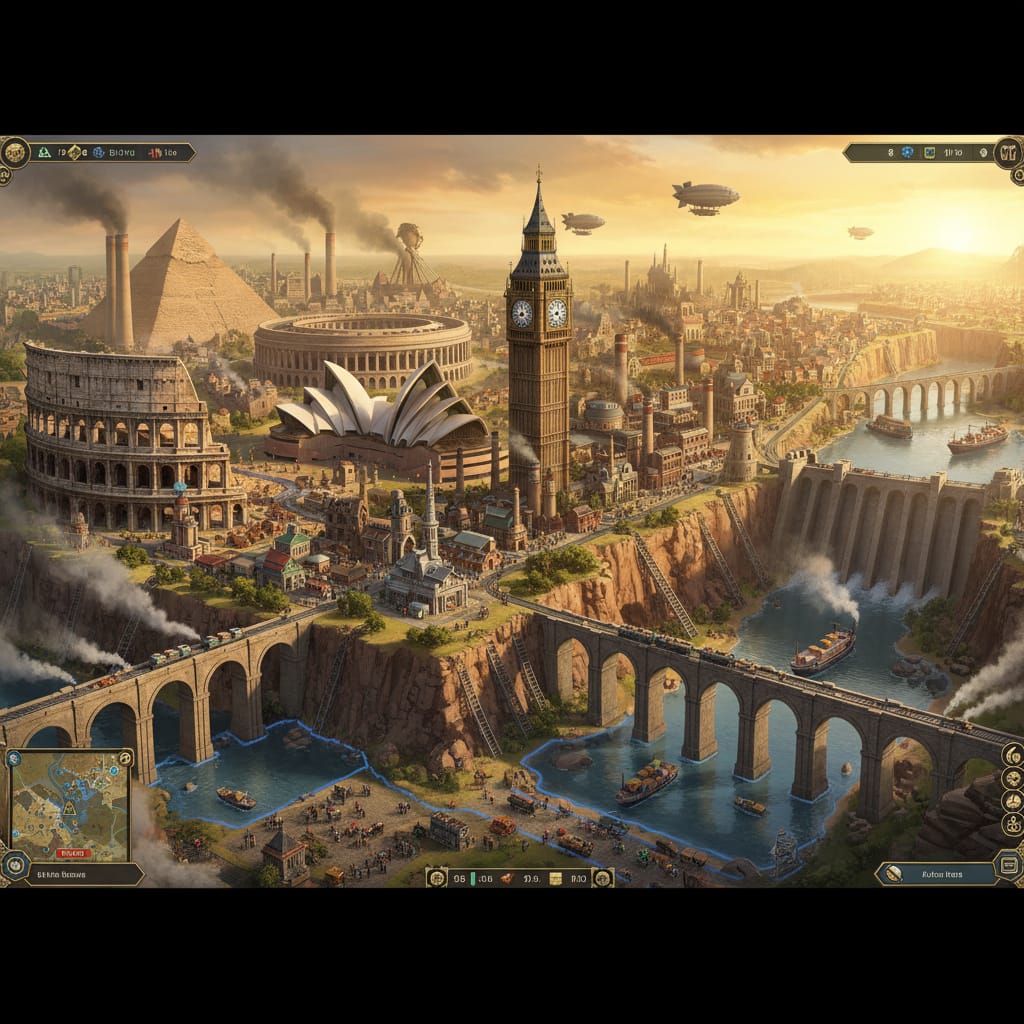
What if the fundamental rule of one wonder at a time was broken? In the grand strategy of Civilization 6, the race to build a World Wonder is a high-stakes gamble. Empires pour immense resources into these architectural marvels, knowing that only the first to complete one reaps its rewards. This creates a tense, competitive dynamic where timing, production, and a little bit of luck determine who gets to erect a monument to their civilization’s greatness. But what if this core mechanic was fundamentally altered? Imagine a scenario where any civilization could build any wonder in any of their cities, without the global competition. This guide explores the strategic and tactical implications of such a paradigm shift, analyzing how it would reshape every aspect of the game, from city planning to victory conditions.
The End of Wonder-Rushing as We Know It
The most immediate and obvious consequence of this hypothetical change would be the end of “wonder-rushing.” In the current game, players often make risky, all-in pushes to complete a highly contested wonder like the Pyramids or the Colosseum in the early game. This often involves neglecting military, settlers, or districts to channel all production into the wonder. According to the player community, this high-risk, high-reward strategy would become obsolete. With the threat of being “beaten to the punch” removed, the incentive to make such sacrifices disappears.
Instead of a frantic race, wonder construction would become a calculated, long-term investment. Players would be free to build wonders at their own pace, integrating them into their overall city development plans. This would lead to a more deliberate and less stressful early game, where the focus would be on building a strong economic and military foundation before embarking on large-scale construction projects. Analysis on forums shows that this would likely benefit players who prefer a more methodical, “builder” playstyle, as they would no longer be punished for not taking early risks.
The Rise of “Wonder Factories” and Specialized Cities
With the ability to build multiple wonders simultaneously, a new strategic concept would emerge: the “wonder factory” city. Many professional gamers suggest that players would designate one or two cities with exceptionally high production potential to become dedicated wonder-construction centers. These cities would be meticulously planned to maximize production output, featuring Industrial Zones with Factories and Power Plants, and potentially leveraging the bonuses of governors like Magnus with his Vertical Integration promotion.
The choice of which cities to turn into wonder factories would be a critical strategic decision. A city with access to numerous hills for mines, a river for a Dam and an Aqueduct, and perhaps a civilization-specific production bonus would be an ideal candidate. For example, a German civilization with its extra district slot and powerful Hansa adjacency bonuses could create a production powerhouse capable of churning out wonders at an astonishing rate. A popular strategy would likely involve using internal trade routes to funnel food and production to these wonder factories, further accelerating their construction capabilities.
A New Era of Economic and Cultural Dominance
The ability to build wonders in any city would have a profound impact on the economic and cultural aspects of the game. In the current meta, the distribution of wonders is often uneven, with a few lucky or highly specialized civilizations monopolizing the best ones. In this hypothetical scenario, every civilization would have the opportunity to build a wide array of wonders, leading to a more balanced and competitive landscape.

The Economic Snowball Effect
From an economic perspective, the ability to build multiple economic wonders would create a powerful snowball effect. A civilization that could construct the Great Zimbabwe, Colossus, and Big Ben in its commercial hubs would generate a massive amount of gold per turn, allowing it to fund a large army, purchase buildings, and maintain a technological edge. According to the player community, this would make economic victories more viable and interactive, as players would be competing to create the most powerful economic engine rather than simply accumulating the most gold.
The Cultural Renaissance
For cultural victories, the change would be even more transformative. The current cultural game is often a mad dash to secure wonders with Great Work slots, such as the Bolshoi Theatre, Broadway, and the Sydney Opera House. In a world without wonder competition, a culturally focused civilization could build all of these and more, creating a vast network of museums and amphitheaters to house their Great Works. This would lead to a cultural renaissance, with tourism numbers skyrocketing and the path to a cultural victory becoming more about careful planning and Great Person generation than about simply getting lucky with wonder construction.
Reshaping the Military and Diplomatic Landscape
The impact of this change would not be limited to the economic and cultural spheres. The military and diplomatic aspects of the game would also be significantly altered.
The Fortress Empire
Militarily, the ability to build defensive wonders in multiple cities would create “fortress empires” that are incredibly difficult to conquer. A civilization with the Great Wall, Alhambra, and Terracotta Army spread across its border cities would present a formidable defensive challenge. Analysis on forums shows that this would likely lead to a more defensive and attrition-based style of warfare, where sieges would become protracted and costly affairs. It would also make civilizations with unique siege units, like the Romans with their Legions, even more valuable.
A New Diplomatic Calculus
In the diplomatic arena, the change would introduce a new layer of strategic complexity. With every civilization having access to wonders that grant diplomatic favor, such as the Potala Palace and the Mahabodhi Temple, the competition for diplomatic victory would intensify. A popular strategy would be to build these wonders in as many cities as possible to maximize diplomatic favor generation, allowing a player to dominate the World Congress and push their agenda. This would make diplomatic victories more of a long-term strategic goal rather than a side effect of other playstyles.
The Shifting Value of Wonders
Not all wonders would be created equal in this new paradigm. The relative value of each wonder would shift based on its unique bonuses and how well it synergizes with the new strategic landscape.

Top-Tier Wonders in the New Meta
According to the player community, wonders with powerful, empire-wide bonuses would become even more valuable. The Kilwa Kisiwani, with its ability to boost the yields of city-states, would be a top-priority wonder for any civilization, regardless of their victory condition. Similarly, wonders that provide extra policy card slots, such as the Forbidden City and Potala Palace, would be essential for any empire looking to maximize its flexibility and power.
The Rise of Situational Wonders
Wonders that are currently considered situational or niche would see their value increase significantly. The Mausoleum at Halicarnassus, which provides extra charges for Great Engineers, would become a must-have for any civilization with a wonder factory. The Oracle, with its bonus to Great Person generation, would be a cornerstone of any cultural or scientific victory strategy. Analysis on forums shows that players would be more willing to invest in these wonders, knowing that they are guaranteed to get them.
A More Strategic and Deliberate Game
The hypothetical scenario of being able to build wonders in any city, without the pressure of global competition, would fundamentally reshape the strategic landscape of Civilization 6. It would transform the game from a high-stakes race into a more deliberate and calculated exercise in long-term planning. The end of wonder-rushing would lead to a more stable and less stressful early game, while the rise of wonder factories would create new strategic possibilities for production-focused civilizations. The economic, cultural, military, and diplomatic aspects of the game would all be profoundly affected, leading to a more balanced, competitive, and strategically deep experience. While the thrill of snatching a wonder from an opponent at the last second would be lost, the new strategic possibilities that would emerge in its place would make for a more engaging and rewarding game for all types of players.