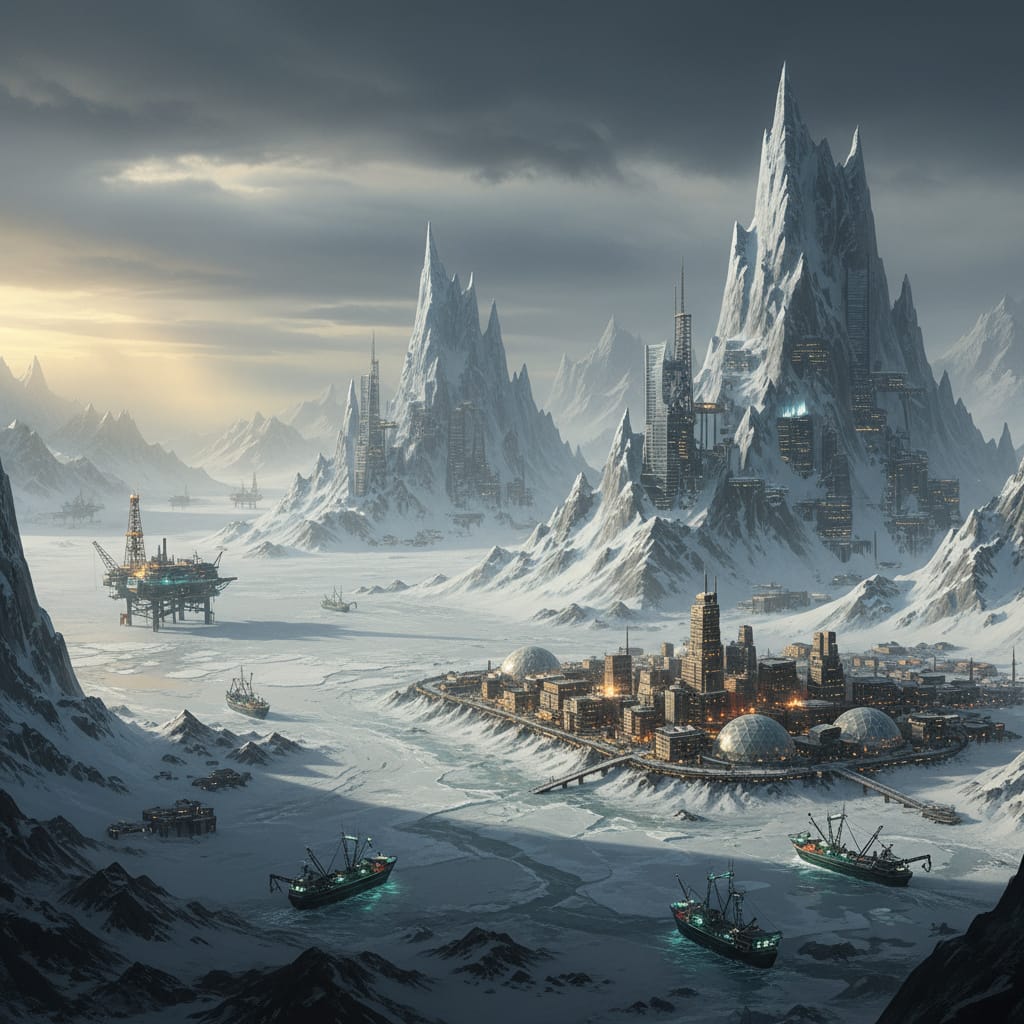
The world is on the brink of a new dawn. The digital age has arrived, ideologies have clashed and resolved, and the great tapestry of human history is woven with the threads of progress. Then, the sky begins to fall. Not with fire and fury, but with the silent, inexorable descent of a world-ending winter. A sudden, catastrophic climate shift plunges the globe into an eternal ice age, burying the ambitions of nations under miles of glacial ice. The once-green cradle of civilization becomes a frozen wasteland, and the modern era is transformed into a desperate struggle for survival. This is not a scenario the annals of history have prepared you for. This is a new game, with new rules.
In this definitive guide, we will explore the strategic imperatives of surviving and conquering a world gripped by an eternal, modern-era ice age. We will dissect the new realities of this frozen Earth, from the immediate scramble for resources to the long-term race for technological salvation. According to the player community, success in this brutal new world is not just about adaptation; it’s about mastering the ice itself.
The Great Freeze: Initial Survival and Adaptation
The first few turns after the Great Freeze are the most critical. The world you knew is gone, and the immediate challenges are overwhelming. Food production plummets as fertile plains and grasslands are buried under permafrost. Production grinds to a halt as mines and quarries are rendered inaccessible. The very foundations of your civilization are threatened with collapse.
Analysis on forums shows that the key to initial survival is a ruthless and immediate reprioritization of your civilization’s efforts.
- Food First, Always: Your primary concern is staving off mass starvation. Immediately shift your focus to any remaining viable food sources. Coastal cities become the new breadbaskets of the world.
- Fishing Fleets: Task your builders with improving every available sea resource. Fishing boats become the single most important improvement in the game. Policy cards that boost their yields are no longer optional; they are essential.
- Internal Trade Routes: Establish internal trade routes from your coastal cities to your inland population centers. This is the only way to keep your inland cities from starving.
- Technological Triage: Your research priorities must shift to survival technologies.
- Early Techs: Any early-game technologies you may have neglected that improve fishing, sailing, or food from camps are now of paramount importance.
- Modern Techs: In the modern era, this means prioritizing technologies that unlock advanced food production methods that can be implemented indoors or in controlled environments. Hydroponics, if it were a feature, would be the holy grail. In its absence, technologies that boost food from specialists or trade routes are your best bet.
- Civic Re-Education: Your society must adapt to the new reality.
- Survival Policies: Immediately slot any policy cards that provide bonuses to food, housing, or amenities. The “Maritime Industries” card, for example, becomes a top-tier choice.
- New Government: Consider a change in government to one that offers more economic policy slots, allowing you to stack food and production bonuses.
Masters of the Permafrost: Essential Civilization Choices
In this frozen new world, not all civilizations are created equal. Many professional gamers suggest that civilizations with inherent advantages in cold climates or on the high seas are the only ones with a realistic chance of not just surviving, but thriving.
- Russia (The Uncontested Heir): Peter the Great’s Russia is, without a doubt, the most powerful civilization in an ice age scenario.
- Tundra Dominance: Russia’s ability to gain extra faith and production from tundra tiles is now a world-beating advantage. The Lavra, combined with the “Dance of the Aurora” pantheon, will allow you to generate massive amounts of faith, which can be used to patronize Great People who can provide crucial boosts to your science and culture.
- Endless Expansion: Russia’s ability to claim extra territory when founding cities allows you to quickly lock down remaining coastal areas and strategic resources.
- Canada (The Resilient Survivors): Wilfrid Laurier’s Canada is another top-tier choice for an ice age world.
- Tundra/Snow Farming: Canada’s unique ability to build farms on tundra and, with the right technologies, on snow, is a game-changer. This allows you to support a larger population than almost any other civilization.
- Cold-Weather Resources: Canada’s bonuses from camps and mines on tundra and snow tiles provide a much-needed production boost.
- Norway (The Frozen Reavers): Harald Hardrada’s Norway becomes a terror of the frozen seas.
- Coastal Raiding: With most civilizations’ coastal defenses weakened, Norway’s ability to raid coastal tiles is more powerful than ever. You can pillage your way to a powerful economy, stealing the resources you need to survive.
- Naval Supremacy: Norway’s unique naval units, like the Viking Longship, will allow you to dominate the early-to-mid-game seas, clearing out barbarians and establishing control over key sea lanes.
- The Inca (The Mountain Kings): Pachacuti’s Inca offer a unique, albeit more challenging, path to victory.
- Terrace Farms: In a world where flat, farmable land is a distant memory, the Inca’s ability to build terrace farms on mountainsides is a powerful advantage. If you can secure a mountain range with a few coastal tiles, you can create a small, but highly defensible and self-sufficient, empire.
The Frozen Economy: Resource Management in a White Wasteland
The ice age economy is a brutal one. The resources that once fueled your empire are now buried under a thousand feet of ice. A popular strategy is to completely rethink your economic model, focusing on the few remaining avenues for generating wealth and production.

- The Coastal Monopoly: Coastal cities are the new economic powerhouses.
- Harbors are Mandatory: Every coastal city must have a Harbor. The “Shipyard” building is essential for its production bonus, and the “Seaport” for its food and gold.
- Commercial Hubs: A Commercial Hub in every coastal city is also a necessity. The trade routes they provide are the lifeblood of your empire, and the “Great Merchant” points they generate can provide game-changing economic advantages.
- The Offshore Oil Boom: While land-based resources are inaccessible, offshore oil rigs become the most important strategic resource in the game.
- Naval and Air Power: Oil is the fuel of the modern military. Controlling the world’s offshore oil reserves means controlling the world’s most powerful navies and air forces.
- Energy for the Future: Oil will also power the advanced buildings and projects needed to sustain your population and push for a science victory.
- The Espionage Economy: In a world of scarcity, theft is a viable economic strategy.
- Resource Raids: Use your spies to steal gold, technologies, and strategic resources from your rivals. A successful spy mission can be more valuable than a dozen trade routes.
- Sabotage: Sabotaging your rivals’ industrial zones and spaceports can slow their progress and give you a crucial edge in the race for victory.
Warfare in the White Hell: Military Strategy in the Ice Age
The eternal ice age renders traditional land warfare obsolete in many parts of the world. The vast, frozen plains are impassable to all but the most specialized units. The new battlefield is the sea.
- The Rise of Naval Power: The melting of the polar ice caps and the freezing of the oceans will create a new global map, one dominated by vast, interconnected seas.
- Submarine Warfare: Submarines are the ultimate weapon in the ice age. They can move undetected beneath the ice, launch surprise attacks on enemy fleets and coastal cities, and provide invaluable intelligence.
- Aircraft Carriers: Aircraft carriers are mobile airbases, allowing you to project air power across the globe. A carrier strike group can devastate an enemy’s coastal infrastructure and clear the way for an amphibious assault.
- The Air Power Doctrine: With land armies largely neutralized, air power becomes the key to long-range strikes and strategic bombing.
- Bombers: Long-range bombers can fly over the frozen wastes to strike at the heart of your enemies’ empires, destroying their production centers and crippling their ability to wage war.
- Fighters: Fighters are essential for protecting your own airspace and for escorting your bombers on their deadly missions.
- The Last Stand of the Land Army: While land armies are less important in a global sense, they are still crucial for defending your own coastal cities and for launching amphibious assaults on enemy territory.
- Marines: Marines are the elite infantry of the ice age, specially trained for amphibious assaults.
- Modern Armor: A small, elite force of modern armor can be decisive in the final stages of a coastal assault.
Technological Salvation: The Race for a New Future
In the desperate world of the eternal ice age, technology is the only hope for a better future. The tech tree becomes a race for survival, with every discovery offering a potential lifeline.
- The Naval and Air Tech Trees: Your first priority is to rush the technologies that unlock advanced naval and air units.
- Submarines and Carriers: The technologies that unlock submarines and aircraft carriers are the most important military techs in the game.
- Jet Aircraft: Jet fighters and bombers will give you a decisive edge in the air war.
- The Energy Revolution: To power your advanced military and your indoor farms, you will need to unlock new sources of energy.
- Nuclear Power: Nuclear power plants provide a massive amount of energy, but they come with the risk of a nuclear meltdown.
- Renewable Energy: Solar and wind farms are a safer, but less powerful, alternative.
- The Escape from Earth: For many, the ultimate goal in an ice age world is not to conquer it, but to escape it.
- The Science Victory: The science victory becomes a desperate race to build a spaceship and leave the frozen Earth behind. This requires a massive investment in science and production, and a willingness to sacrifice everything else for the dream of a new home among the stars.
A New World Order: Diplomacy in the Endless Winter
The eternal ice age will shatter the old world order and forge a new one in the crucible of survival. Alliances will be born of desperation, and betrayals will be swift and merciless.
- The Coastal Coalition: The civilizations that control the world’s remaining ice-free coastal areas will quickly realize that they have a shared interest in defending their privileged position. A powerful “Coastal Coalition” could become the dominant force in world affairs.
- The World Congress: The World Congress becomes a battleground for the future of the planet.
- Cold-Weather Policies: Civilizations like Russia and Canada will use their diplomatic favor to push for policies that benefit cold-weather civilizations.
- The Last Bastion: The remnants of the warmer-climate civilizations may band together to resist the rise of the new ice age powers, leading to a global ideological struggle.
The eternal ice age is a scenario that will test the limits of your strategic skill and your will to survive. The world is a cold, harsh, and unforgiving place, but for those with the vision and the ruthlessness to adapt, it is a world ripe for the taking. The old empires have fallen, and the future belongs to those who can master the ice. The game has changed, but the goal remains the same: to build a civilization that can stand the test of time, even in a world frozen in an endless winter.