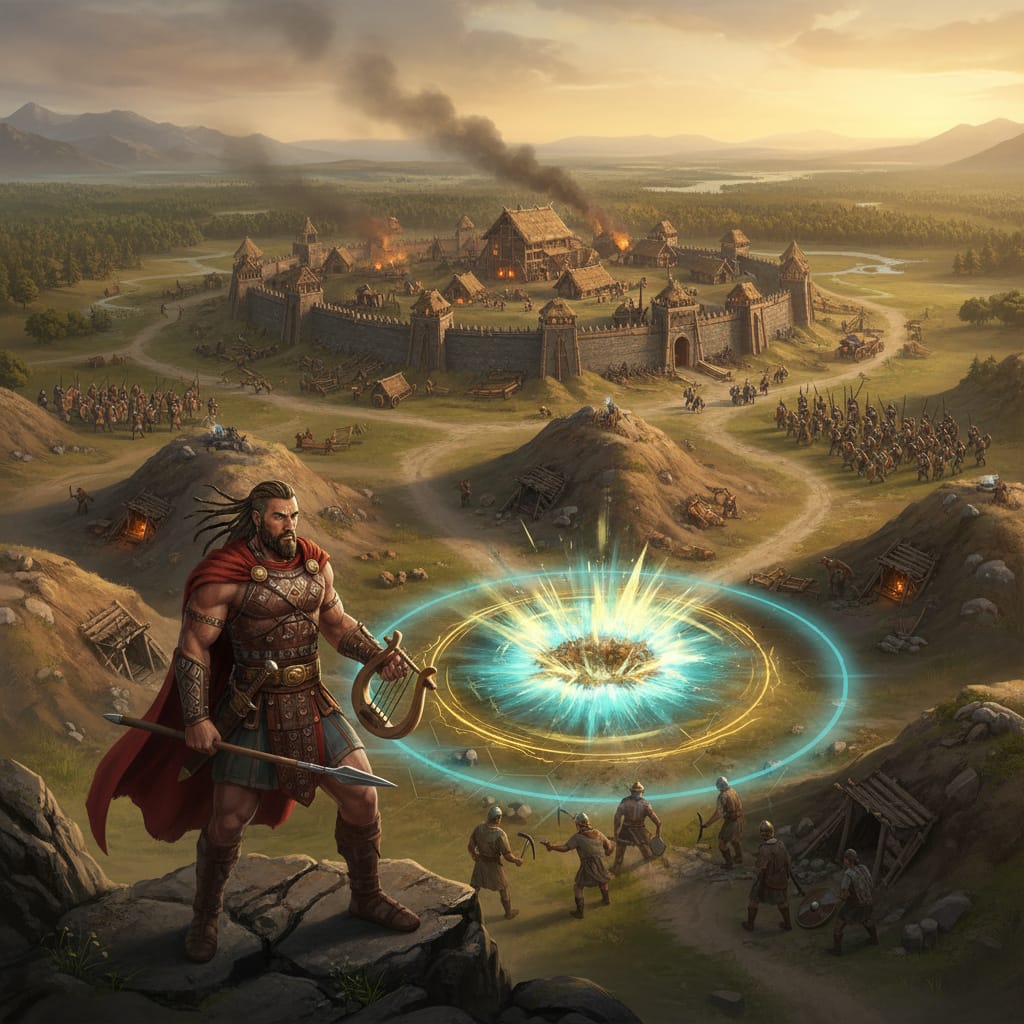
The question isn’t “what if,” but “what now?” In the grand tapestry of Civilization VI, the developers posed and answered a fascinating strategic question: what if a civilization’s most basic industrial improvement became a tool of aggressive territorial expansion? The Gauls, under the leadership of Ambiorix, embody this reality. Their mines don’t just fuel production; they trigger Culture Bombs, fundamentally altering the rhythm of expansion and city planning. This guide delves into the strategic depths of this powerful and unique mechanic, offering a comprehensive analysis of how to leverage the Gallic ability to paint the map your color, one mine at a time.
According to the player community, the Gauls are a top-tier civilization precisely because of this potent synergy between industry and culture. Their ability to seize territory without loyalty pressure or military conquest in the early game is unparalleled. This guide will break down the mechanics, strategies, and nuances of the Gallic mine Culture Bomb, providing a roadmap for dominating the ancient and classical eras.
Hallstatt Culture: The Engine of Gallic Expansion
The cornerstone of Gallic strategy is the “Hallstatt Culture” civilization ability. This ability has three components, but the most impactful is the Culture Bomb triggered by the construction of a mine.
The Culture Bomb Mechanic
A Culture Bomb is a powerful mechanic that instantly acquires all surrounding tiles for the city that owns the improvement that triggers it. For the Gauls, every mine acts as a trigger. When a builder completes a mine, all adjacent tiles that are not owned by another civilization are immediately added to your empire.
- Territorial Acquisition: This is the most obvious and powerful effect. You can rapidly expand your borders, claiming valuable resources, strategic chokepoints, and prime locations for future cities. Analysis on forums shows that a well-placed mine can acquire up to six tiles at once.
- No Loyalty Pressure: Unlike conquering cities, tiles acquired through a Culture Bomb exert no loyalty pressure on your empire. This allows for rapid, penalty-free expansion.
- Strategic Denial: A popular strategy is to use mines to “forward settle” without actually building a city. By placing a mine on the edge of your territory, you can claim land that an opponent was planning to settle, effectively boxing them in.
The Nuances of Gallic Culture Bombs
While powerful, the Gallic Culture Bomb has limitations that must be understood to be used effectively.
- Unowned Tiles Only: The Culture Bomb will not steal tiles from another civilization. This means you can’t use it to encroach on an established neighbor’s territory. However, it can and will claim tiles that are within the “workable” range of a rival city if they haven’t been acquired by that city yet.
- City Ownership: The tiles are acquired by the city that owns the tile the mine is built on. This is an important distinction when planning your city layouts and ensuring the right city gets the right tiles.
- Three-Tile Radius: The Culture Bomb only affects tiles within a three-tile radius of the city center. This is a standard game mechanic, but it’s especially relevant for the Gauls as you plan your mine placement for maximum territorial gain.
Ambiorix: The Warrior-Poet of the Gauls
Ambiorix’s leader ability, “King of the Eburones,” synergizes perfectly with the Hallstatt Culture ability, creating a powerful feedback loop of production, military, and culture.

Culture from Combat
Ambiorix gains culture equal to 20% of a non-civilian unit’s production cost whenever that unit is trained. This is a significant cultural boost, especially in the early game.
- The Feedback Loop: The Gauls’ high production, fueled by their numerous mines, allows them to churn out military units at an impressive rate. Each unit trained then provides a burst of culture, accelerating your progress through the civic tree. This allows you to unlock powerful policy cards, governments, and unique units faster than your opponents.
- Early Game Dominance: Many professional gamers suggest that this ability makes the Gauls one of the strongest early-game military civilizations. You can build a large army while simultaneously rocketing through the civic tree, giving you a significant advantage in both military and cultural development.
The Gallic Horde
Ambiorix’s units also receive a +2 combat strength bonus for every adjacent combat unit. This encourages a “swarm” or “horde” tactic, where you group your units together to overwhelm your enemies.
- Strategic Positioning: This ability forces a different approach to tactical combat. Instead of spreading your units out, you want to keep them tightly packed to maximize the adjacency bonus. This makes Gallic armies incredibly formidable in open terrain.
- Synergy with Production: Your high production allows you to build the large army necessary to take full advantage of this combat bonus. You can afford to lose a few units and quickly replenish your ranks, maintaining the pressure on your opponents.
The Oppidum: The Heart of the Gallic War Machine
The Gauls’ unique district, the Oppidum, is the final piece of the puzzle. It replaces the Industrial Zone but is available much earlier and has a lower production cost.
A Fortified Industrial Hub
The Oppidum is more than just an Industrial Zone. It has its own ranged attack, making it a defensive bastion in its own right. It also gains a major adjacency bonus from quarries and strategic resources.
- Early Production Spike: The early availability of the Oppidum provides a massive production spike long before other civilizations can build their Industrial Zones. This allows you to build wonders, districts, and units at a pace that no other civilization can match.
- Free Technology: Building your first Oppidum grants you the Apprenticeship technology for free. This is a huge boost, unlocking more advanced units and buildings even earlier.
Unique District Placement
The Oppidum, like all Gallic specialty districts, cannot be built adjacent to the city center. This forces a unique approach to city planning.
- Decentralized Cities: Gallic cities tend to be more spread out than those of other civilizations. You’ll need to plan your district placement carefully, taking into account the adjacency bonuses from mines and other features.
- Mine-Centric Layouts: A popular strategy is to plan your cities around clusters of hills. This allows you to maximize the number of mines, which in turn provide adjacency bonuses for your districts.
A Step-by-Step Guide to Gallic Dominance
Now that we’ve broken down the components of Gallic power, let’s put it all together in a step-by-step guide to achieving victory with Ambiorix.

Early Game (Ancient and Classical Eras)
- Settle on Hills: Your first priority is to settle your capital on or near a cluster of hills. This will allow you to start building mines as soon as you research the Mining technology.
- Research Mining: This should be your first or second technology. The sooner you can start building mines, the sooner you can start expanding your territory and generating culture.
- Mine Everything: Build mines on every available hill. Don’t worry about other improvements for now. Your goal is to grab as much land as possible and get your cultural engine running.
- Train, Train, Train: As soon as you have a few mines up and running, start churning out military units. Warriors and Slingers are fine in the early game. The culture you gain from training them will be invaluable.
- Build the Oppidum: As soon as you can, build your first Oppidum. The production boost and free technology will catapult you ahead of the competition.
Mid Game (Medieval and Renaissance Eras)
- Leverage Your Production: With your Oppidums online and your empire humming with production, you have a choice to make. You can continue to build up your military and go for a Domination Victory, or you can start to pivot towards a Culture or Science Victory.
- Domination: Your powerful military, fueled by high production and Ambiorix’s combat bonus, makes a Domination Victory a very attractive option. Your unique Man-at-Arms replacement, the Gaesatae, is incredibly powerful and can tear through enemy cities.
- Culture: The culture from your mines and military production gives you a strong foundation for a Culture Victory. Focus on building Theater Squares and wonders that provide tourism bonuses.
- Science: Your high production can also be used to build Campuses and Libraries, allowing you to keep pace with or even surpass other civilizations in technology.
Late Game (Industrial and Modern Eras)
By the late game, your early-game advantages will start to diminish as other civilizations catch up in production and technology. However, the massive empire you built in the early game will provide you with the resources and population you need to compete for any victory type.
- Tourism from Mines: Don’t forget that your mines also provide tourism after you research the Flight technology. This can provide a significant late-game boost to a Culture Victory.
- Adapt and Overcome: The key to winning with the Gauls is to leverage your early-game advantages to build an insurmountable lead. Be flexible, adapt to the situation, and don’t be afraid to switch your victory focus if a better opportunity presents itself.
The Unstoppable Gallic Expansion
The Gauls are a testament to the power of a single, well-designed mechanic. The “what if” of mines triggering Culture Bombs creates a dynamic and aggressive playstyle that is both fun and incredibly effective. By understanding the synergies between Hallstatt Culture, Ambiorix’s leadership, and the Oppidum, you can turn the rolling hills of the ancient world into a sprawling, productive, and culturally vibrant empire. The community of players has shown that this is not a hypothetical scenario, but a proven path to victory. So go forth, build your mines, and watch your empire expand with every swing of the pickaxe.