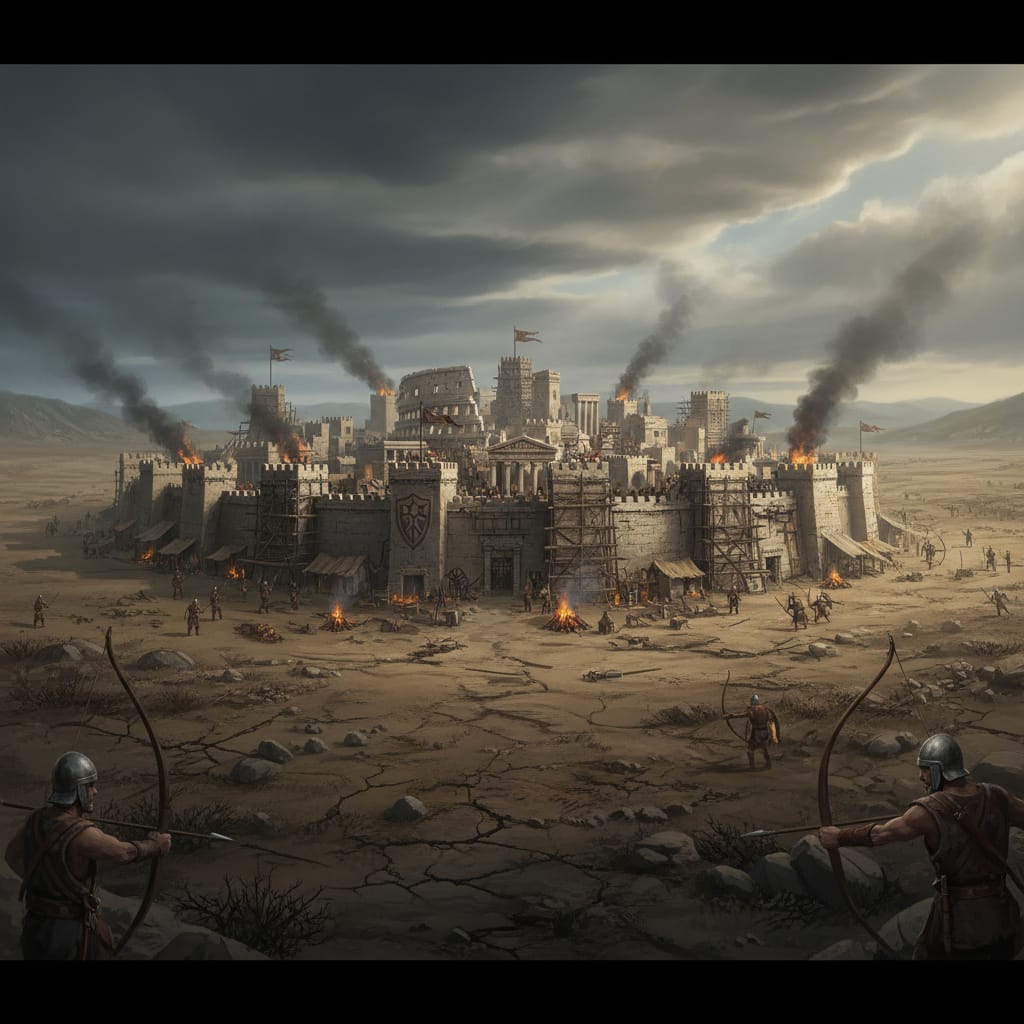
Imagine a game of Civilization VI where the earth is barren. Not of life or features, but of the very materials that fuel empires and delight citizens. A world where horses never ran wild, iron deposits never formed, and the silks, spices, and dyes that define wealth are mere myths. This isn’t a bug; it’s a strategic puzzle of the highest order. Stripped of these fundamental resources, the entire framework of Civilization VI collapses and reforms into something new and brutally challenging. Standard strategies become obsolete, the value of leaders is completely re-shuffled, and victory itself must be pursued through unconventional and highly focused means. This guide provides a comprehensive analysis of how to not only survive but dominate in a world devoid of strategic and luxury goods.
The Great Collapse: Understanding the Core Changes
To succeed, one must first internalize the gravity of the situation. The absence of these resources creates two fundamental, game-altering crises: the Amenity Crisis and the Stagnant Battlefield.
The Amenity Crisis: A Civilization on the Brink
Luxury resources are the primary source of Amenities, which represent the contentment and overall happiness of your populace. Without them, every city you found is on a knife’s edge, perpetually close to the -5 Amenity threshold where they become rebellious, spawning barbarian units and crippling their own yields.
- The End of “Happy” and “Ecstatic”: In a normal game, duplicate luxuries are traded away for gold or other luxuries, allowing a wide empire to remain “happy” (1 to 2 Amenities) or “ecstatic” (3+ Amenities), which provides crucial bonuses to non-food yields. In this scenario, these states are nearly impossible to maintain across your empire. The default state for any city will be “displeased” (-1 to -2 Amenities), which incurs a -5% penalty to non-food yields.
- Growth Becomes a Liability: Every point of population in a city requires 0.5 Amenities. Therefore, natural growth, normally a sign of a healthy city, actively pushes your cities toward rebellion. A city at 10 population requires 5 amenities just to break even—a monumental task in this mode.
- Economic Black Hole: The lucrative early-game practice of selling excess luxuries to the AI for 20-30 gold per turn is gone. This severely curtails early-game income, making it harder to purchase builders, settlers, or military units.
The Stagnant Battlefield: Warfare Reimagined
The lack of strategic resources completely flattens the military technology tree. The escalating power of units from one era to the next is erased, creating a long, drawn-out era of ancient and classical-era warfare.
- Key Units Are Unavailable: Entire classes of units are impossible to build. This includes, but is not limited to: Horsemen, Swordsmen, Knights, Coursers, Musketmen, Bombards, Ironclads, Tanks, and all air units. The backbone of most offensive and defensive armies throughout history is simply gone.
- The Ranged Unit Supremacy: Analysis on forums shows that without powerful mounted or heavy infantry units to flank and absorb damage, ranged units become the undisputed kings of the battlefield. Archers, Crossbowmen, and Field Cannons, supported by a frontline of Warriors and Spearmen, form the core of every single army.
- Fortification and Terrain Are Paramount: When unit types are so limited, tactical positioning becomes exponentially more important. Hills, forests, and rivers are not just minor modifiers; they are the difference between a successful defense and a complete rout. Building forts is no longer a niche strategy but a vital defensive measure.
Pillars of the New World: Redefining Your Victory Condition
With the standard game flow shattered, the viability of each victory condition is dramatically altered. Player community analysis suggests a clear shift in which paths are most feasible.
- Domination Victory (High Viability): While the tools of war are limited, so are your opponents’. Victory is not achieved by unlocking a game-changing unit like Tanks. Instead, it’s a war of attrition, superior production, and tactical genius with a limited unit roster. An early rush with a mass of Archers can cripple a neighbor and snowball into an unstoppable force.
- Religious Victory (High Viability): This victory path is almost entirely unaffected by the resource scarcity. Faith generation, the spread of religion, and theological combat are independent of any material goods. Many professional gamers suggest that a Religious Victory is the most straightforward and reliable path in this scenario.
- Science Victory (Low Viability): This path is severely hampered. The late-game projects, particularly the Mars Colony components, require immense production. This production is normally augmented by powerful factory buildings, which in turn require electricity from Power Plants. Without Coal, Oil, or Uranium, you are limited to basic power from dams or renewable sources, crippling your late-game production capacity and making the space race an agonizing crawl.
- Culture Victory (Very Low Viability): A Culture Victory relies on generating Tourism. While many sources of tourism (Great Works, Wonders, National Parks) are still available, your output is fundamentally undermined by the Amenity crisis. Unhappy and rebellious cities generate significantly less tourism, and you lack the “ecstatic” bonus that can accelerate a culture win.
- Diplomatic Victory (Medium Viability): This path remains plausible. Earning Diplomatic Favor through alliances, suzerainty over city-states, and participating in the World Congress is unchanged. However, emergencies related to city-state conquest will be more frequent, and managing a wide empire of conquered cities to avoid grievances will be a major challenge due to loyalty and amenity issues.
The New Pantheon: Top-Tier Civilizations in a Resource-Deprived World
Civilization and leader abilities that are resource-independent or directly address the core crises of this mode become incredibly powerful.

God-Tier Leaders
- Aztec (Montezuma): The Aztecs are arguably the strongest civilization for this scenario. Their Legend of the Five Suns ability allows them to use Builder charges to rush 20% of a district’s production cost. This is a massive production advantage in a world where raw production is king. More importantly, their Gifts for the Tlatoani ability grants them +1 Amenity for each different improved luxury resource in their territory. While you won’t have any, the second part of this ability is the game-changer: units gain +1 Combat Strength for each Amenity level your empire has. Even breaking even is a bonus.
- Japan (Hojo Tokimune): Japan’s Meiji Restoration ability provides a standard +1 adjacency bonus for districts placed next to each other. In a game where maximizing raw yields from every tile is critical, this is a foundation for powerful, self-sufficient cities. Their Electronics Factory, arriving late, still provides a culture bonus in addition to production, and their Samurai, while a unique unit, do not require Iron, making them a rare and powerful medieval swordsman replacement.
- Germany (Frederick Barbarossa): Production is the ultimate currency in this mode, and Germany is an economic powerhouse. The ability to build one more district than the population limit allows allows for early and potent city specialization. The Hansa, replacing the Industrial Zone, gets a massive +2 Production bonus for being adjacent to a Commercial Hub, and further bonuses for adjacent resources and districts, making it the single best production district in this scenario.
- Russia (Peter): The Mother Russia ability grants extra territory when founding cities and provides Faith and Production from Tundra tiles. This allows for a wide, faith-generating empire from the start. The Lavra, their unique Holy Site, is cheaper and generates Great Person points faster, accelerating a Religious Victory.
Strong Contenders
- Mali (Mansa Musa): In a world where gold from luxuries is gone, Mali’s ability to generate immense wealth is a lifesaver. Suguba districts provide cheaper purchasing and massive gold adjacency from rivers and Holy Sites. This gold can be used to purchase builders, settlers, and an entire army of Crossbowmen, bypassing production bottlenecks.
- Rome (Trajan): Trajan’s Column provides a free Monument in every city. This early culture is helpful, but more importantly, the Monument provides +1 Loyalty, helping to stabilize newly founded or conquered cities in a world rife with rebellion. All roads lead to Rome, and these automatic roads create the logistical network needed to move your limited armies efficiently.
- Sumeria (Gilgamesh): The earliest rush is the strongest rush. The War-Cart is a powerful Ancient Era unit that requires no resources and suffers no penalty against spearmen. A popular strategy is to build a horde of War-Carts and conquer your nearest neighbor before they can even produce Archers, giving you an insurmountable early advantage.
The Art of Austerity: New Strategic Priorities
Success requires a complete overhaul of your strategic thinking, focusing on three key areas.
Amenity Management is Priority Zero
You must actively hunt for every possible source of Amenities.
- Entertainment Complexes and Water Parks: These districts are no longer optional; they are mandatory. The Arena, Zoo, and Stadium (and their Water Park equivalents) must be planned for in your key cities. The +1 Amenity from an Arena is one ofr the earliest and most reliable sources you can get.
- Policy Cards: Cards like Retainers (+1 Amenity in cities with a garrisoned unit) and Liberalism (+1 Amenity in all cities with at least two districts) are top-priority civic unlocks.
- Religion: Founding a religion is almost essential. Beliefs like Zen Meditation (+1 Amenity in cities with 2 districts) or Stupas (a worship building providing +1 Amenity) are game-saving.
- City-State Suzerainty: Becoming the suzerain of cultural city-states (e.g., Zanzibar, Buenos Aires) is critical. Zanzibar is the ultimate prize, as its suzerain bonus grants you two unique luxury resources, Cinnamon and Cloves, which are unobtainable anywhere else on the map. This makes them the single most contested city-state in this mode.
The Unchanging Face of War
Military strategy becomes a refined art of fundamentals.
- The Archer Core: Your early-to-mid game army will consist of a front line of Warriors or Spearmen and a back line of as many Archers and Quadriremes as you can build. The goal is to protect your ranged units at all costs and let them methodically dismantle enemy forces and cities.
- The Crossbow Power Spike: The upgrade from Archer to Crossbowman is the single most important military power spike in the game. A force of 10-12 Crossbowmen, supported by a few melee units and a Battering Ram or Siege Tower, is capable of conquering an entire civilization.
- Siege and Support: Battering Rams (for ancient walls) and Siege Towers (for medieval walls) are not optional. They are the only effective way to take walled cities without suffering catastrophic losses. A Great General is also invaluable, providing +5 Combat Strength and extra movement to your classical and medieval units.
Economic Overhaul: Gold Without Goods
Your economy needs to be rebuilt from the ground up.
- Harbors and Commercial Hubs: These are your primary source of income. Building a Lighthouse and Market early is essential. Focus on trade-route-granting buildings and policies.
- Trade Routes are Lifelines: Every trade route is precious. They provide gold, and can also be used to provide food and production to new, struggling cities. The Wisselbanken and Joint Stock Company policy cards, which boost trade route yields, are high-priority.
- Tribute and Plunder: A popular strategy is to use your early military advantage to declare war on a neighbor not to conquer them, but to pillage their districts and trade routes for gold and science, then make peace for a lump sum of gold. This “bully” strategy can fund your entire early-game development.
A True Test of Strategy
Playing Civilization VI without strategic or luxury resources is a transformative experience. It strips away the comfort of powerful unique units and the safety net of happy citizens, forcing players to engage with the game’s core mechanics on a deeper level. Production, tactical warfare, and meticulous city management become the undisputed pillars of a successful empire. Victory is not found in a lucky spawn of Niter or a cluster of Silk; it is forged in the careful placement of a district, the precise movement of an Archer, and the desperate, brilliant management of a civilization perpetually on the edge of collapse. It is, in its purest form, a test of the player, not the map.