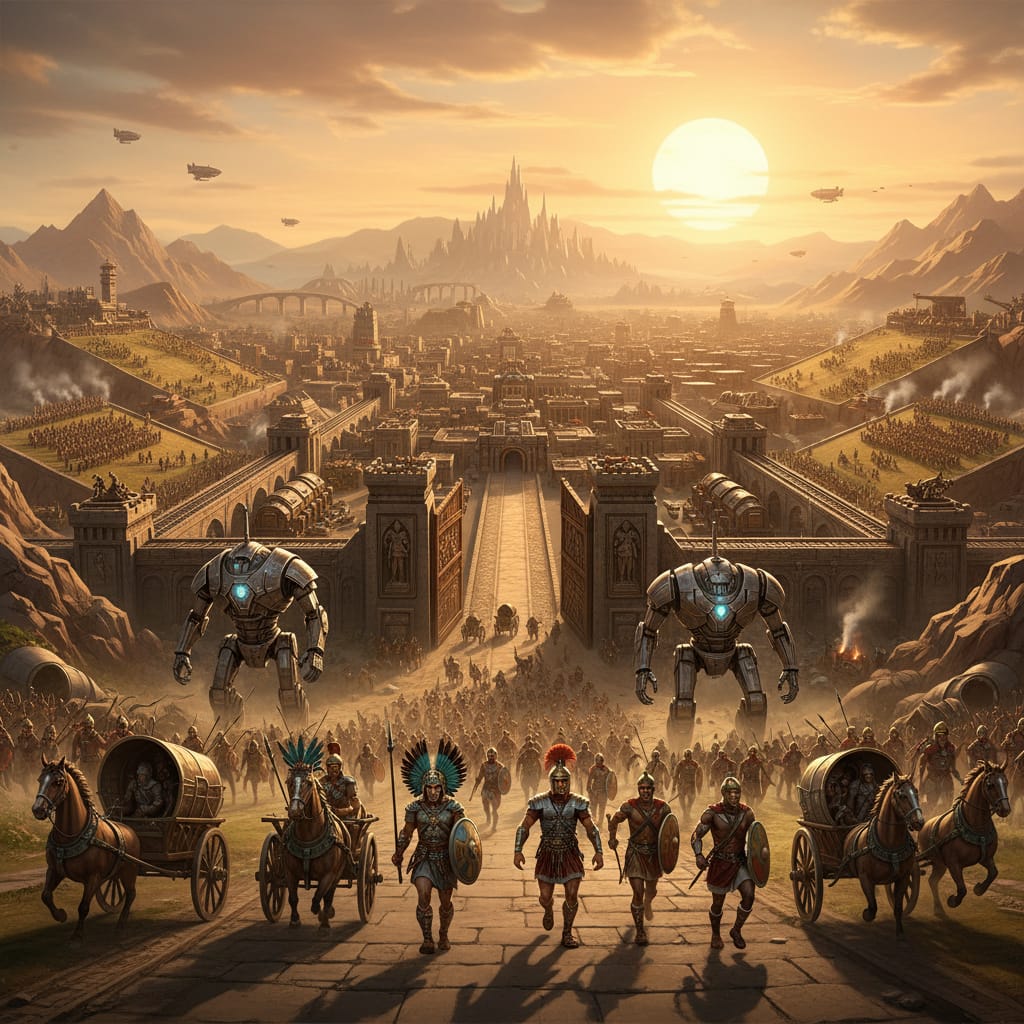
What if the most iconic and powerful units of your civilization could only be trained in the heart of your empire—your original capital? This single change would fundamentally reshape the strategic landscape of Civilization 6, transforming your capital into a military-industrial complex of unparalleled importance. The player community has extensively analyzed this hypothetical scenario, and the consensus is clear: it would force a complete re-evaluation of city planning, military strategy, and even victory conditions. This guide delves into the strategic depths of this fascinating “what if” scenario, offering a comprehensive analysis of how to thrive when your unique military might is tethered to a single city.
The Capital as the Crucible of War: A New Strategic Paradigm
Under this rule, your capital is no longer just your first city; it becomes the sole source of your civilization’s unique military identity. Many professional gamers suggest that this would elevate the importance of your capital’s production capacity to unprecedented levels. Every district, every building, and every citizen in your capital would need to be optimized for the singular purpose of churning out your elite forces. This constraint would also place an immense premium on unit preservation. Losing a unique unit far from home would be a devastating blow, as reinforcements would have to travel from the heart of your empire.
Early Game: The Decisive Rush
Analysis on forums shows that civilizations with powerful early-game unique units would become even more dominant. The ability to field a small but potent force of elite units in the first 50-100 turns could be the deciding factor in the game.
- The Untouchables: Sumeria and the War-Cart: Sumeria’s War-Cart, available from the start, becomes a game-breaking unit in this scenario. With no resource requirement and high combat strength, a steady stream of War-Carts from your capital would allow for unparalleled early aggression. A popular strategy is to use this early advantage to conquer a neighboring civilization or several city-states, effectively doubling your empire’s size before most other civilizations have even fielded their second or third settler.
- The Aztec Onslaught: Eagle Warriors and the Builder Economy: The Aztecs’ Eagle Warrior, a replacement for the Warrior, is another prime example of an early-game powerhouse. Their ability to capture defeated enemies and turn them into Builders would create a powerful feedback loop. Each victory would not only expand your military but also your economic capacity, allowing you to further develop your capital and, in turn, produce even more Eagle Warriors.
-
Rome’s Enduring Legacy: The Legion’s March: The Roman Legion, a Classical Era unique unit, is a testament to the power of a well-timed push. With their superior combat strength and ability to build Roman Forts, a wave of Legions emerging from Rome could carve out a vast and easily defensible empire. The key, according to many players, is to pre-build Warriors and then upgrade them to Legions as soon as the Iron Working technology is researched. This allows for a much faster deployment of your elite force.
Mid-Game: The Long Reach of the Capital
As the game transitions into the mid-game, the strategic challenges of this scenario become more complex. Your empire will have expanded, and the front lines will be far from your capital. This is where logistical planning and strategic foresight become paramount.
- The Lifeline of Empire: Reinforcement and Logistics: A popular strategy is to establish a chain of well-defended cities and encampments that can serve as forward operating bases. While these cities cannot produce your unique units, they can heal them and provide a safe haven for them to regroup. The strategic placement of roads and, later, railroads becomes crucial for rapidly deploying reinforcements from your capital to the front lines.
-
The Power of Projection: Naval and Air Power: For civilizations with naval unique units, like Norway’s Viking Longship or England’s Sea Dog, the capital’s coastal access becomes a critical factor. A well-placed canal or a capital on a strait can project naval power across the map. In the later stages of the game, the development of an air force in your capital can provide a rapid-response capability that transcends the limitations of ground-based reinforcements.
-
The Great Generals: Force Multipliers: Great Generals become even more valuable in this scenario. Their ability to boost the combat strength and movement of your unique units can turn a small, elite force into an unstoppable army. Many professional gamers suggest actively pursuing Great Generals through the construction of Encampment districts and their buildings in your capital.
Late-Game: The Elite Guard
In the late game, the focus shifts from rapid expansion to maintaining a technological and military edge. Your unique units, now likely veterans with multiple promotions, become an elite guard that can be deployed to critical fronts to turn the tide of a war or to protect your interests abroad.
- The Modernization of Might: Upgrades and Obsolescence: The upgrade path of your unique units becomes a critical consideration. For some civilizations, like the Zulu with their Impi, the unique unit remains relevant for a significant portion of the game. For others, the unique unit may become obsolete as new technologies are researched. In these cases, the focus should be on leveraging the unique unit’s power window to its fullest extent and then transitioning to a more conventional military force.
-
The Ultimate Weapon: The Giant Death Robot: For civilizations that survive into the late game, the ultimate expression of this capital-centric military strategy is the Giant Death Robot. While not a unique unit in the traditional sense, the ability to produce a steady stream of these powerful units from a hyper-productive capital would be a game-winning strategy.
Impact on Victory Conditions
This “what if” scenario would have a profound impact on all victory conditions, forcing players to adapt their strategies and re-evaluate their priorities.

- Domination Victory: A Double-Edged Sword: While this scenario seems to favor a Domination Victory, it also presents significant challenges. The inability to produce unique units on the front lines would make long, drawn-out wars of attrition incredibly costly. The key to a successful Domination Victory would be to use your elite forces to deliver decisive blows, capture enemy capitals, and then use your conventional forces to hold the newly acquired territory.
-
Science Victory: The Defender of the Cosmos: For a Science Victory, your unique units would serve as a powerful deterrent, protecting your scientifically advanced cities from the aggression of your rivals. A small but technologically superior force of unique units could hold off a much larger but less advanced army, giving you the time you need to complete the space race.
-
Culture Victory: The Guardians of the Faith: For a Culture Victory, your unique units would be the guardians of your cultural heritage. They could be used to protect your wonders, your holy sites, and your great works from being plundered by your enemies. In a more aggressive cultural strategy, they could be used to “persuade” other civilizations to adopt your way of life.
-
Religious Victory: The Holy Warriors: For a Religious Victory, your unique units could be the vanguard of your faith. They could be used to escort your apostles and missionaries as they spread your religion to the far corners of the world. A well-timed holy war, led by your unique units, could be a powerful tool for converting even the most stubborn of heretics.
-
Diplomatic Victory: The Peacemakers: For a Diplomatic Victory, your unique units would be a symbol of your military might, a powerful bargaining chip in the world congress. The ability to project power and to intervene in international crises would give you a significant advantage in the diplomatic arena.
Conclusion
The hypothetical scenario of being able to build a civilization’s unique units only in their original capital presents a fascinating and complex strategic challenge. It would force a radical rethinking of traditional Civilization 6 strategies, elevating the importance of the capital to unprecedented heights and placing a premium on logistical planning and unit preservation. While this rule change would undoubtedly favor civilizations with powerful early-game unique units, it would also create new and interesting strategic possibilities for all civilizations. Ultimately, the ability to thrive in this scenario would depend on a player’s ability to adapt, to innovate, and to master the art of wielding a small but elite force of unique units to shape the destiny of the world.