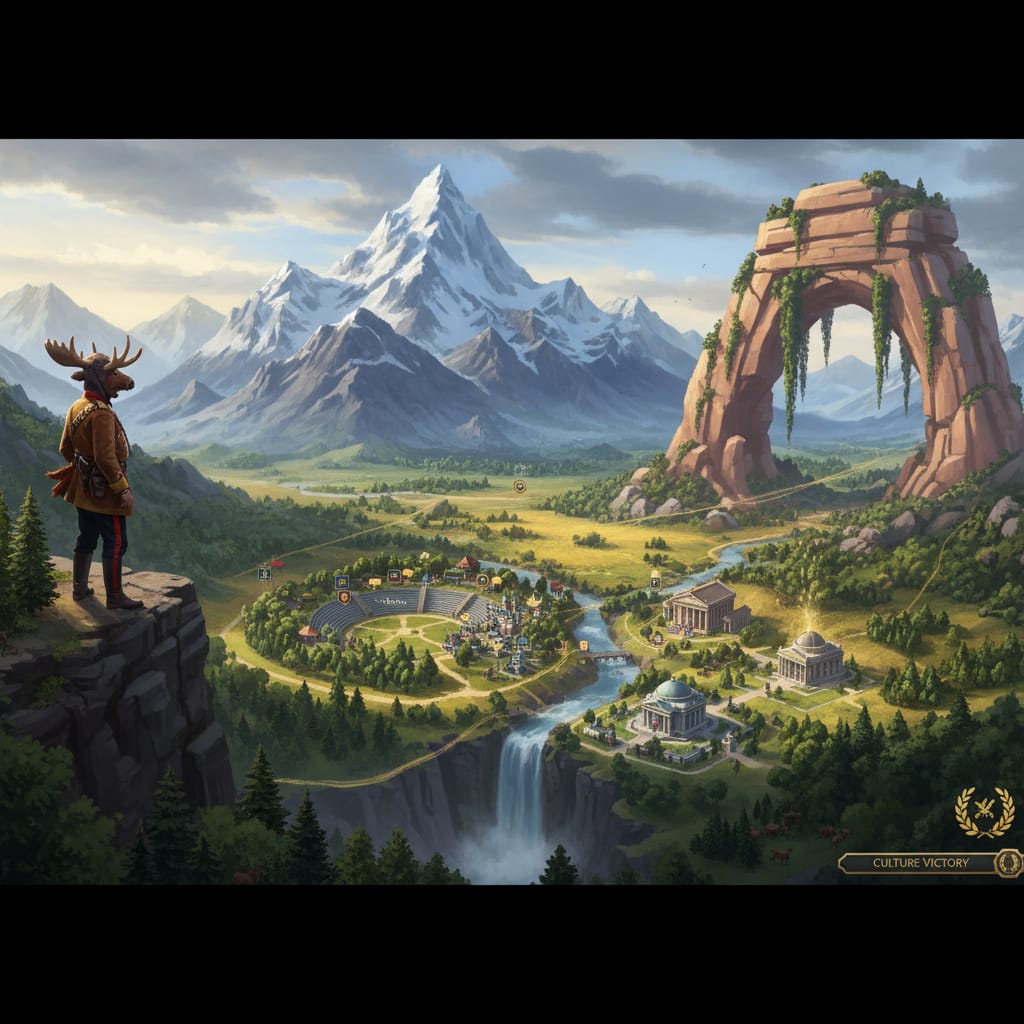
In the grand tapestry of Civilization 6, few leaders are as intrinsically tied to the very land they inhabit as Teddy Roosevelt. While others build empires of gold, faith, or military might, Roosevelt, particularly in his Bull Moose incarnation, commands an empire of breathtaking vistas and cultural resonance. Mastering his gameplay is not merely about strategic expansion; it is an exercise in landscape architecture, where the placement of a single city can determine the cultural destiny of a nation. This guide offers a definitive analysis of city placement strategy for Teddy Roosevelt, providing the actionable intelligence needed to transform any map into a canvas for a dominant Culture Victory.
Understanding the Core Mechanics: Appeal and the Roosevelt Legacy
Success with Teddy Roosevelt hinges on a deep understanding of his unique abilities, which fundamentally alter the traditional priorities of city placement. Analysis on player forums consistently shows that failing to grasp these mechanics is the number one reason for a stalled game with this leader.
The Two Faces of Roosevelt
First, it’s crucial to distinguish between his two leader variants, as they inform different strategic nuances.
- Rough Rider Teddy: His primary ability, the “Roosevelt Corollary,” provides +5 Combat Strength to units on their home continent and grants +1 Appeal to all tiles in a city with a National Park. This version encourages a more aggressive early-game posture, using the combat bonus to secure a continent and protect future National Park sites.
- Bull Moose Teddy: This is where the strategy becomes truly unique. His “Antiquities and Parks” ability is a powerhouse of passive yield generation. For every tile with Breathtaking Appeal, he receives +2 Science if it is adjacent to a Mountain or Natural Wonder, and +2 Culture if it is adjacent to a Wonder or Woods.
For the purposes of this guide, the focus will be heavily on the Bull Moose strategy, as it requires the most specialized and deliberate city placement. However, the principles of Appeal and National Park planning are vital for both versions.
Appeal: The Central Pillar of Strategy
In Civilization 6, Appeal is a rating assigned to every tile, indicating its desirability. This rating is the engine of a Roosevelt Culture Victory. The levels are:
- Breathtaking (+4 and higher)
- Charming (+2 to +3)
- Average (0 to +1)
- Uninviting (-1 to -3)
- Disgusting (-4 and lower)
For Bull Moose Teddy, achieving Breathtaking status on as many tiles as possible is the primary objective. These yields are not just bonuses; they are the foundation of your empire’s scientific and cultural output, allowing you to outpace rivals without needing a massive number of traditional Campus or Theater Square districts.

The Foundation: Your First Three Cities
The early game is a critical land grab. Your initial city placements will set the stage for the entire game, establishing the core of your future tourism empire. Many professional gamers suggest that the first 100 turns are a race to identify and claim the pristine territory Teddy needs to thrive.
Capital Placement: Reading the Landscape
Your starting location is a matter of chance, but your first move is pure strategy. When settling your capital, you are looking for a confluence of factors that synergize with the Bull Moose ability.
- Mountains are Paramount: A nearby mountain range is the single most valuable feature. Each Breathtaking tile adjacent to a mountain will generate +2 Science. A city nestled near a cluster of mountains can become a scientific powerhouse early in the game, accelerating your progress through the tech tree.
- Abundant Woods: Woods provide a dual benefit. They grant +1 Appeal to adjacent tiles, making it easier to reach Breathtaking status, and they trigger the +2 Culture bonus on Breathtaking tiles adjacent to them. A starting location with a mix of woods and mountains is ideal.
- Standard Requirements: Do not neglect the fundamentals. Fresh water is non-negotiable for housing and growth. Good food tiles (like Wheat, Rice, or Cattle) and production tiles (Hills) are still necessary to build settlers and districts in a timely manner.
A popular strategy is to settle in a location that may not have the highest immediate yields but possesses the highest potential for high-Appeal tiles. You are playing the long game.
Expansion Targets and Pantheon Choice
Your second and third cities should not be placed arbitrarily. Scout aggressively to identify the next best locations. Look for:
- Natural Wonders: These are magnets for Appeal, granting significant bonuses to adjacent tiles. A city that can work a Natural Wonder and its surrounding high-Appeal tiles is invaluable.
- Continental Divide: Spreading your early cities across your home continent allows you to exert control and use your +5 Combat Strength bonus to deter aggressive neighbors or remove city-states blocking prime locations.
- Future National Parks: Begin to visualize the diamond shape required for National Parks. Look for clusters of four tiles that can be left unimproved, ideally surrounded by mountains and woods.
During this initial expansion, you will likely found a Pantheon. According to the player community, Earth Goddess is the undisputed best choice for Bull Moose Teddy. It provides +1 Faith for every tile with Charming or better Appeal. This early Faith generation is not for religious conversion; it is your primary means of funding the Naturalists required to create National Parks in the mid-to-late game.
Mastering the Art of Appeal: A Tile-by-Tile Analysis
To effectively plan your cities, you must internalize the mathematics of Appeal. Every feature, district, and improvement has a positive or negative impact on the tiles around it. Expert players often use map pins to meticulously plan their city layouts decades in advance.

Positive Appeal Sources (Your Best Friends)
- +2 Appeal: City Park improvement.
- +1 Appeal: Adjacent Woods, Coast, Lake, River, Oasis, Natural Wonder, Holy Site, Theater Square, Entertainment Complex, Water Park, and most World Wonders.
- Variable Appeal: The Preserve district provides +1 Appeal to adjacent tiles, and its Grove and Sanctuary buildings increase the Appeal of the tile they are on.
Negative Appeal Sources (To Be Avoided or Isolated)
- -1 Appeal: Adjacent Rainforest, Marsh, Floodplains, Pillaged tiles, Industrial Zone, Encampment, Aerodrome, Spaceport, Quarry, and Mine.
- -2 Appeal: Adjacent Dam district.
Analysis on forums shows that a single misplaced Industrial Zone can ruin the potential of an entire National Park area. The core principle is to concentrate Appeal-boosting features and districts in your core cities while quarantining negative-Appeal structures in less critical, production-focused cities.
Strategic District and Improvement Placement
With a firm grasp of Appeal, you can now approach district placement with surgical precision. For Teddy, this is less about adjacency bonuses (though they are still important) and more about sculpting the environment.
The Holy Trinity: Preserve, Theater, and Holy Site
- The Preserve District: This should be considered Teddy’s unique district in all but name. It is the single most powerful tool for amplifying your leader ability. Place it in a location surrounded by tiles you want to boost. The Grove and Sanctuary buildings provide bonus Food, Faith, Science, Culture, and Production to adjacent unimproved tiles, with the best yields reserved for Breathtaking tiles. A well-placed Preserve can turn a handful of unimproved tiles into your city’s primary source of yields.
- Theater Squares: These are essential for any Culture Victory, generating Great Writer, Artist, and Musician points. They also provide +1 Appeal to adjacent tiles, making them perfect for placing next to a planned National Park or a cluster of woods.
- Holy Sites: Even if not pursuing a Religious Victory, Holy Sites are critical. They provide the Faith generation (especially when combined with Earth Goddess) needed for Naturalists and boost adjacent Appeal.
The “NIMBY” Districts: Industry and Military
The phrase “Not In My Back Yard” should be your mantra when placing districts that lower Appeal.
- Industrial Zones: These are necessary for production but are toxic to Appeal. A popular strategy is to designate one or two cities as your industrial heartland. These cities, often on less appealing terrain like plains or grasslands without features, will house the Industrial Zones and Factories for your empire. Place them away from your cultural centers.
- Encampments and Aerodromes: Like Industrial Zones, these districts reduce Appeal. Place them on the periphery of your empire, where they can serve a defensive purpose without interfering with your high-Appeal territories.
Improvements: To Chop or Not to Chop
Builder management is also key. While chopping woods for a quick production boost is a standard tactic for many leaders, for Teddy, it’s a decision with long-term consequences.
- Lumber Mills: These are an excellent choice as they allow you to gain production from a forest tile without removing the woods, thereby preserving its Appeal bonus.
- Planting Woods: The Conservation civic unlocks the ability for Builders to plant new woods. This is a game-changing ability for Teddy. You can use it to create Breathtaking tiles where none existed before, literally manufacturing the perfect landscape for your abilities and National Parks. Many professional gamers suggest saving Builder charges for the late game specifically for this purpose.
The National Park Gambit: From Placement to Tourism
National Parks are your primary weapon for winning a Culture Victory. They generate massive amounts of Tourism based on the total Appeal of their tiles.
The Mechanics of a National Park
Creating a National Park has specific requirements:
- The Shape: It must be a vertical diamond of four land tiles.
- Ownership: All four tiles must be owned by the same city.
- Appeal: All four tiles must have an Appeal level of at least Charming.
- Unimproved: The tiles must be natural and contain no districts, wonders, or tile improvements (Lumber Mills are an exception, but it’s often better to remove them).
The Process
- Identify: Use the Appeal lens and map pins to identify potential National Park locations early.
- Cultivate: Protect these areas. Do not build improvements or districts on them. If necessary, plant woods on or around them to increase their Appeal to the required level.
- Purchase: Accumulate Faith throughout the game. Once you unlock the Conservation civic, you can purchase a Naturalist unit with Faith.
- Create: Move the Naturalist to one of the four tiles in your planned diamond and activate the unit. This will establish the National Park, and you will see a significant jump in your Tourism per turn.
A popular strategy is to create multiple National Parks in a single city, which, when combined with the Film Studio (America’s unique building), can create a “tourism bomb” that catapults you toward victory.
Wonders, Governors, and Policies for a Perfect Landscape
Finally, several other game elements can amplify your city placement strategy.
- Key World Wonders: The Eiffel Tower is a must-build wonder. It provides +2 Appeal to every tile in your empire, making it dramatically easier to create Breathtaking tiles and National Parks. St. Basil’s Cathedral is also incredibly powerful if you have tundra tiles, as it boosts their yields and provides tourism.
- Governors: Reyna (the Financier) is an excellent choice for a city with a Preserve. Her “Forestry Management” promotion causes all features (woods, rainforest, marsh) in the city to grant an additional +1 Appeal to adjacent tiles. Pingala (the Educator) is always a strong choice for your capital or largest city to boost its Science and Culture output.
- Policies: Look for policies that enhance your strategy. The Wisselbanken policy increases yields from trade routes to allied city-states, while later policies directly boost Tourism from National Parks and wonders.
Conclusion
To play Teddy Roosevelt is to see the world of Civilization 6 through a different lens. The value of a tile is not just its immediate output of food or production, but its potential beauty. The optimal strategy is one of patience, foresight, and environmental cultivation. By prioritizing mountains and woods, meticulously planning district placement to maximize Appeal, and leveraging Preserves and National Parks, you transform the landscape itself into your primary engine for victory. Analysis on forums shows that a well-executed Bull Moose strategy is one of the most satisfying and dominant paths to a Culture Victory in the game. Your empire will not be a sprawling network of mines and factories, but a testament to the enduring power of the natural world—a carefully sculpted masterpiece of culture and tourism that no rival can withstand.